

Different termite types found in the U.S.
If you're a homeowner, being aware of the different types of termites is beneficial for several reasons. Knowing what some termite species look like, where you can find them, and how they behave can help you recognize signs of an infestation early on. There are three types of termites: subterranean termites, drywood termites, and dampwood termites.
Subterranean termites
Subterranean termites build their nests underground and are the most common type of termite in the United States.
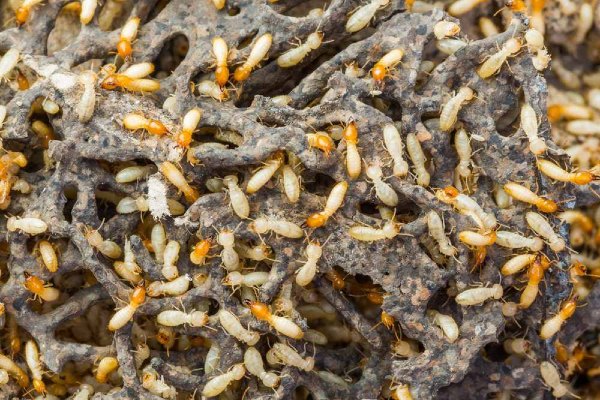
- Region: This termite species is found in every state except Alaska. They are common in warm, humid regions across the United States, especially in the southern states.
- Behavior: They nest underground near structures and build mud tubes to access above‐ground food sources. They're social insects that live in large colonies consisting of workers, soldiers, and reproductive termites (alates).
- Appearance: These termites are about one‐eighth of an inch long. Their wings are a creamy white color, while their long bodies are typically dark brown or black.
- Damage: Subterranean termites can cause the most damage of any termite species. They feed on wood and cellulose materials, causing significant damage to buildings.
There are at least seven species of subterranean termites common in the U.S. This includes the:
- Eastern subterranean termite (the most common)
- Formosan subterranean termite (not native to the U.S.)
- Dark southeastern subterranean termite
- Light southeastern subterranean termite
- Western subterranean termite
- Arid land subterranean termite
- Desert subterranean termite
Eastern subterranean termites
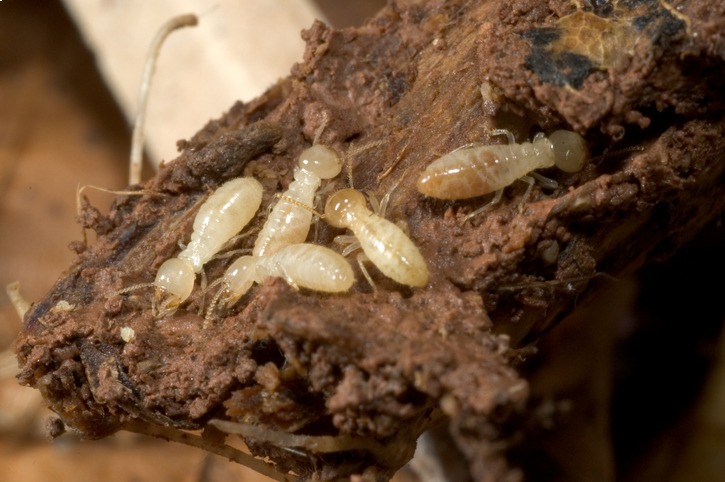
- Region: These types of termites are primarily found on the East Coast and in southern states. They live under the soil but will also inhabit wet or water‐damaged areas around your home.
- Behavior: Eastern subterranean termites are highly social insects that live in colonies consisting of workers, soldiers, and alates. Workers are responsible for foraging for food, constructing and repairing tunnels, and caring for the young. Soldiers defend the colony against threats. Male and female alates leave the colony to mate and create a new colony.
- Appearance: The worker termites are cream‐colored and about one‐eighth of an inch long. Soldiers are orange‐colored and about one‐quarter of an inch long. They have large jaws they use to combat intruders. Alates are winged termites or “swarmers”(pictured above). They are black or dark brown and about ⅜” to half an inch long. Alates lose their wings after a termite swarm.
- Damage: These termite types primarily feed on cellulose materials found in wood, including structural lumber, wooden fixtures, and other cellulose‐based materials. They can cause significant damage to buildings and other structures.
Eastern subterranean termites
Formosan termites
Formosan termites
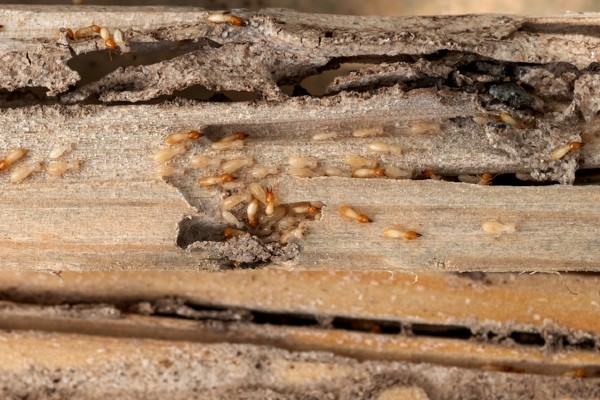
- Region: These termites are found in Alabama, California, Florida, Georgia, Hawaii, Louisiana, Mississippi, North Carolina, South Carolina, Tennessee, Texas, and Virginia.
- Behavior:Formosan termites are one of the most aggressive and destructive types of termites. They eat cellulose found in wood and paper.
- Appearance: Alates are yellowish‐brown, workers are opaque white, and soldiers have pale bodies with an amber‐colored head. The soldiers have distinctive large, oval‐shaped heads with mandibles they use for defense against predators.
- Damage: These kinds of termites cause damage to wood, creating a ribbed effect as they consume the softer parts of growth rings, leaving denser sections behind. Their large colonies enable rapid structural damage. These termites relentlessly pursue cellulose, damaging both building structures and plants.
Drywood termites
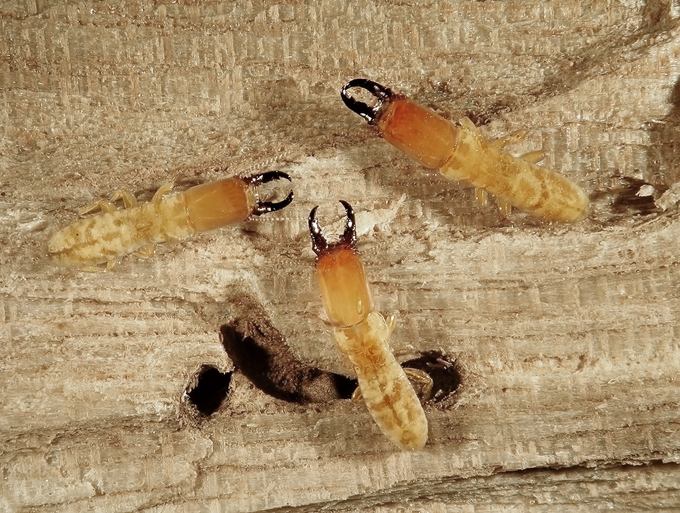
- Region: These termite types can be found in southern California, Arizona, New Mexico, Texas, Louisiana, Mississippi, Alabama, Georgia, Hawaii, New Mexico, and all of Florida.
- Behavior: Drywood termites infest dry wood and establish their colonies within the wood they infest. This termite is known for its ability to infest structural lumber, wooden fixtures, furniture, and other dry wood materials commonly found in homes and buildings.
- Appearance: The appearance of this termite species varies between castes. In general, soldiers are ⅜ of an inch long, while the alates measure about half an inch long. These termites are usually pale brown but vary between dark brown and light tan.
- Damage: These types of termites tunnel through dry wood, consuming it from the inside out and leaving behind hollowed‐out passages.
There are three common species of drywood termites in the U.S., including the:
- Southeastern drywood termite
- West Indian drywood termite
- Western drywood termite, also known as the desert drywood termite
These types of termites receive all of their nutrition from wood and, unlike other termites, do not require moisture from soil. Drywood termites can create multiple colonies within a home.
Conehead termites
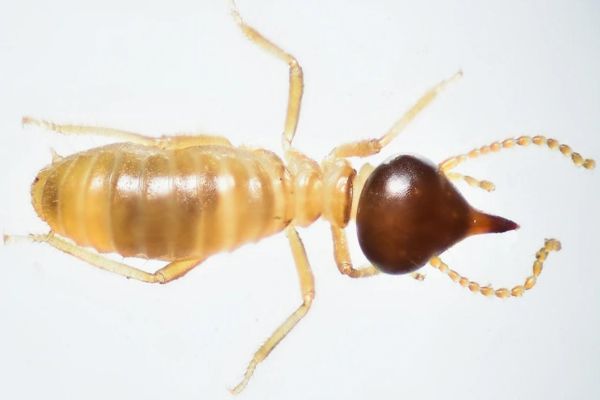
Conehead termites
- Region: This termite species is native to the Caribbean and Central America in areas like Panama. They can also be found in southern Florida.
- Behavior: These kinds of termites build large, above‐ground nests resembling cones or mounds, typically in trees, shrubs, or on the ground. They are also known for their rapid colony growth.
- Appearance: Conehead termites have elongated cylindrical bodies and a distinctive cone‐shaped head. They are light to dark brown and have relatively small mandibles compared to other termite species.
- Damage: They will eat just about anything that contains cellulose, and their destructive feeding habits can result in significant damage to trees, wooden structures, and landscaping materials.
Dampwood termites
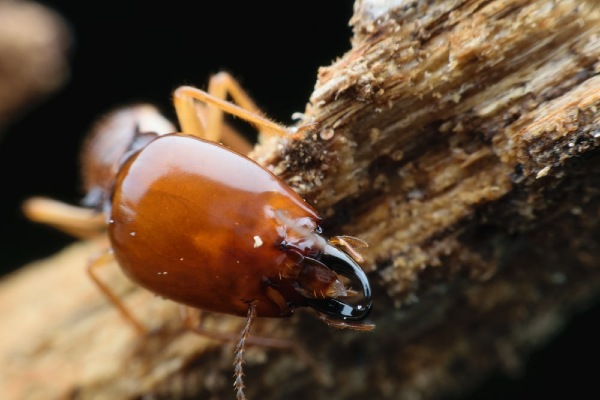
- Region: These types of termites are found in western states, including California, Idaho, Montana, Nevada, Oregon, Florida, Hawaii, and Washington.
- Behavior:Dampwood termites thrive in moist environments and require regular contact with water and high humidity. They do not create shelter tubes and can live entirely within the wood they infest, sealing openings with fecal pellets to maintain humidity levels. These termites typically infest fallen timber, dead trees, and stumps.
- Appearance: Dampwood termites are the largest termites in North America, with kings and queens measuring between one‐half to ⅝ of an inch in length. Their color ranges from dark to light brown, sometimes appearing reddish towards their abdomens. Nymphs are cream‐colored.
- Damage: This termite species can cause significant damage to homes by hollowing out support beams. Their secretive behavior makes it challenging to detect activity until it becomes severe.
Because termites are so small, it can be difficult for the average homeowner to get up close and identify these pests correctly. Termites can quickly breed and multiply, making them difficult to eliminate. At Terminix, our expert technicians employ cutting‐edge methods to protect your property from termites. Schedule a free termite inspection with us today!