DIY
How to safely remove wildlife from your home
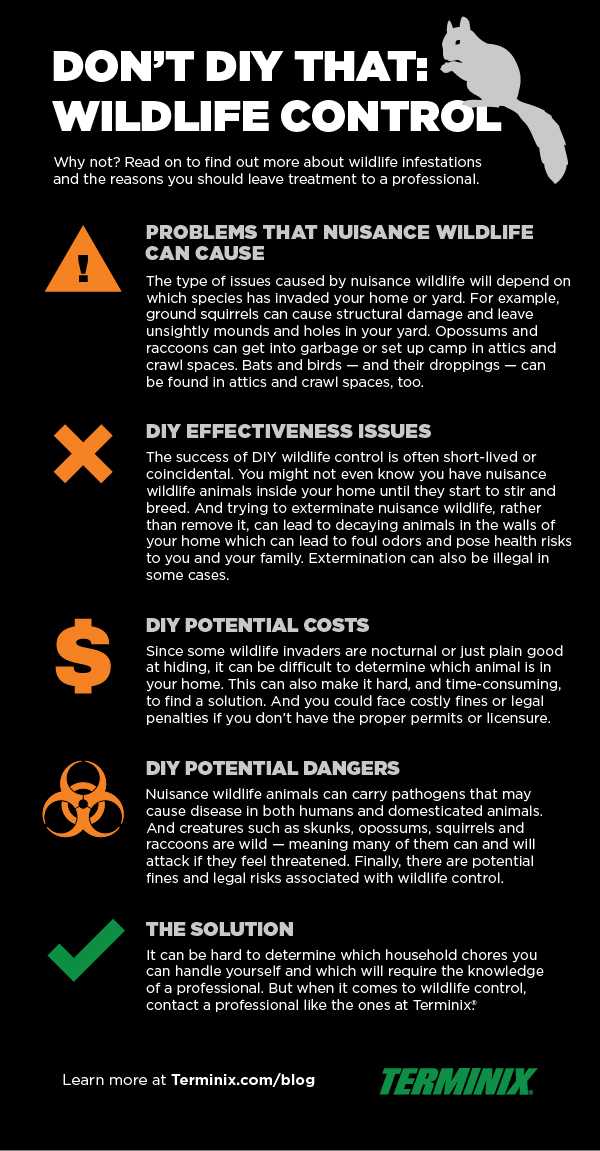
When raccoons, opossums, rats, mice, skunks, and other nuisance wildlife enter your home, it's typically because they're seeking food, shelter, or warmth. These crafty creatures can find their way into attics, crawl spaces, basements, or even inside walls, causing damage and spreading potential health risks. Whether they're rummaging through garbage, nesting in chimneys, or gnawing on wires, their presence can lead to bigger problems if left unchecked.
While DIY wildlife control might seem like a quick fix, it often fails to address the root of the problem. It's best to leave wildlife control to the professionals at Terminix, who can safely and effectively remove1 the pests and prevent them from returning.

Problems that nuisance wildlife can cause
While not all animals will invade your home or cause damage, many—including bats, certain bird species, skunks, raccoons, opossums, and squirrels—can pose serious issues. The problems caused will vary depending on the species that invades your home or yard.
For example, opossums and raccoons may rummage through garbage, damage roofs, and tear up insulation while nesting in attics or crawlspaces. Skunks can dig holes in lawns and release a strong, lingering odor if they feel threatened. Bats and birds may nest in attics, leaving behind droppings that can lead to respiratory issues.
Many of these animals also carry pathogens that can cause diseases like rabies, leptospirosis, and salmonella, increasing the risk of having them in or around your home.
Effectiveness of DIY removal methods for nuisance wildlife
Some wildlife may move into your home to hibernate or ride out the winter, meaning you might not even know they’re inside your home until they start to stir and breed. While some praise home remedies or wildlife traps, the success of DIY wildlife control is often short-lived, coincidental, or even a fluke. Common DIY methods can include:
Squirrel traps: While these can catch a squirrel or two, poorly set traps may injure non-target animals or fail to capture anything. Traps also require knowledge of local laws regarding the relocation of wildlife.
Natural and chemical repellents: Natural & Chemical repellents, such as ammonia, may help temporarily deter wildlife, but animals often adapt, and repellents can easily be washed away by rain or lose effectiveness over time.
Squirrel traps: While these can catch a squirrel or two, poorly set traps may injure non-target animals or fail to capture anything. Traps also require knowledge of local laws regarding the relocation of wildlife.
One-way exclusion doors: These DIY wildlife control methods are designed to let animals, like raccoons and squirrels, exit your home but not re-enter. However, if improperly installed, they can trap animals inside, causing further damage.
Fencing and barriers: Installing mesh fencing or barriers around gardens and under decks can help prevent groundhogs, skunks, and other burrowing animals from entering. If not correctly reinforced, animals may dig deeper or find alternate routes.
Extermination: Exterminating wildlife instead of removing them can result in decaying animals inside walls or attics, leading to unpleasant odors and attracting pests like flies and beetles.
DIY wildlife removal methods like repellents and traps may occasionally provide temporary relief, but pests often find alternate entry points or return once deterrents wear off. Additionally, improper use of traps or handling of wildlife can be dangerous, and some species are protected by the law.

Will DIY wildlife removal still save me money?
DIY wildlife control might seem cheaper upfront, but it often leads to higher costs over time. Many DIY methods only provide temporary fixes, meaning you'll need to repeatedly purchase products or deal with recurring issues.
Wildlife can also cause hidden damage to your home’s wiring, insulation, and structure. Additionally, professionals handle wildlife removal carefully and provide long-term prevention.
Dangers associated with DIY wildlife removal
There can be many dangers associated with DIY wildlife removal from homes. It’s important to remember that animals like skunks, opossums, squirrels, birds, and raccoons are wild. When threatened or cornered, these animals can become aggressive, potentially injuring you, your family, or your pets. Additionally, wildlife laws protect certain animals during specific times of the year and regulate their relocation to ensure the safety and conservation of the species. Attempting DIY wildlife removal without understanding these regulations can lead to legal issues and harm to the animals.
These animals can carry pathogens that can cause diseases in both humans and pets, such as rabies, leptospirosis, and salmonella. On the other hand, DIY wildlife removal can carry fines and legal risks. Many animals, such as certain bat species, are protected by law. Attempting to remove or disturb them without following proper guidelines can result in hefty fines or even jail time. Navigating these legal matters can be complex, making professional wildlife control the safer, more effective option.

How to help keep critters out of your house
To help keep these nuisances out of your house, the following tips may help:
To help keep these nuisances out of your house, the following tips may help: This can help keep squirrels, raccoons, and birds from nesting indoors.
Keep food sealed: Store pet and human food in airtight containers, and regularly clean up food waste to avoid attracting pests.
Trim vegetation: Overhanging branches and dense shrubs provide a bridge to your home, so keeping plants trimmed can help reduce entry points.
While these measures can help, professional exclusion services are your best option for a long-term solution. Terminix’s wildlife exclusion service is a permanent control method that focuses on sealing entry points and installing barriers to help keep critters out for good. Unlike many DIY methods, exclusion begins working immediately, often in just one visit, and addresses pests without harmful chemicals or side effects.
Terminix’s exclusion services are designed to close off potential entry points, from small cracks to more significant gaps in roofs or foundations, helping to ensure no pests get through. This comprehensive, professional approach not only saves time and effort but also provides peace of mind, knowing your home is protected year-round. Schedule your inspection today!
1Coverage generally includes commensal rodents (house mice, Norway rats, roof rats), tree squirrels, flying squirrels, raccoons, opossums, pigeons, starlings, sparrows, armadillos, and skunks. Covered pests vary between Rodent & Wildlife Exclusion service plans. See Plan for details