Education
Are there flies that bite?
Updated: May 23, 2025
If you’ve ever felt a sharp, stinging sensation while outdoors, you may have wondered: Do flies bite? The answer is yes, but only certain types. While many flies are harmless, several species do bite, and some can even transmit diseases. Unlike mosquitoes, which pierce the skin, most biting flies use cutting or scraping mouthparts to tear the skin and feed on blood.
So, why do flies bite? In most species, it's only the females that bite, and they do it to obtain a protein-rich blood meal necessary for reproduction. Flies are attracted to body heat, carbon dioxide, sweat, and movement, all of which make humans and animals ideal targets.
Which kinds of flies bite?
Not all flies bite, but several species are known for their aggressive feeding habits and their painful bites. If you’ve ever spent time outdoors during warmer months, you’ve probably encountered at least one of the following biting flies:
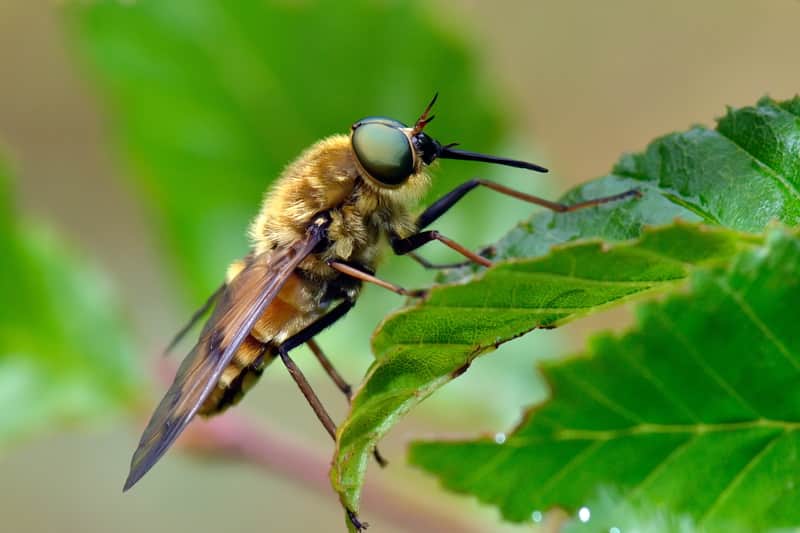
- Horse flies: Large (up to one inch), dark-colored flies with powerful wings and green or black eyes. Horse fly bites are very painful since they use scissor-like mouthparts to slice the skin.
- Deer flies: Slightly smaller than horse flies, with colorful, patterned wings and bright green or golden eyes. Common in wooded areas near water, their bites can transmit tularemia, also known as rabbit fever.
- Black flies: Small, dark flies found near fast-moving rivers and streams. They bite by cutting the skin and feeding on the blood, often leaving itchy, swollen welts.
- Stable flies: Resemble house flies but have a piercing proboscis or elongated mouthparts. They are often found near livestock, and their bites are painful and can cause irritation in humans.
- Sand flies: Tiny (about one-eighth of an inch), pale flies that are most active at dawn and dusk. Their bites can result in itchy red bumps and may transmit leishmaniasis in some regions.
- No-see-ums (biting midges): Extremely small flies that are hard to detect but can deliver surprisingly painful bites, especially near coastal or marshy areas.
- Mosquitos: Technically part of the fly family, mosquitoes are the most well-known biting insects. They pierce the skin to draw blood and can spread dangerous diseases like Malaria, West Nile virus, and Zika.
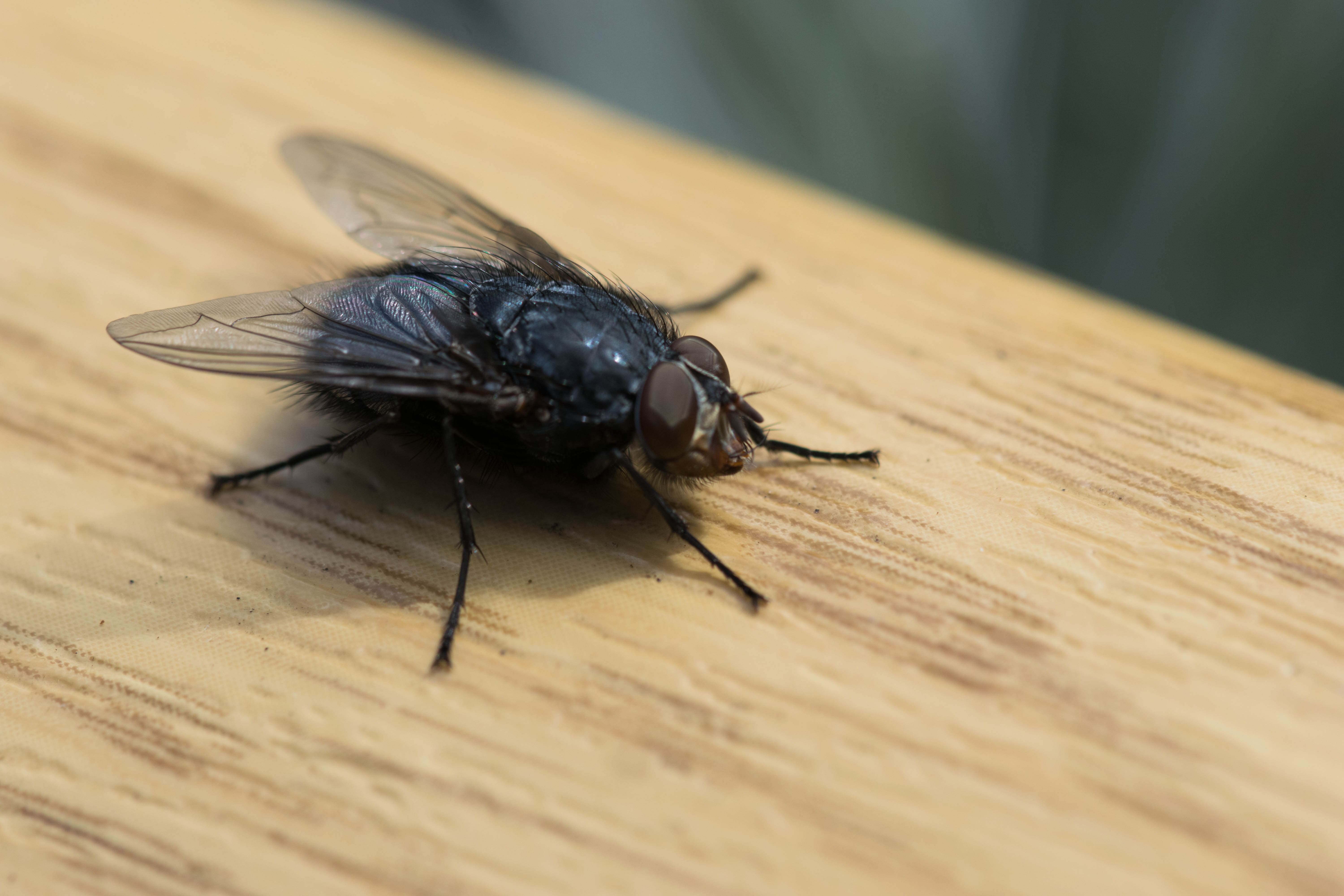
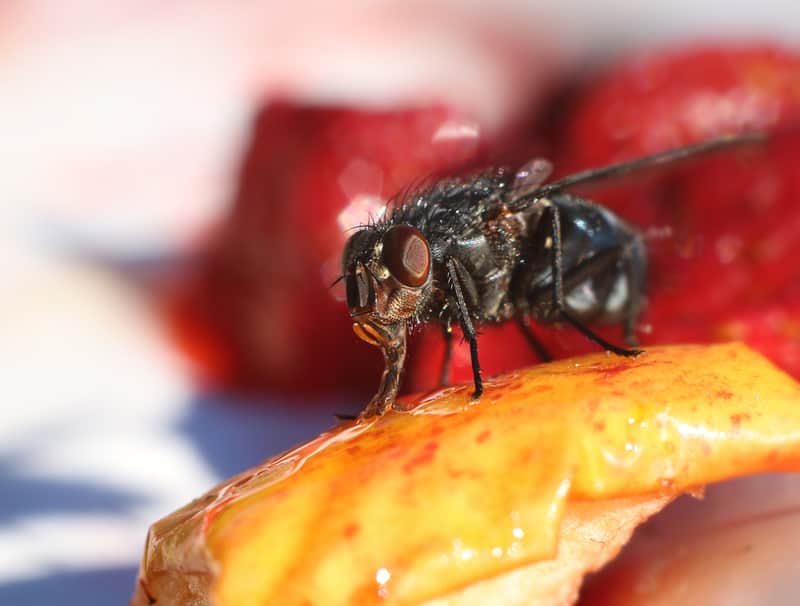
Luckily, common flies like house flies, fruit flies, and most gnats do not bite. They are unsanitary and spread bacteria, but they lack the mouthparts needed to pierce the skin.
What happens when a fly bites?
Fly bites can range from mildly irritating to seriously painful, depending on the species. Most biting flies use blade-like mouthparts to tear through the skin rather than piercing it like a mosquito. The open wound allows blood to flow, which the fly laps up with a sponge-like tongue or proboscis.
Common reactions to fly bites include:
- Immediate pain or stinging sensation
- Redness and swelling around the bite site
- Itchy welts or blisters
- Possible allergic reactions, especially with repeated exposure
In most cases, fly bites are more annoying than dangerous. However, some species are capable of spreading diseases or causing secondary infections if the bite is scratched excessively or left untreated. For example, deer flies can transmit tularemia, while sand flies are known to carry parasitic diseases in certain parts of the world.
Not every bite will result in illness, but it’s still important to clean the affected area and monitor it for signs of infection, especially if swelling worsens or symptoms persist.
Preventing fly bites
Avoiding biting flies starts with knowing where and when they’re most active and taking the right steps to protect yourself. Along with preventing flies from invading your space, here’s how you can avoid fly bites:
- Stay indoors during peak activity: Most biting flies are active during the day, especially in the warmer months. No-see-ums, however, are most active at dawn and dusk.
- Wear protective clothing: Long sleeves, pants, hats, and gloves can limit exposed skin.
- Use insect repellent: Products containing DEET, picaridin, or oil of lemon eucalyptus can deter many types of biting flies.
- Install window screens: Fine mesh screens can keep flies out of your home, especially in rural or coastal areas.
- Clean up potential breeding areas: Stable flies and similar species breed in wet hay, grass clippings, and manure. Eliminating these materials helps control populations.
Controlling biting flies can be difficult, especially since many of them breed in remote, hard-to-reach environments like swamps, wetlands, and compost piles. While stable flies can be locally managed, they’re also capable of traveling more than 100 miles, making full control nearly impossible without expert help.