Education
What do flies eat?
Content Updated: April 7, 2026
Key takeaways
- Flies primarily feed on decaying organic matter, liquids, and sweet substances, with their diet varying significantly by species.
- Contrary to popular belief, fruit flies consume the yeast from rotting fruit rather than the fruit itself.
- House flies are opportunistic feeders that regurgitate digestive enzymes onto solid food to liquefy it for consumption.
- Flies can contaminate food by transferring bacteria and pathogens from their bodies and feces, making effective fly control essential.
Jump to section:
What are common food sources for flies?
Can flies contaminate food they land on?
The "fly diet" isn’t some new trend to help you lose weight. That would be pretty gross considering the rotten nature of fly food. But what do flies eat? And how do flies eat? Learn the answers to these common questions and understand why fly control is so important for you and your family's health.
What are common food sources for flies?
Generally, most flies eat decaying organic matter, nectar, liquids, and sometimes even other insects. However, the feeding habits of each species vary greatly. For example, mosquitoes are a type of fly that feed on decaying organic matter in water during the larval stage. As adults, they turn to plant nectar for sustenance, though they are better known for sucking blood.
Tachinid flies also feed on plant nectar as adults, but in their larval stage, they dine on other insects. Hessian flies eat grass, while bot flies eat animal tissue. The most recognizable fly – the house fly – sustains itself on rotting food and meat while at the larval stage. The decaying matter is preferably peppered with human, pig, or horse feces, if the house fly larvae has its say. As an adult, the house fly prefers sweets, liquids, and rotting fruit. And that explains why the "fly diet" was never invented.
Interestingly, flies require very little food to survive. Their feeding habits are often opportunistic, allowing them to thrive on minimal sustenance.
Do fruit flies eat fruit?
Contrary to popular belief, fruit flies don't actually eat fruit. Instead, they eat the yeast cells that grow on fruit, particularly rotting fruit. That's why you only see them pop up when fruit gets old, or around garbage storage and disposal areas, since that's often where people discard rotten fruit.
What do drain flies eat?
Drain flies feed on organic matter found in moist environments, particularly in areas like drains, sewers, and compost piles. Their diet mainly consists of decaying plant material, algae, and bacteria that thrive in these wet conditions. Drain flies tend to lay their eggs in slimy, organic matter, which provides a steady food source for their larvae once they hatch.
What do house flies eat?
House flies are particularly attracted to sugary substances, rotting food, waste, and even animal feces. They are opportunistic feeders and have a diverse diet. House flies are known to regurgitate digestive enzymes onto solid food to help break it down before feeding.
How do flies eat?
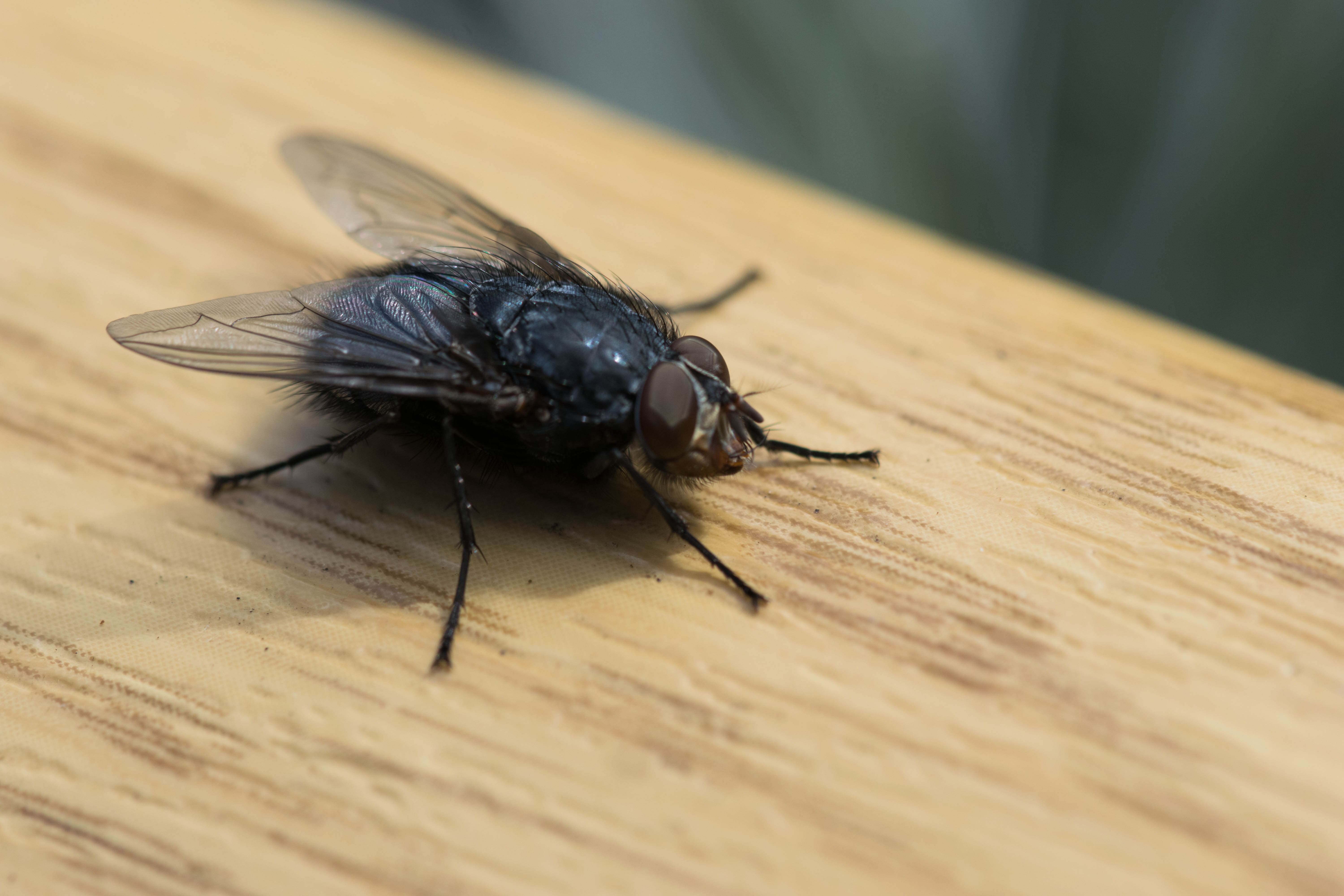
Most flies have mouthparts that are best described as two sponge pads and a straw. Their lips have grooved channels that allow liquid to flow in from the two fleshy pads attached to the fly's lower lip (the labella). Since they cannot chew, flies have to dissolve solid food into liquid, or at least into particles measuring less than a half a millimeter. To do this, the fly regurgitates saliva from its stomach, which dissolves the food until it is digestible. The house fly then uses its proboscis to suck up the liquefied food.
We know how flies eat, but how do they taste? Though they eat with their mouths, house flies taste with their feet. This is why they are always crawling on your food.
Can flies contaminate food they land on?
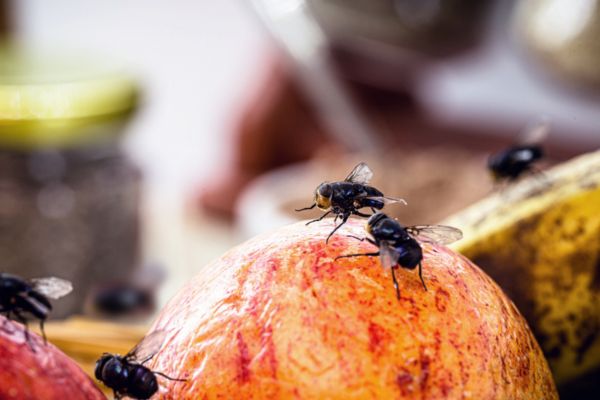
Since they also "taste" spoiled meat and feces, the last place you want them crawling is on food you're about to put in your mouth – not to mention flies constantly defecate. As a result, flies can contaminate food by transferring disease from their bodies and feces onto food surfaces.
Flies are dirty, annoying, and some species can bite. If you have a fly problem, don’t try to starve them out with some crazy fly diet or home remedy. Contact Terminix to help get rid of flies from your home.