

What are fleas, and how can you avoid them?
Fleas are small, blood-sucking parasites that generally prefer to feed on dogs, cats, rodents, and wildlife, but they’ll bite humans if necessary. Known scientifically as Siphonaptera, fleas are wingless insects with powerful hind legs that allow them to jump and easily travel between hosts and hiding places.
While around 2,000 flea species exist globally, only about 325 are found in the United States. Fleas are, unfortunately, a common pest, especially in households with pets. These tiny intruders can thrive in warm environments and reproduce quickly, making infestations challenging to eliminate if they’re not addressed.
What do fleas look like?
Many flea species share similar physical characteristics, including:
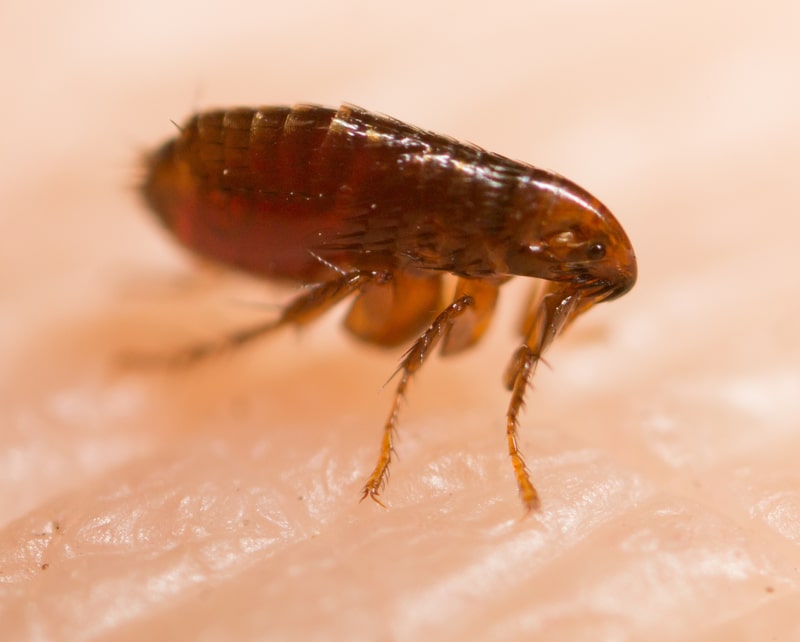
Body: Fleas are reddish-brown and have flat, oval-shaped bodies.
Size: They’re typically no larger than ⅛ of an inch.
Legs: They have six powerful legs that allow them to jump over 100 times their own length in search of their next meal.
Behavior: Fleas do not have wings, but their strong legs make them excellent jumpers. Their ability to entrench themselves under animal fur and deep within the carpeting can make them hard to spot.
.jpg?h=400&w=600&rev=b98c4d07cf0c457eb16383bc97653c62&hash=D3BF859198EB5E5E485785B6BC96D2BF)
Flea habitat and behavior
Fleas are highly adaptable and can survive in various climates, though they thrive in dark, warm, and humid environments. Outdoors they often settle in shaded areas like shrubbery, tall grass, and under leaves, where they can easily latch onto passing animals.
Once indoors, fleas typically favor pet-frequented areas like carpets, upholstered furniture, and pet bedding, where they can remain hidden and near the host they are feeding on. They are more active at night but remain semi-active throughout the day, allowing females to lay eggs around the clock.
What do fleas eat?
Fleas are blood-sucking parasites. The adults feed on the blood of warm-blooded animals, especially those with fur, where they can easily hide, mate, feed, and lay eggs. Flea larvae develop along the ground or floor surface and consume materials, such as dried blood, flea feces, dead skin, and dead insects.
Most flea species prefer animals over humans, but they will bite humans for a quick blood meal before moving on to more suitable hosts. This adaptability allows fleas to survive in various environments and find new hosts quickly.
The flea lifecycle
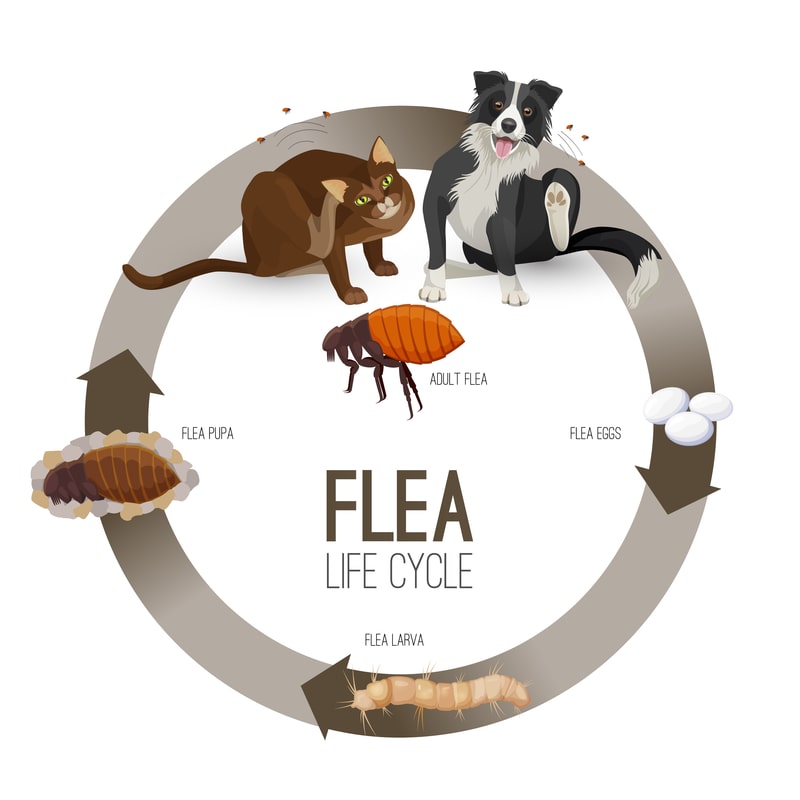
The flea lifecycle has four stages: egg, larva, pupa, and adult. Under ideal conditions, the entire cycle can take just a few weeks but may extend up to a year. Fleas need a host to survive long-term; without one, the adults only survive about one to two weeks. However, with a host, adult fleas can live around 100 days, sometimes up to a year, with females laying up to 2,000 eggs in a lifetime.
Eggs are typically laid in their host's fur. These eggs hatch into larvae within a week. Within a couple of weeks, the flea larvae spin a cocoon mixed with bits of debris for camouflage. During this stage, the developing flea is protected from drying out, harsh environmental conditions, and pesticide applications. Adults emerge from cocoons only when they sense a nearby host, allowing them to begin feeding and reproducing quickly. Without a host, these encased pupae can survive for long periods of time.
Common types of fleas in the U.S.
While many different flea species exist in the U.S., homeowners usually only encounter a few of them. The most common types of fleas include:
Cat fleas (Ctenocephalides felis)
Cat fleas are the most common species encountered in North America. They feed on house cats and dogs. Additionally, the cat flea targets wild hosts, such as raccoons, possums, and skunks. They can survive for months without food, but once they begin feeding, they can lay up to 4,000 eggs on your pet's fur during their lifetime. Frequent biting and scratching may be a sign your pet has cat fleas. If a human is bitten, they may develop a rash with small bumps.

Dog fleas (Ctenocephalides canis)
Dog fleas are less prevalent in North America and more common in Europe. Although they feed on both cats and dogs, they are typically found on wild hosts in North America. Interestingly, over 95% of fleas on dogs are actually cat fleas.
Human fleas (Pulex irritans)
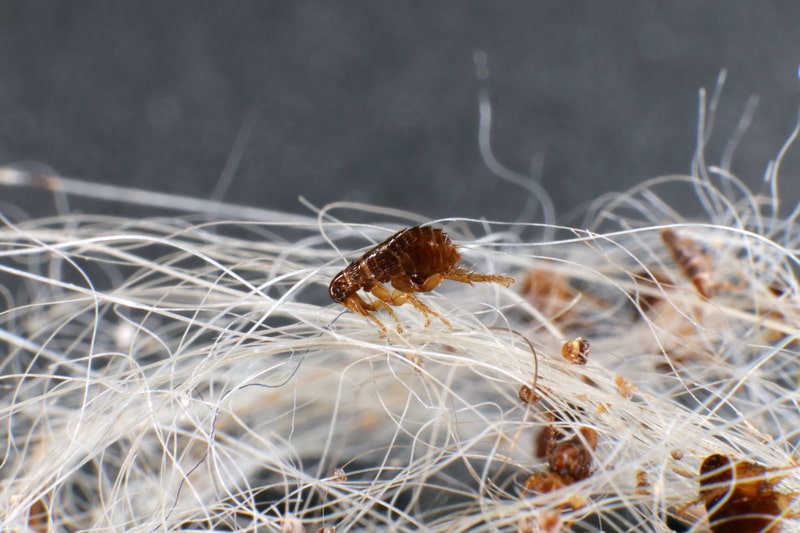
The name of human fleas results from their frequent occurrence on humans under poor sanitary conditions. They can also infest pigs, dogs, and various wild animals.

Other flea species
Here are some other less common flea species, along with their preferred climates, typical hosts, and associated diseases.
- Chigoe fleas (Tunga penetrans)
- Climate: Tropical and subtropical
- Hosts: Humans, livestock
- Behavior: Burrow into host skin to lay eggs
- Diseases: Can cause secondary infections due to burrowing
- Sticktight fleas (Echidnophaga gallinacea)
- Climate: Warm, often rural areas
- Hosts: Primarily birds, especially chickens; sometimes pets like cats and dogs
- Behavior: Embeds head under host’s skin to feed
- Oriental Rat fleas (Xenopsylla cheopis)
- Climate: Warm, tropical regions
- Hosts: Rodents; occasionally bite humans
- Diseases: Known vector for bubonic plague and murine typhus
How fleas travel and find hosts
Fleas often hitch a ride on their hosts and can easily jump from one warm-blooded animal to another. They enter homes primarily by attaching themselves to pets. However, they can also be carried in on clothing, shoes, or by wildlife that are adjacent to a home or have found their way into the attic or crawl space. These animals need to be removed, and the area should be addressed by a professional.
Fleas are attracted to body heat, movement, vibrations, and carbon dioxide caused by breathing, which helps them locate potential hosts. While fleas do not have wings and cannot fly, they possess powerful hind legs that enable them to jump impressive distances.
Are flea bites dangerous?
If you are concerned about flea bites or have a severe reaction to one, you should seek medical advice. Flea bites can pose health risks as fleas can be vectors for diseases like the bubonic plague and murine typhus. They can also transmit parasites such as tapeworms, which are primarily a concern for pets and their owners.
It’s not uncommon to wonder if flea bites may be from another pest like ticks or bed bugs. Tick bites are usually singular and can go unnoticed until the tick is found attached to its host. Bed bug bites tend to appear after sleeping and on exposed skin like the arms, neck, and face. Flea bites typically appear as small, red, raised bumps that are very itchy, often clustered around the ankles, legs, and waist. The severity of a flea bite reaction varies from person to person.

Preventing and getting rid of fleas in your home
Fleas can be a persistent pest once they’re in your home. To help prevent fleas:
- Regularly treat your pets with veterinarian-approved flea preventatives
- Wash pet bedding often
- Vacuum frequently, especially in areas where pets spend time
- On the exterior, create an environment that is less attractive to wild animals:
- Keep the grass cut short
- Trim back vegetation
- Remove wood/rock piles
- Remove pet bowls
- Ensure there are no rodent or wildlife entry points into your home
Attempting DIY flea treatments can help reduce flea numbers, but professional solutions are often necessary to completely eliminate an infestation. Fleas hide in tough-to-reach spots like carpets and baseboards, and many DIY methods only target adult fleas, allowing eggs and larvae to keep the cycle going.
With Terminix's PestFree365+ plan, your home and family can stay protected year-round from 39 common household pests, including indoor fleas. PestFree365+ will provide you with a customized protection plan tailored to your specific needs and regularly scheduled treatments to help prevent flea infestations.1Schedule your inspection today!
1If infestation of bees, brown recluse spiders, fleas, indoor ticks, cockroaches, carpet beetles, fabric moths, stored product pests, mice, or rats present at time of initial inspection, a curative upcharge will apply.