
Raccoons Opossums and Wildlife
Where do raccoons live?
Raccoons are remarkably adaptable creatures that thrive in a wide range of habitats across North America. From urban environments to rural landscapes, these clever animals have found ways to coexist with humans and take full advantage of available resources. Raccoons prefer habitats that provide ample food and shelter, with the season and their reproductive needs playing a significant role in their choice. So, where do raccoons live? And what should you do if you spot one of these creatures in your backyard?
Raccoon habitats
Raccoons typically have what is called a "home range" or an area they stake a claim to. How big the range is will depend on how large the raccoon is, how old it is and where it is. Urban raccoons often have smaller ranges than suburban or rural raccoons. The size of a range is anywhere from one square mile to 18 square miles. Here’s where you may find a raccoon’s habitat:
Rural areas: In rural or sparsely populated areas, raccoons live near rivers, streams, and lakes. They are also found in marshes and heavily forested areas full of dense brush.
Urban areas: Raccoons have altered their preferences to match man-made offerings. In urban settings, they are often found near food sources, including dumpsters, gardens or parks, and in storm drains.
Wooded areas: These native mammals prefer to live in areas with plentiful tree cover near a source of water. These habitats provide shelter and food, making them ideal spots for raccoons to live and forage.
Agricultural areas: Raccoons thrive in agricultural areas, often near crop fields and farms. They can be found scavenging for fruits, vegetables, and grains, as well as in barns or silos where food is stored.
Seasons and breeding cycles significantly influence raccoon habitats. In spring, as temperatures rise, males roam to find females for mating, while females seek sheltered dens to raise young. Summer sees raccoons exploiting abundant food sources, and autumn leads raccoons to seek areas rich in food to build fat reserves for winter. In winter, raccoons enter a state of torpor, relying on insulated dens in protected spots, which may include tree cavities or human-made structures.
In the den
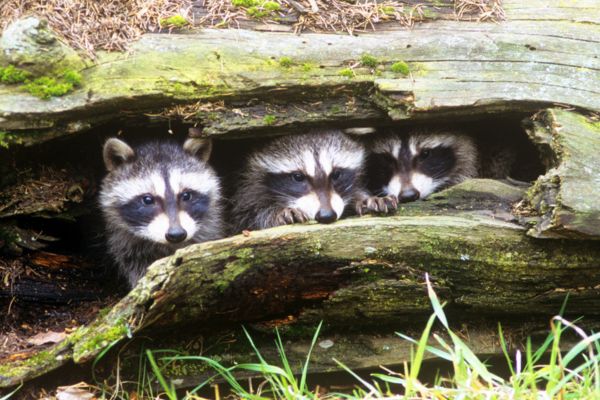
Once a raccoon finds somewhere that offers food and access to water, it will make itself a den. In rural settings, dens are often repurposed burrows dug by other animals. Wild raccoons are also known to build dens in hollow logs, below rocks or brush piles, or in hollowed trees. In more urban settings, a raccoon's den may be an abandoned vehicle, a chimney, an attic or crawl space, or any other protected location they can get into. They may also take refuge below homes or underneath woodpiles.
Raccoons typically have multiple dens, and they move between them every couple of days. Because they are primarily nocturnal, raccoons rest during the day. These mammals are able to climb and are sometimes seen in trees, but they do not live in them. Raccoons may climb trees in order to rest safely during the day. Most raccoons, however, will rest inside one of their dens.

What to do if you see a raccoon or den
While it may be tempting to approach or even feed these furry creatures – it’s not a wise course of action. Raccoons out during the day are probably just foraging for extra food or moving between dens, but they could also be sick. Like foxes and skunks, wild raccoons are often exposed to rabies and should only be approached or handled by trained professionals.
If you find raccoons living in or near your home, it’s best to contact a professional for help. Terminix can help remove these pests and stop them from coming back. Schedule your free inspection today!