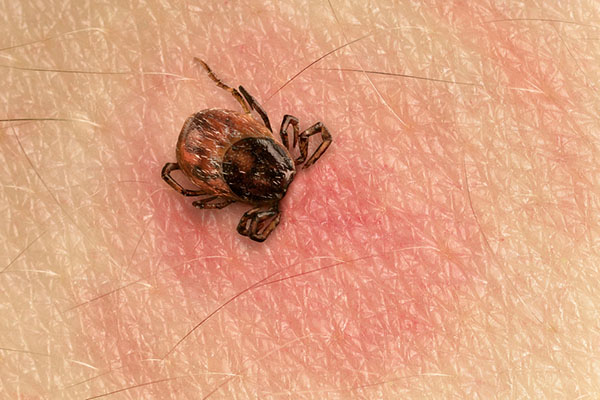

Learn about the lone star tick
(Amblyomma Americanum)
Lone star ticks (Amblyomma Americanum) are a pest you don’t want to ignore—they’re not only aggressive feeders but also known to actively seek out their next meal. Unlike other ticks that wait for hosts to pass by, lone star ticks can hunt in groups. If you spend time outdoors, it’s important to know how to spot them, understand their behavior, and protect yourself with tick prevention and control.
Jump to section:
Identifying lone star ticks
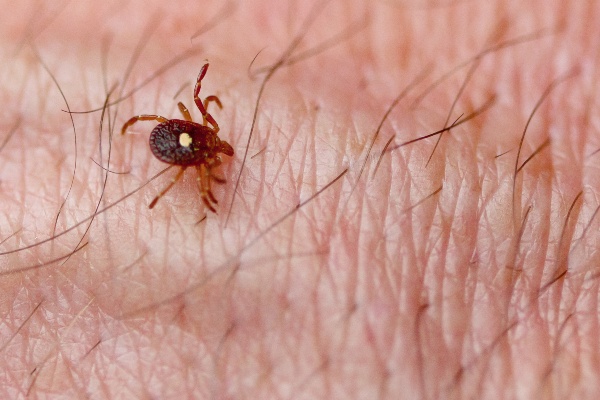
Most ticks are small and can be difficult to spot. The lone star tick only grows to about a quarter of an inch in adulthood. So, how do you identify ticks like the lone star tick? Lone star ticks do have a distinctive appearance. They are easy to identify as ticks with white dots resembling stars on the center top of their abdomen.
The lone star tick life cycle
A lone star tick life cycle usually takes about two years to complete and is in four stages: egg, larva, nymph, and adult. Lone star ticks are three-host ticks, meaning they feed on a different host at each stage, requiring a blood meal to grow and reproduce.
Egg
Eggs are the first stage of the lone star tick life cycle and can take one to two months to hatch. One lone star tick can lay thousands of eggs at a time in areas with high humidity.
Larva
The second stage in the life cycle of a lone star tick is the larva stage. Lone star larvae are six-legged, about the size of a pinhead, and actively "quest" to attach to smaller hosts like rodents. Once attached, a larva will feed for three to seven days before detaching to molt into the next stage.
Nymph
After the larva, the third stage in the lone star tick life cycle is the nymph stage. Lone star nymphs are eight-legged and slightly larger, about the size of a poppy seed. Nymphs attach to a new host, feed, and often overwinter before developing into adults.
Adult
Adults molt from nymphs and seek larger hosts, where they feed, and will mate typically in the spring. Females need to engorge on blood to lay thousands of eggs, although only a small percentage survive to adulthood.
What is the lone star tick’s habitat?
Lone star ticks are found throughout the eastern half of the United States, spanning from Missouri down to Texas and Louisiana and can be found all the way to the east coast. They live in wooded areas and fields and are more common around homes and buildings in secluded or rural areas. This species is rarely found living indoors. If it is found inside, it will generally be discovered on dogs or cats.
Like all ticks, the lone star tick is a bloodsucking ectoparasite. It is found where mammalian hosts such as deer, raccoons, and opossums live. Lone star ticks are opportunistic and can also live near bodies of water where animals drink to pick up a host.
Lone star tick diet and behavior
Ticks require a blood meal at each stage of life in order to grow. In adulthood, lone star ticks survive up to two years without feeding under the right conditions and are at their most active in the spring and summer.
Ticks feed both for survival and to reproduce. A female lone star tick must engorge herself with blood to obtain the nourishment necessary to produce the thousands of eggs she lays. Despite the large number of eggs these ticks can lay, only a small percentage will make it to maturity.
What happens if you get bit by a lone star tick? Ticks do not embed their entire head into a host, only the mouthparts. To keep the blood from clotting, the tick will inject an anti-clogging agent. Lone star tick bites, like bites from other closely related species, can cause a severe reaction. Because lone star ticks live in wooded areas, one of their primary hosts is white tail deer, but they also feed on mammals like cattle, dogs, horses, and rodents, as well as on humans.
Lone star ticks and tick-borne diseases
When people think of tick-borne diseases, Lyme disease often comes to mind. But do lone star ticks carry Lyme? The answer is no. Lone star tick bites have not been shown to transmit Borrelia burgdorferi, the bacteria that cause Lyme disease. However, these ticks can spread other significant illnesses with a tick bite. Here are the lone star tick diseases these bugs can transmit.
Alpha-gal syndrome (meat allergy)
Alpha-gal syndrome is a unique allergic reaction triggered by a sugar molecule called alpha-gal, which a lone star tick can transfer to humans when they feed. In some people, this molecule can cause an allergic reaction to meats, including beef, pork, or lamb, and certain animal products like gelatin or dairy. Symptoms include:
Hives or itchy rash
Swelling of the lips, face, or tongue
Stomach pain, nausea, or vomiting
Difficulty breathing (severe allergic reaction)
Ehrlichiosis
Ehrlichiosis is a bacterial infection caused by species of Ehrlichia bacteria carried by lone star ticks. The illness often causes flu-like symptoms, and signs usually appear within 14 days of a lone star tick bite. Symptoms include:
Headaches
Chills
Fever
Aching muscles and joint pain
Nausea, vomiting, diarrhea
Rash
Confusion
Rocky Mountain spotted fever (RMSF)
Rocky Mountain spotted fever is another lone star tick disease that can be caused by a tick bite. The disease often begins with a sudden onset of symptoms, which can become life-threatening if untreated. Symptoms include:
Sudden moderate to high fever (lasting a couple of weeks)
Severe headache
Fatigue and chills
Muscle pain and aches
Rash
Lone star ticks may not spread Lyme disease, but the illnesses they carry can cause serious health issues. If you suspect you have a lone star tick bite and experience symptoms, seek medical attention promptly.
Lone star tick prevention and control
Ticks are difficult to control; therefore, the services of an experienced professional are recommended. Treatments may be necessary in areas of the yard where ticks are found. The best way to avoid lone star tick bites is to stay away from tick-infested areas. However, if it is necessary, follow these tips when working or walking in areas potentially inhabited by ticks:
Wear long-sleeved shirts and long pants. Light colors are best, so ticks are easier to detect.
- Secure the bottom of pants inside socks or tie close around the ankles.
Wear a hat.
- Tuck long hair under a hat.
Use tick repellent applied to clothing, particularly the lower body and the arms.
Carefully inspect your body after exiting infested areas. Have another person who knows how to check for ticks inspect your backside and back of your head.
Wash clothing in warm water and detergent immediately after leaving an area where tick infestation is suspected.
Never throw potentially infested clothing in a hamper with other clothes or onto the floor.
Protect pets by preventing them from venturing into tick-infested areas, or consult your veterinarian for tick treatment products. Remember, your dog can also contract many tick-borne diseases.
Inspect pets carefully for ticks after walking them in wooded areas or fields.
While lone star ticks and other tick species can pose serious health risks, professional tick control services can help keep your yard protected. Terminix offers targeted treatments to eliminate ticks and prevent their return, so you don’t have to sweat peak tick season. Take control of your outdoor space with Terminix’s expert tick services today.