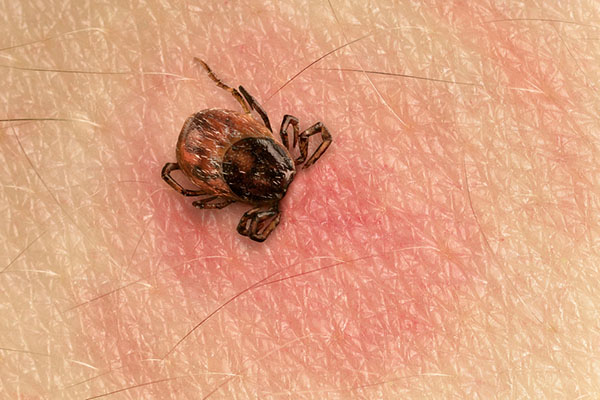
Ticks
The life cycle of a tick outdoors
The tick life cycle is a fascinating process that enables these pests to survive and reproduce in outdoor environments. From tiny larvae to nymphs and adults, ticks undergo distinct stages that involve feeding on hosts to progress. Learning about the tick life cycle helps you recognize their behavior, assess the risk they pose, and take steps to protect yourself and your surroundings.
How long do ticks live outside?
A tick’s life span depends on several factors, including its species, the availability of hosts, and environmental conditions. Generally, ticks can live anywhere from a few months to several years. For example, the American dog tick typically lives about two years, while the black-legged tick can live up to two to three years. A tick’s life cycle also plays a significant role in its lifespan, as many ticks can live three to five months between each stage. Ticks requiring multiple molts to reach maturity may take up to three years to complete their development.
Ticks can remain attached to a host for several days or even over a week, depending on their life stage and species. Without a host, however, ticks rely on stored energy and their ability to remain dormant. Tick larvae may survive a few months, while nymph ticks and adults can live up to a year or more without feeding.
Environmental factors and predators can also shorten a tick’s life. Harsh weather conditions, the absence of hosts, and natural enemies like birds, reptiles, and small mammals can significantly impact a tick’s ability to survive. Once a tick reaches maturity, its primary purpose is reproduction. Male ticks die shortly after mating, while females either lay one large batch of eggs or several smaller ones before completing their life span.
The phases of the tick life cycle

Ticks undergo a four-stage life cycle: egg, larva, nymph, and adult. Each stage is distinct, with ticks requiring a blood meal to progress to the next phase. This process is how ticks develop and survive in outdoor environments.
Tick eggs

The first stage of the tick life cycle begins with tick eggs. After mating, female ticks lay thousands of eggs in sheltered, humid environments where they are protected until hatching.
Here’s what you need to know about tick eggs:
Appearance: Small, shiny, and dark brown or reddish, laid in clusters.
Location: Found in shaded, moist areas such as leaf litter, soil, or under vegetation.
Duration: The egg phase lasts about one to several weeks, depending on environmental conditions.
Larvae
The second stage of the tick life cycle begins when tick eggs hatch into larvae. These tiny creatures are barely visible to the naked eye and rely on their first blood meal to grow and progress to the next phase.
Here’s what you need to know about tick larvae:
Appearance: Extremely small, with six legs, and often referred to as “seed ticks.”
Behavior: Tick larvae actively seek a host for their first blood meal, feeding for about three days before dropping to the ground.
Duration: Some species can live for months without finding a blood meal or maturing.
After a larva finds a blood host, it feeds for about three days before dropping back to the ground. Once there, the larva matures and sheds its outer skin through a process called molting, transforming into a nymph. Some species may require multiple molts and hosts to fully mature.
Nymph
The third stage of the tick life cycle, called the nymph stage, begins after a larva feeds and molts into a nymph. At this stage, nymph ticks must find a blood host and feed again to continue their development. This phase is crucial for ticks to mature and progress to adulthood.
Here’s what you need to know about nymph ticks:
Appearance: Slightly larger than larvae, with eight legs, resembling miniature adult ticks.
Behavior: Nymphs actively seek out a blood host and must feed to mature into adults.
Duration: Nymph can remain in this stage for several months, depending on conditions and host availability.
The length of time a nymph feeds varies by species and environmental factors. After feeding, nymphs may drop to the ground to molt, become dormant for a season, or, in some cases, complete their life cycle on the same host. This stage is vital for a tick’s development and sets the stage for its transition into adulthood.
Adult ticks
The final stage of the tick life cycle begins when a nymph molts into an adult. At this stage, adult ticks require another meal to reproduce. Both male and female ticks feed, but females typically become more engorged during the process. Reproduction occurs after feeding, marking the end of their life cycle. Tick bites at this stage are especially significant since adult ticks are more likely to transmit disease to their hosts.
Here's what you need to know about adult ticks:
Appearance: Fully developed with eight legs, adult ticks are larger than nymphs and easier to spot, though still small and flat when unfed.
Behavior: Adults actively seek hosts for feeding, which is essential for reproduction.
Duration: The adult stage can last several months to over a year, depending on environmental conditions and host availability.
After feeding, males and females mate in secluded environments. Male ticks typically die soon after, while females complete the tick life cycle by laying their eggs and dying shortly afterward.
Tick behavior during their lifespans
Throughout the tick life cycle, these pests exhibit behaviors designed for survival and reproduction. Ticks rely on questing to secure their blood meals. This is when they climb onto vegetation like blades of grass and wait for a host to pass by so they can latch on. Once attached, ticks feed for several days, with the duration depending on their life stage and species. After feeding, they drop off their host to molt into the next stage, or in the case of adults, to mate and lay eggs.
Ticks are resilient and adapt their behavior to their environment. Without a host, they remain dormant in sheltered areas until an opportunity to feed arises. Knowing these habits and behaviors is essential for managing their impact on your home and health. Professional tick control services, like those from Terminix, provide targeted solutions to reduce tick populations and help keep you and your loved ones safe.