

Differences Between Termites and Flying Ants
Although they are vastly different, termites and flying ants are often mistaken for one another. This can result in disastrous property damage if you ignore what you think are ants, only to discover later that you're actually dealing with termites.
You may be used to seeing ants crawling on the ground, but flying is part of their natural lifecycle. Flying ants are simply ants that have reached sexual maturity. Reproductive-stage termites also have wings and swarm like ants, so confusing them with their flying counterparts is easy. Keep reading to learn how to spot the difference between flying ants and termites.
Identify Termites and Flying Ants
Flying ants are generally harmless, but when confused with a more troublesome pest–termites–they can become a serious problem. Termites eat wood and can cause severe structural damage to your home or property if an infestation is established, so it’s essential to know how to tell the difference between bugs that look like flying termites. Here are a few key differences to help you identify which kind of pest you’re dealing with:
- Antennae – Ant antennae are bent, and termite antennae are straight.
- Waist – Ants have a pinched waist, while termites have a fatter, straight waist.
- Wings – Flying ants have two pairs of wings that are different sizes. Termites, on the other hand, have two pairs of wings that are the same size.
- Diet – Ants eat carbohydrates and proteins, while termites eat the cellulose inside of wood.
- Visibility – Flying ants can be visible in your home, but termites can only be seen when swarming.
- Behavior – Both ants and termites are attracted to wood and moisture, but ants are also attracted to sweets.
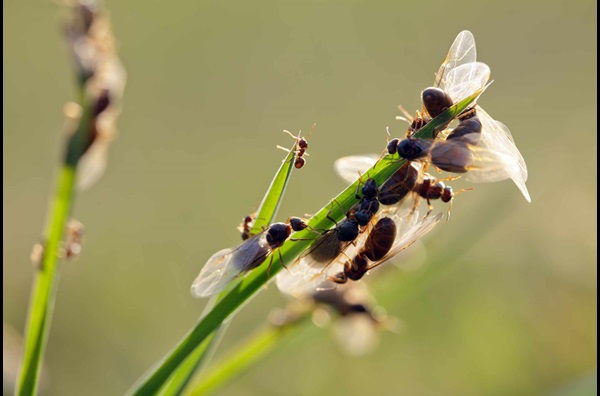
What do winged termites look like?
Identifying which type of termite species you’re dealing with is essential to the treatment process. Termite swarmers, or winged termites, are adult reproductive members of a termite colony. They can typically be spotted in the spring when temperatures begin to reach 70 degrees. Winged termites have straight, bead-like antennae and a broad waist. They also have two identical sets of wings. Winged termites are not usually visible unless swarming, so they may be hard to spot if you're looking for them. Call your local Terminix technician immediately if you are unsure if you have winged ants or termites on your property.
Signs of flying ants vs termites
There are different telltale signs of termites or flying ants to look out for. Termites swarming inside your home can commonly be found around light fixtures and window seals. This is because they are looking for a way out to form another colony, and their instinct is to fly toward the light. If you encounter a “swarm,” look for evidence of termite-damaged wood. Ants typically won't damage wood, so damaged wood can be a strong indicator of flying termites. In addition, look for dark or blistering wood, clay tubes, and tunnels that can point to termites.
If you think you have flying ants on your property, look for mating aggregations around your property. Also known as “hill-topping,” these aggregations can be found around bushes, trees, chimneys, and other large or high structures. Flying ants can be seen in the late spring and early summer months. Many ant species only swarm at night, making it difficult to spot signs of these insects.
What should you do if you have termites or flying ants?
If you notice flying insects, especially if they are swarming in a single location on your property, call your local Terminix technician to investigate the issue. Our technicians are experts in identifying flying ants and termites and will provide the appropriate treatment methods and prevention recommendations.
Whether you’re dealing with flying ants or termites, Terminix® can help get the problem under control. Call today for an inspection and help keep your home pest-free all year long.