Contributed by: Doug Webb
Updated on: April 15, 2025
If you've seen a single termite, it might seem impossible that it could cause so much damage. But one single termite usually means a colony of thousands more are nearby. So, while the damage that one termite can cause may be minor, a whole colony of termites can cause significant damage to building structures. Recognizing the signs of termites as early as possible is critical for termite control and minimizing costly damage. Keep reading to learn about termite infestation signs and how to protect your home.
Contact your local termite control expert for a free termite inspection.
What is a termite infestation?
A termite infestation is when members of a termite colony enter a residence or other structure. Termites’ diet primarily consists of cellulose found in wood, paper, and cardboard. In nature, termites help clean up dead trees and other plant material, feeding off the cellulose in these materials. However, when present in homes and structures, a termite's appetite for cellulose can cause severe damage.
Depending on the termite species you're dealing with, signs of termites in your house may look different. However, some of the most common termite infestation signs are:
- Buckling or blistering floors
- Hollow-sounding wood
- Termite swarmers
- Mud tubes
- Frass or pellets
How do you know if you have termites?
Different home types can show different signs of termite damage. Wooden homes may show sagging floors or hollow wood, while brick homes reveal mud tubes. Warm, humid regions typically see subterranean termites with mud tunnels, while dry areas have drywood termites that leave sawdust-like droppings. At the first sign of termites, it's crucial to call professionals immediately.
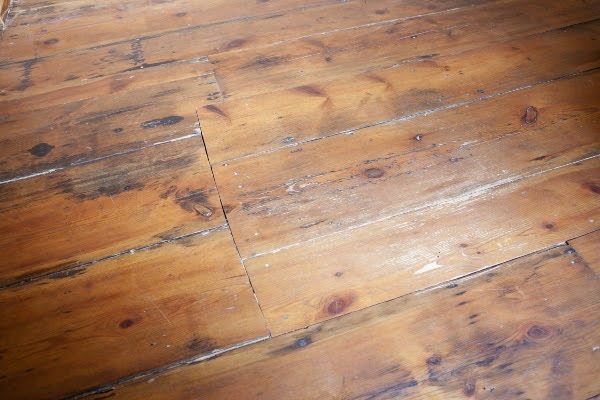
Buckling or blisters in wood flooring
If your wood flooring is buckling or has blister spots, this could be evidence of termites in your house. Subterranean termites can cause damage to the subfloor, which can make your wood flooring look discolored or have a wavy appearance on the surface. Termites prefer the softer subfloor wood or supports, so you may not notice until they have done quite a bit of damage.
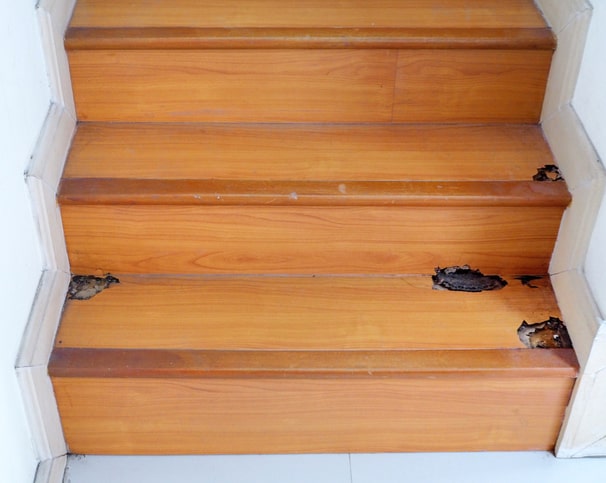
Hollowed or damaged wood
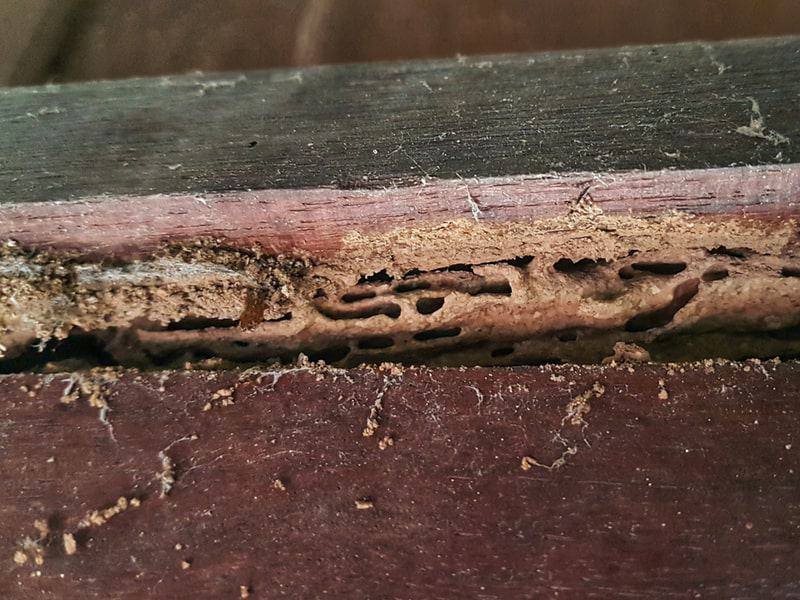
Termites feed on wood from the inside, creating maze-like or honeycomb patterns. This concealed damage can weaken walls and floors, causing them to sound hollow when tapped. Since they consume the wood interior, signs of termite damage are often hard to detect until serious structural problems develop.
Swarmers (flying termites)
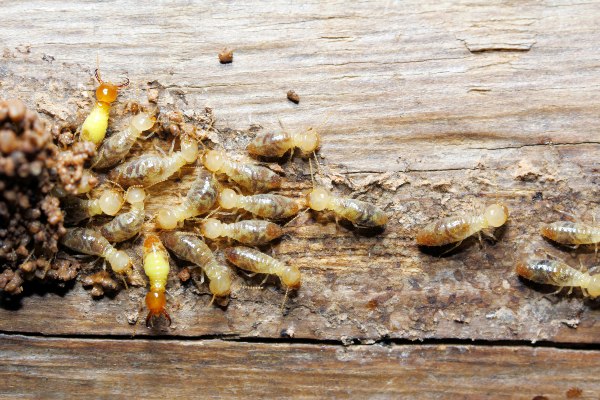
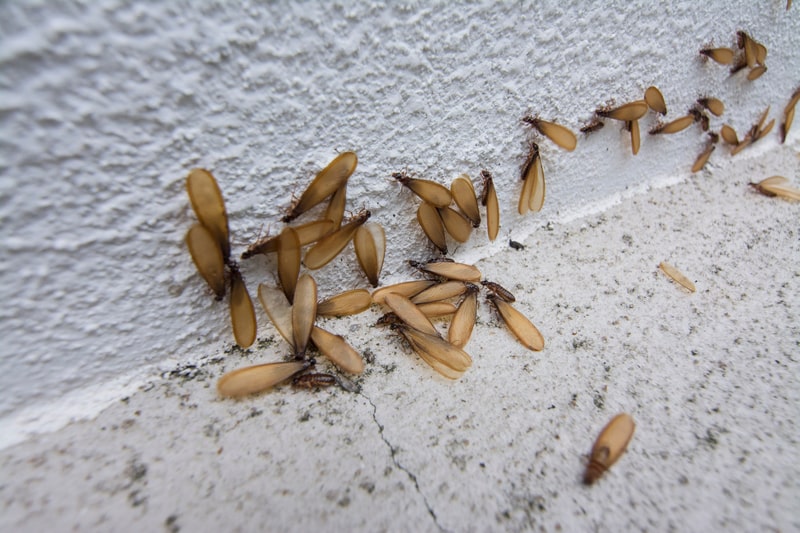
Swarmers are flying termites that branched off from their colony to find mates and begin new colonies. Swarming happens at certain times of the year, and there may be hundreds or thousands of flying termites in a swarm. If you notice a swarm of flying termites in or near your property, it can be a sign that termites may have lived there for several years.
Discarded termite wings
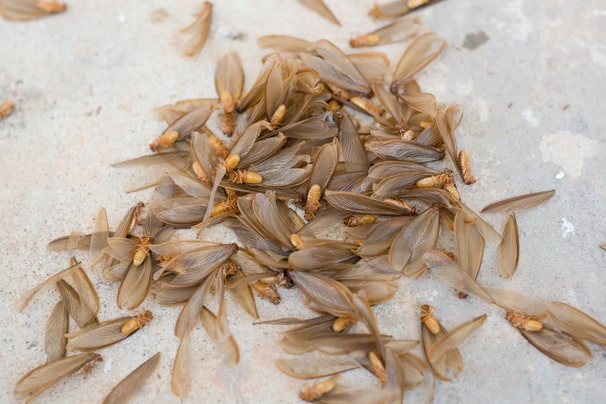
Discarded termite wings can be found near closed windows, doors, and other home-access points. Termites fly toward the windows as they are attracted to the light from outside. They intentionally twist their wings off when they land because they won't need them again. You may notice these discarded wings, but that doesn’t mean the termites are dead–they may be busy trying to build a new colony.
Hard to open doors and windows
When the termites eat through the wood in search of cellulose, they cause damage to the wood, causing it to buckle or warp. This termite damage can make opening and closing your doors and windows difficult. Stuck windows and doors that won't fully close could be early warning signs of a termite infestation.
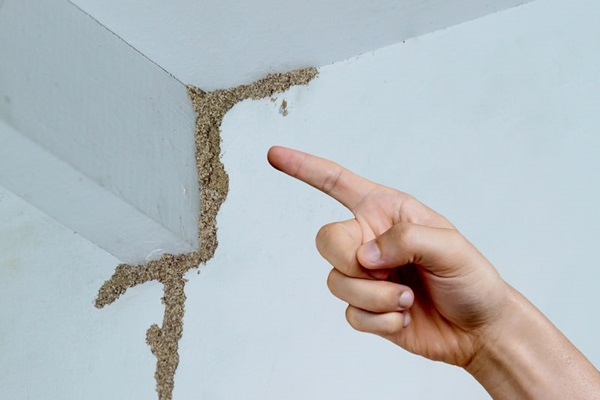
Mud tubes
Subterranean termites nest underground and forage up to their food source, which is often a house structure. Pencil-sized mud tubes can be found where the ground meets your house or any food source, like a tree or shed. Their tunnels help block out cool, dry air, turning your home into an environment where they thrive.
Drywood termite droppings (frass)
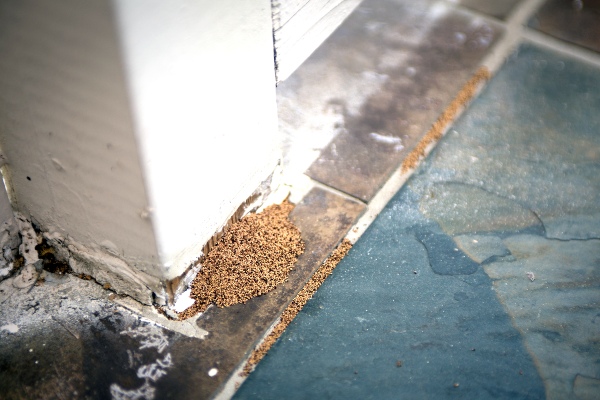
Drywood termites nest inside of wood. While tunneling and eating the wood they're infesting, they create galleries. To keep these galleries clean, they create kick-out holes where they remove their droppings. Their droppings are wood, and when they land on window sills or floors, they can create small mounds of pellets that resemble sawdust or coffee grounds.
Live termites found during remodeling
If you're remodeling your home, keep an eye out for termites living in the wood you're tearing out. Removing the damaged wood will not remove the termite infestation. They can be found in the soil around your home, in rotting or damp wood components, or anywhere on your property where they can feed.
Damaged drywall, bubbling under paint or wallpaper
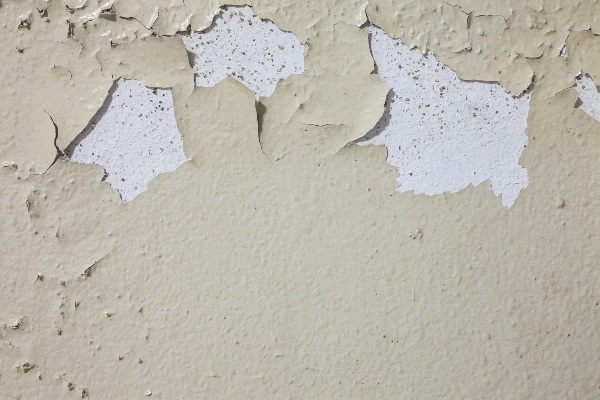
Drywall contains paper – and paper contains cellulose, a termite's primary food source. As termites chew, they will leave behind small trails on the surface of and inside drywall. You may notice Pin-sized holes in your drywall or wallpaper where the termites have eaten their way through. These pinholes, capped with dirt and bubbling beneath your wallpaper or paint, can be a sign of termites.
Moldy scents
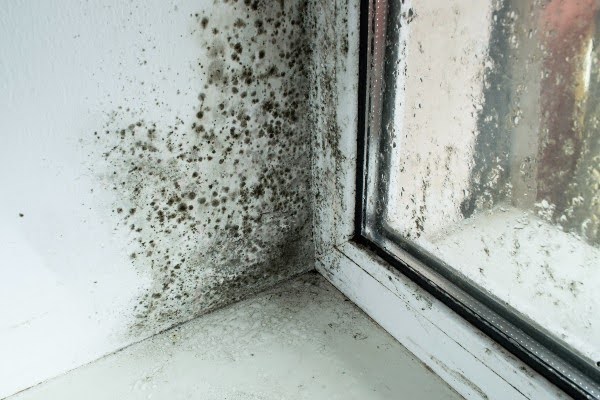
Termites like wood that is in high moisture situations, which usually includes a moldy scent. If you notice a musty smell and can't find the source, call your local Terminix termite technician for a termite inspection
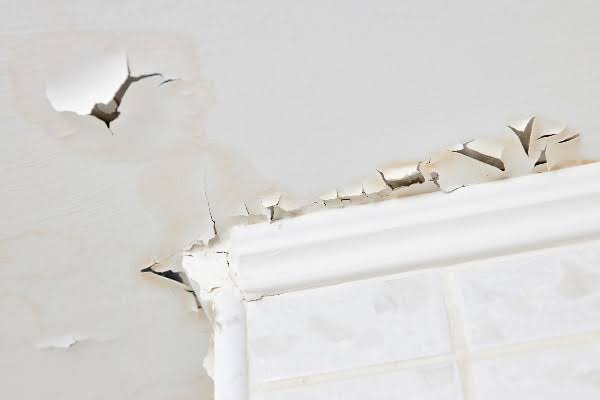
Dipping ceilings, buckling support beams, or other severe structural damage
A termite infestation can cause damage to the structural elements of your building. Termite-damaged support beams can cause ceilings to dip and crack and floorboards to buckle. Their relentless tunneling can cause wood to fail. These damages can be costly to repair.
Overly squeaky floors and loosening tiles
When termites eat your flooring or subflooring, they can loosen the tiles. If you have wooden floorboards, termite damage causes them to buckle and blister, resulting in more noise as you walk over them and apply pressure to the damaged areas.
Signs of Termites: Terminix's Guide to Common Termite Signs
How fast can termites cause damage?
Termites are not a direct health hazard but primarily pose a safety risk by silently compromising a home's structural integrity. Their slow, hidden damage can persist for years, leading to extensive and expensive repairs.
While taking immediate action to treat a termite infestation is essential, it's equally important to be careful about the treatments you use in and around your home. Different termite species have different behaviors, and treatment should be specific to the species you're targeting. Using the wrong DIY or over-the-counter termite solutions can often be ineffective and potentially dangerous. The best course of action is to call your local Terminix technician at the first sign of a termite infestation.
Checking for signs of termite activity
At Terminix, we understand the anxiety termite infestations can cause, which is why early detection is crucial. Our termite inspections are comprehensive and designed to uncover even the most subtle signs of termites. We examine your property and use advanced tools to help detect termite activity within walls and foundations. We then tailor treatment plans to your specific situation and offer preventative measures to help safeguard your home against future termite infestations. Schedule a termite inspection to get started!



.jpg?rev=447dc7eb22a14e04ac3fd58d88ef91e1&hash=E3C25C364BF796C0DD8A93F85A2A3D4C)