

In the heart of the colony: Termite queens
Queen termites are typically the largest and longest‐lived members of a colony. The queen's sole function is to lay eggs continuously, ensuring the colony's survival and growth. The queen usually cannot move freely, so worker termites feed, groom, and protect her.
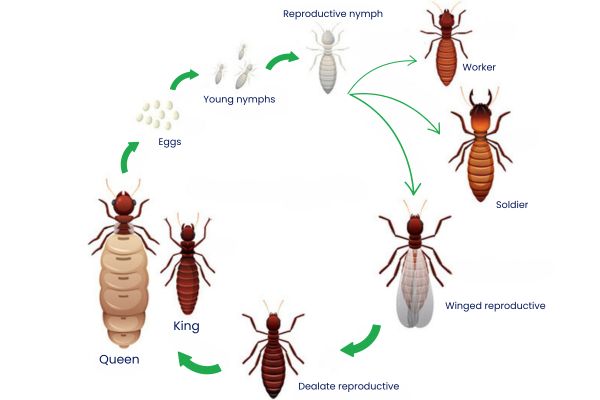
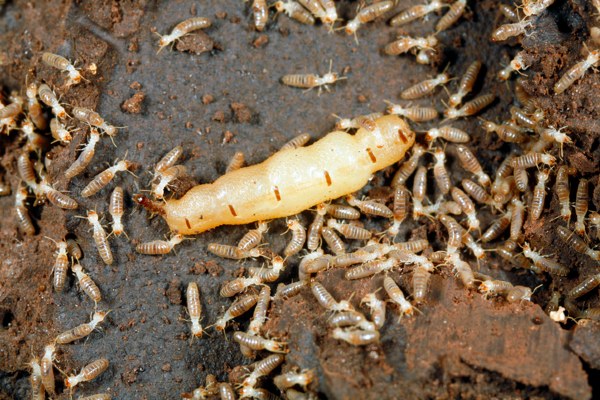
Locating the queen termite seems like it would be an easy task based on her appearance, but she's likely hidden deep within the colony. However, there are several characteristics that help distinguish her from other members of the colony:
- Size: The size of a queen termite can fluctuate based on the number of eggs she lays, but termite queens can grow to over four inches long and two to three inches in diameter. Her head and legs remain unchanged as the queen's body swells with eggs.
- Color: The queen termite is similar to the worker termites but darker in tone. Subterranean termite queens are typically light or white, and drywood termite queens are yellow‐brown.
- Behavior: Queens are confined to the nest chambers, and their primary role is to ensure the colony's survival and growth through reproduction.
The lifecycle and reign of the termite queen
The queen termite's lifecycle begins with mating during a nuptial flight, after which she establishes a new colony. Once settled, she lays eggs that hatch into larvae, eventually becoming workers, soldiers, and future reproductives. The queen's main task throughout the colony's growth is continuous egg‐laying. She's supported by worker termites who provide care and protection.
The lifespan of a termite queen varies depending on factors such as species, environmental conditions, and colony health. Some queen termites can live for several years or even decades, continuously laying eggs throughout their lifespan. The reproductive capacity of a queen may decline over time, leading to the eventual decline or demise of the colony.
Queen's purpose
The queen termite serves as the primary reproductive individual in the colony. Her main purpose is to produce offspring. Additionally, the queen emits pheromones that regulate the behavior and development of other termites in the colony. The pheromones help maintain social cohesion and reproductive control.
What is the queen's role in swarming and moving locations
During swarming, the queen termite mates with a male alate and stores sperm for future egg‐laying, enabling new colonies to start. In relocation, she finds a suitable nesting site and, with worker termites, excavates a chamber to lay eggs, ensuring the colony's foundation and growth.
Egg‐laying process
The egg‐laying process for a queen termite, known as oviposition, begins with her selecting a suitable location within the colony to lay eggs. She typically chooses areas with optimal temperature and humidity levels to ensure the eggs' viability.
Using her ovipositor, a specialized organ for egg deposition, the queen lays numerous eggs, which are then tended to and cared for by worker termites. These eggs hatch into larvae, beginning the colony's growth and expansion. The queen continues to lay eggs throughout her lifespan.
Control over the termite colony
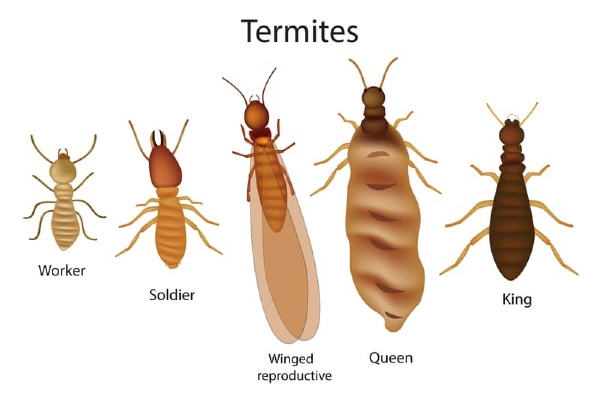
To understand how the queen controls the colony, you must first understand the hierarchical structure of it. The termite colony is organized into a hierarchical structure with distinct castes, each serving specific roles essential for the colony's functioning.
At the top of the hierarchy is the termite queen. Supporting the queen are the king, her mate, and the alates, the winged reproductive termites involved in swarming and establishing colonies. Below them are the workers. They are the largest caste responsible for foraging, nest construction, and caring for the queen and her offspring. Finally, there are soldier termites. They defend the colony from predators and intruders.
Termite queen pheromones
Termite queen pheromones play a crucial role in regulating the behavior and development of other colony members. The chemical signals emitted by the queen influence various aspects of colony life, including reproduction, caste differentiation, foraging behavior, and nest maintenance.
One of the primary functions of queen pheromones is to inhibit the development of other female reproductives, ensuring that the queen remains the primary egg‐layer in the colony. The queen's pheromones also stimulate worker termites to care for the queen, her eggs, and the young larvae.
What happens when the queen termite dies?
When the queen termite dies, two scenarios can occur. In established colonies with multiple supplementary reproductives, the death of the primary queen may not immediately disrupt colony function. When the primary queen dies, one of these supplementary reproductives may assume the role of the primary egg layer, ensuring reproduction continues within the colony.
On the other hand, in newly established colonies or colonies without supplementary reproductives, the queen's death can lead to a gradual decline in population and eventual collapse. Without the continuous production of eggs, the colony cannot replenish its members, and its ability to sustain itself diminishes over time.
How to get rid of termite queens
Termite queens play a central role in colony reproduction and survival, making their elimination essential for long‐term control. Termites can infiltrate homes and infest difficult‐to‐reach areas like under floors and behind walls. Their small size allows them to enter through tiny cracks, making detection and elimination without professional help challenging.
Contacting a professional for termite control is the best option. At Terminix, we have customized solutions for each type of termite designed to target and eliminate colonies, including their queens. Our technicians will assess your property and implement effective treatment and prevention strategies to help protect your home from termites.