

Signs to know if you might have stinging pests
Stinging pests such as wasps, hornets, and bees can not only be a nuisance but also pose a risk to you and your household. These insects can be particularly aggressive when their nests are disturbed, leading to painful stings and, in some cases, severe allergic reactions. It is essential to identify early warning signs of wasp, bee, and hornet infestations to take necessary action and prevent harm.
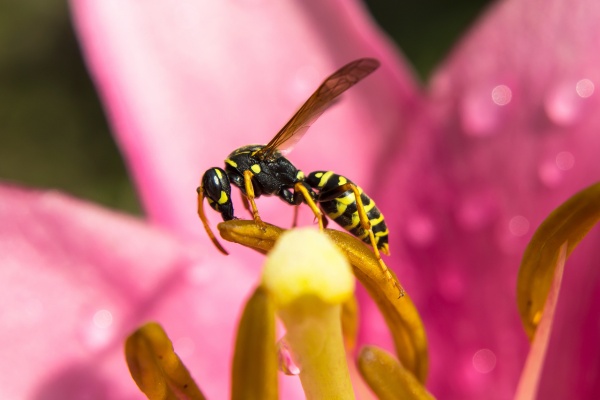
Signs of wasps and hornets
If you suspect a wasp or hornet infestation, it’s important to take immediate action to prevent any harm to you or anyone in your household. Here are a few signs of wasps and hornets to look out for:
It's important to stay alert for any signs of wasp infestations or hornet infestations on your property. By identifying these pests early on, you can take the necessary steps to control their presence. Seeking professional help is always an option if you're unsure about how to handle the situation.
What attracts wasps and hornets
There are several things that might attract wasps or hornets in or around your home. These include sweet-smelling substances like flowers, fruit, and nectar, protein-rich foods like meat and fish, and sugary drinks and foods. They are also attracted to areas that provide shelter, such as trees, bushes, and man-made structures like sheds or attics. If there are any openings or gaps in your home's exterior, they may use them as entry points. It's important to always seal any cracks or openings and keep your home clean and free of debris to prevent a hornet or wasp infestation.
Identifying stinging pests
Stinging pests can vary in appearance based on the species. Identifying them can be tricky, as some species of wasps and hornets can look very similar to one another. However, there are certain physical characteristics, such as body shape, coloration, and wing patterns, that can help distinguish between different types. Here are some key characteristics that can help you identify common stinging pests:
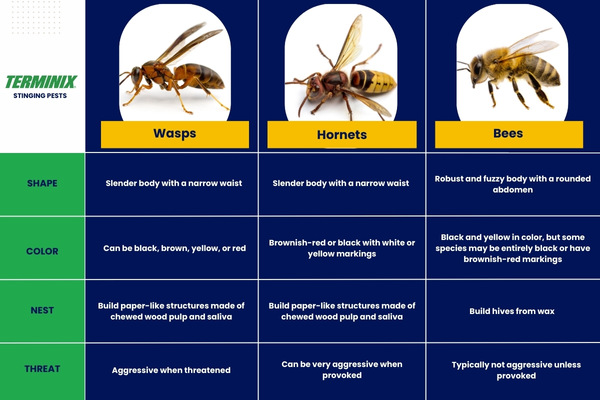
Stinging pest nests
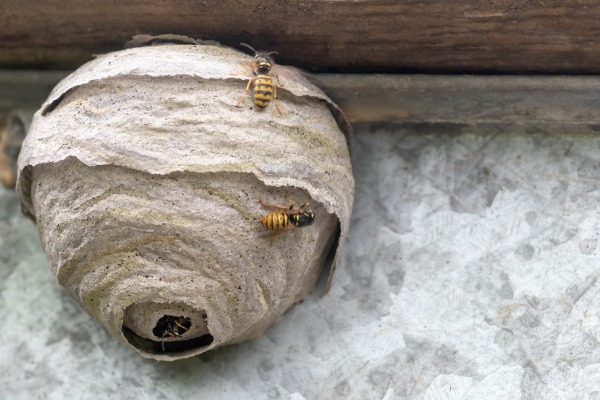
Wasp and hornet nests are typically paper-like structures made of chewed wood pulp and saliva. They can vary in size and shape depending on the species, with some nests being as small as a golf ball and others as large as a basketball or even bigger. The nests can be found in visible areas such as under roof eaves, in trees, bushes, or in man-made structures like sheds or attics. If you notice signs of hornets or wasp infestations, it's important to avoid disturbing them, as this can provoke the stinging pests and cause them to attack. It's best to contact a professional to handle a wasp infestation or hornet infestation safely and effectively.
Signs of a bee infestation
If you see active bee nests, bee swarms, bees inside your home, dark spots on your walls or ceilings, and wood openings, these could be signs of a bee infestation. It's crucial to take action quickly to prevent further damage to your property. We recommend contacting a beekeeper or a professional bee control service to handle the situation safely and effectively.
What to do if you have a stinging pest infestation
If you think you have a hornet or wasp infestation, it’s critical to take immediate action to protect yourself and your household. Here are a few ways to stay safe:
At Terminix, we take pride in providing top-tier pest control services to our customers. Our team of highly trained technicians is equipped to handle any pest problem you may be facing, including wasp and hornet infestations.
Our comprehensive pest control services are essential for homeowners, especially when faced with any signs of a wasp infestation or hornet infestation that may escalate into a serious problem if not addressed promptly. If you're in need of a reliable and trustworthy pest control provider, don't hesitate to contact us today for a free inspection. We're here to help keep your home and family safe!