


Different Types of Spiders: Exploring Spider Species
Spiders are often misunderstood and feared, but these arachnids play crucial roles in our ecosystems as both predators and prey. There are over 48,000 different types of spiders known to science, and this number continues to grow as researchers discover new species every year. Each spider type features its own unique characteristics, from the ingenious web designs of orb-weavers to the remarkable hunting tactics of jumping spiders. Learn about spider identification and how you can spot each type of spider.
Common household spiders
Finding spiders in your home can be a nuisance. However, not all spiders are created equal — while many are harmless, others can pose health risks to humans. Being able to distinguish between common household spiders allows us to make informed decisions on whether a spider can stay or needs to be safely removed. Whether it's the elusive cellar spider lurking in damp basements or the ever-present domestic house spider, let's take a look at the most common household spider types:
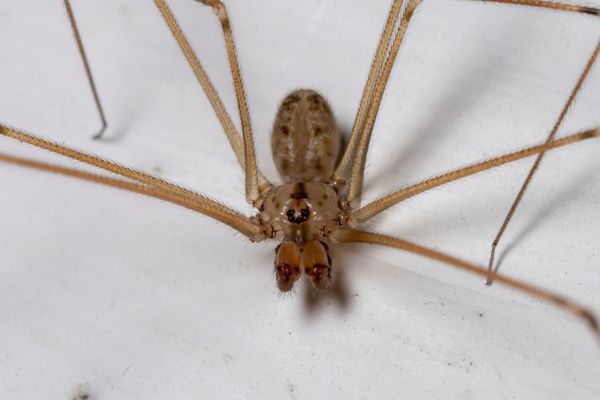
Cellar spider
The cellar spider, also referred to as daddy long legs, is often recognized by its long, thin legs and small body, similar to other spider types. These spiders are identified by their pale yellow or light brown color, which allows them to blend in with their environment. Typically, cellar spiders can be found in dark, undisturbed areas like garages, sheds, or any locations that provide a quiet and isolated shelter. They make their webs in corners of rooms, ceilings, basements, and cellars—hence their name.
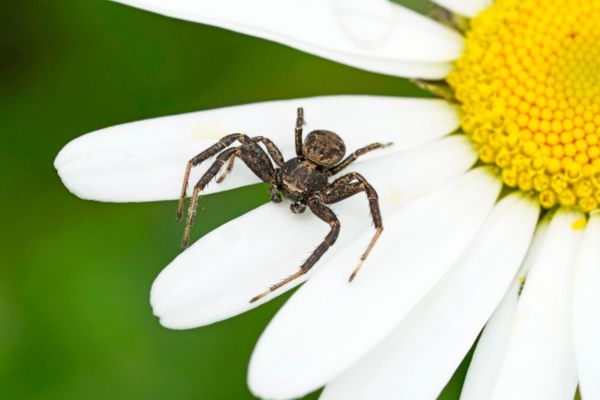
Crab spider
Crab spiders are known for their unique, broad, and flat bodies that resemble crabs. Their legs, which extend sideways, allow them to walk similar to that of a crab, moving forward, backward, and sideways. This type of spider can be a variety of colors, including white, yellow, green, or brown. Many crab spiders prefer habitats like gardens, meadows, and forests where they can easily camouflage amongst flowers, leaves, and bark. Some species are also found under the bark of trees, within leaf litter, or among rocks and debris.
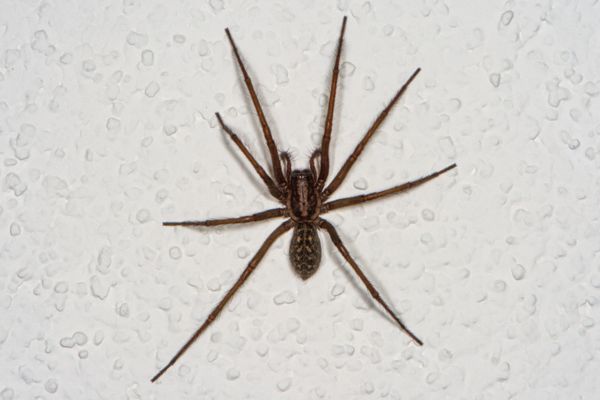
Domestic house spider
The domestic house spider is a common sight in our homes, characterized by its sizable body and long, slender legs. Typically, this spider type is a brownish color and has a distinctively round abdomen. Notable for their speed and agility, domestic house spiders can move quickly when disturbed. They tend to prefer darker, quieter areas where they are less likely to be disturbed, such as basements, garages, and attics. However, it's not uncommon to find them in living spaces, especially in corners of rooms, behind doors, and near window frames, where they can prey on insects attracted by light.
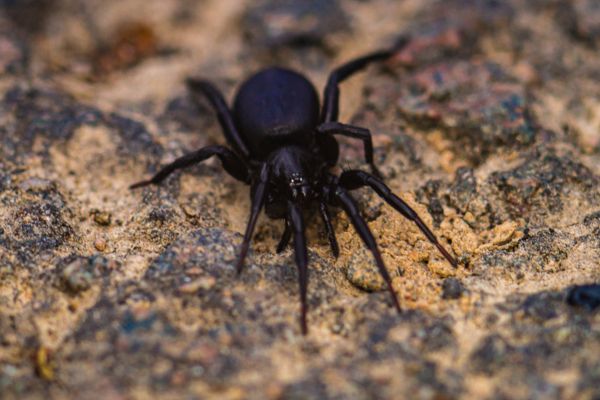
Funnel‐web spider
Funnel‐web spiders can be identified by their medium to large size, with robust bodies and powerful, stout legs. They are typically black or brown shades, allowing them to blend into their surroundings effectively. Funnel-web spiders are primarily found in Australia, although some species exist in other parts of the world. These spiders prefer moist, cool environments and are often found in burrows in the ground, under rocks, in rotting logs, or in dense shrubbery. In suburban areas, they might take residence in shoes left outside, under houses, or in garden sheds.
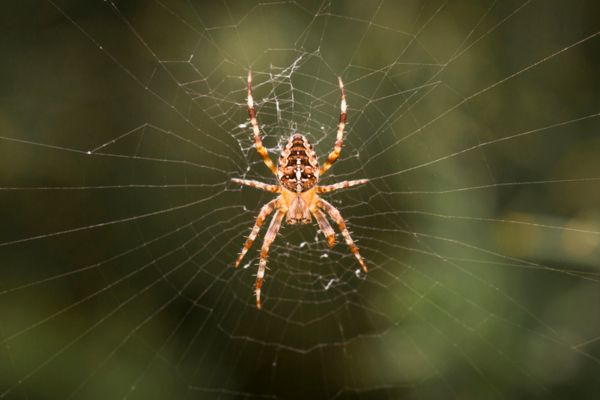
Garden spider
Garden spiders, also referred to as Orb weavers, are a common sight in our outdoor spaces. You can identify this spider type by the bright colors and patterns on their bodies, with hues ranging from yellow to brown. A distinct characteristic of the garden spider is the unique webs they create, featuring a unique zigzag pattern of silk called a stabilimentum, which helps them attract prey, provide stability, or camouflage the spider. Typically, garden spiders can be found in a variety of outdoor settings, such as gardens, fields, and forests. Their presence is particularly noticeable from late summer to early autumn when they reach adulthood, and their webs become more visible.
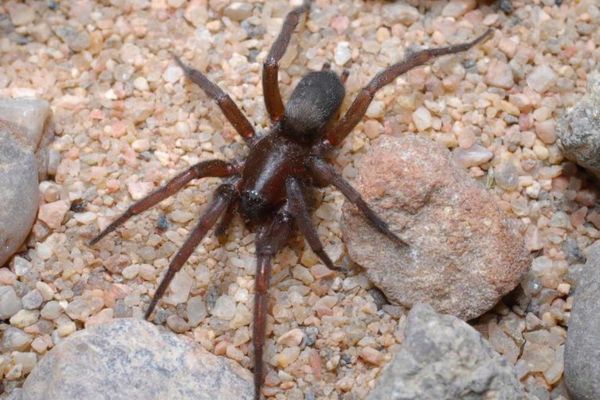
Ground spider
Ground spiders are typically medium-sized and exhibit a range of colors, often brown or gray, which helps them blend into their habitats. Their bodies are usually flattened, a feature that enables them to easily hide under rocks, leaves, and debris. These habitats not only provide them with ample cover from predators but also present abundant opportunities to hunt various ground-dwelling insects.
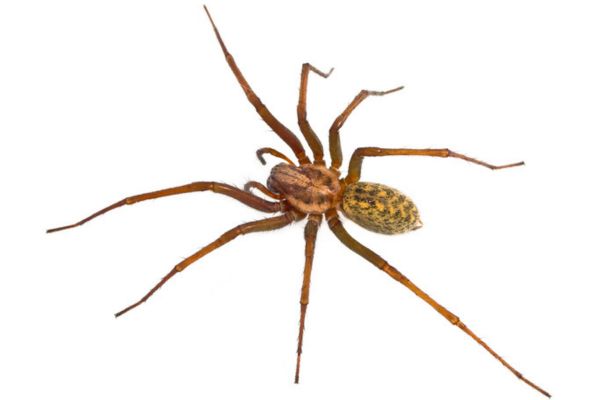
Hobo spider
The hobo spider has a brownish body with a slightly darker pattern on its abdomen, which can make it difficult to distinguish from other species visually. These types of spiders are predominantly ground-dwelling and prefer to live in dark, moist environments. Commonly found in the Pacific Northwest of the United States, they are often spotted in basements, crawl spaces, and other secluded areas of homes, as well as under rocks and woodpiles outdoors. The giant house spider is the main predator of the hobo spider, and since they are related, they are often indistinguishable from the hobo spider except for the giant house spider's larger size. Hobo spiders have not been shown to be of medical importance. They do not cause necrotic wounds from their bites.
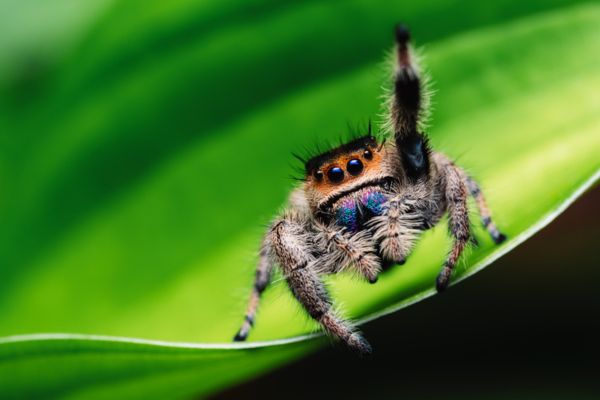
Jumping spider
Jumping spiders are known for their distinctive large eyes, which provide them with excellent vision for hunting prey. Jumping spiders generally have compact bodies and short, robust legs. They have a wide range of colors and patterns, depending on the species, making them among the most visually distinguishable spiders. These spiders are commonly found in a variety of environments, from forests and gardens to human homes. Jumping spiders can usually be spotted in areas that receive plenty of sunlight, such as on walls, plant leaves, and windowsills, where they can spot and ambush their prey.
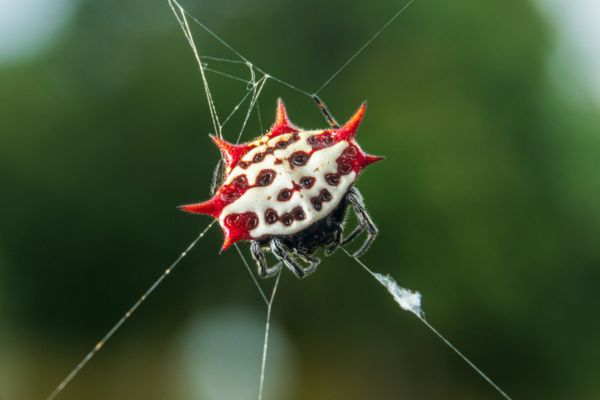
Spiny-backed orb weaver spiders
The Spiny-backed Orb Weaver Spider features a distinctive hard, shell-like abdomen adorned with sharp spines. Its body color can vary significantly, exhibiting vibrant patterns in hues of white, yellow, red, and black. This type of spider is typically found in warm climates and prefers habitats that include gardens, forests, and wooded areas, where they can anchor their webs between branches and plants.
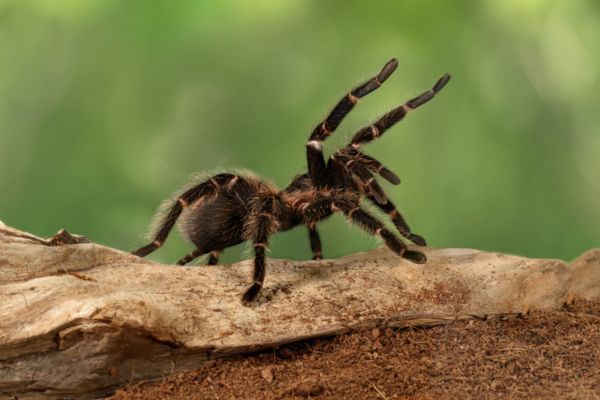
Tarantula spider
The tarantula spider is prominently known for its significant size and hairy body. This spider type can exhibit a range of colors, from brown and black to more vibrant shades, such as blue or green, depending on the species. Their large, strong fangs are capable of delivering a bite; however, the venom of most tarantula species is not considered dangerous to humans. Tarantulas are primarily ground-dwelling creatures that prefer to reside in burrows, which may be naturally occurring or dug by the spider itself.
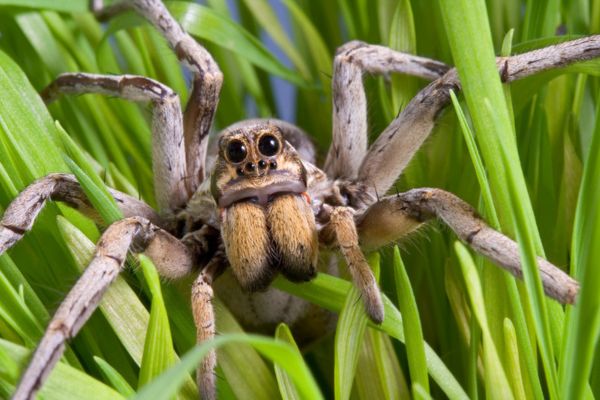
Wolf spider
The wolf spider is characterized by its large, hairy body and excellent eyesight, which it utilizes to stalk prey rather than spinning webs. Typically brown to grayish in color with various markings or bands, the most distinctive feature of this type of spider is their eyes — they have three rows of eyes with two prominent ones shining in the front. They can be found in a range of habitats like forests, grasslands, and deserts, as well as human homes.
Though wolf spiders are venomous, their venom is not considered dangerous to humans under normal circumstances. It is primarily used to immobilize their prey, which includes insects and other small invertebrates. If threatened or provoked to bite, the venom of a wolf spider can cause mild reactions in humans, such as swelling, mild pain, and itching.
Woodlouse spider
The woodlouse spider preys on woodlice and are not venomous to spiders.
Types of venomous spiders
Venomous spiders can be a concern for homeowners due to their potent bites and striking appearances. Common venomous spider types include the infamous black widow, brown recluse, and yellow sac spider. Luckily, many of these common types of spiders are covered under our PF365+ plans.1 Understanding venomous spider identification is crucial, not only for medical reasons but also to appreciate the role these insects play in our ecosystems.
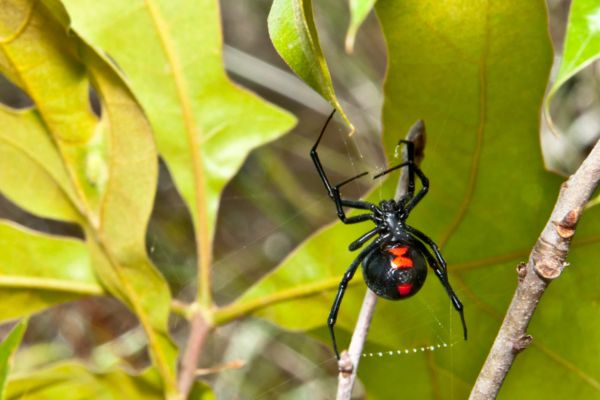
Black widow spider
The black widow spider is easily recognizable by its glossy black body and the distinctive red hourglass shape on the underside of its abdomen. Mature females, typically much larger than males, possess this distinct coloration and are the ones who are most dangerous to humans due to their potent venom. The venom of the black widow spider is a neurotoxin, which can be particularly dangerous because it affects the nervous system. The potency of the venom can make it fifteen times stronger than that of a rattlesnake, though black widows are much less likely to deliver a fatal bite to a human due to the small amount of venom they inject.
The black widow can be found in a variety of environments but prefers dark, secluded areas. Common hiding places include sheds, garages, unused pots and gardening equipment, under rocks, and in woodpiles.
Brown recluse spider
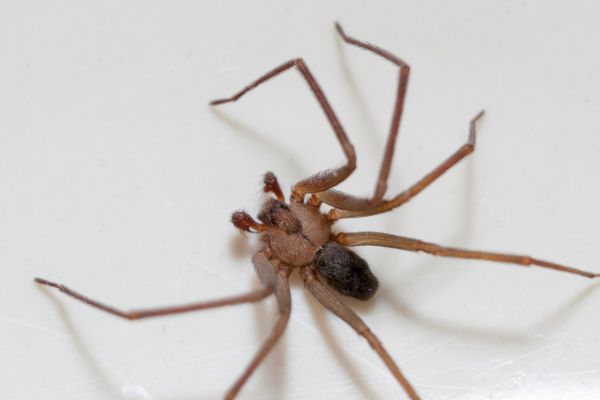
The brown recluse spider is known for its distinctive violin-shaped mark on its back. This spider type is typically light to dark brown, though its color can range closer to a yellow-tan to a dark brown. This spider is unique for having six eyes, arranged in pairs - a characteristic that sets it apart from most other spider species with eight eyes. The brown recluse spider favors dry, sheltered environments such as woodpiles, sheds, closets, garages, cellars, and other secluded areas.
The venom of a brown recluse is particularly dangerous due to its necrotic nature, which can cause significant damage to the skin and underlying tissues due to secondary infections, leading to large, ulcerating sores that are slow to heal.
Yellow sac spider
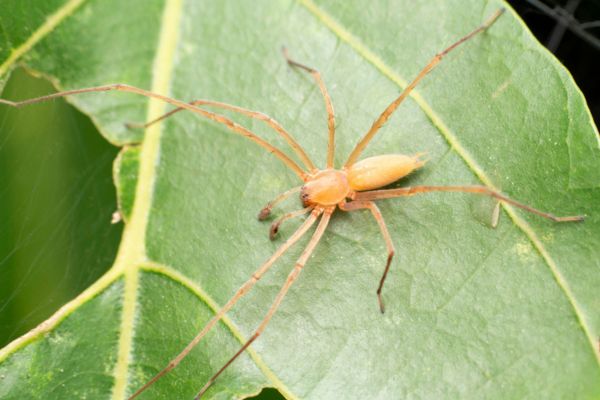
The yellow sac spider is a relatively small species, most recognizable by its pale yellow or light green color. These spider types have an elongated body, longer front legs, and a round stomach. They can be found in both indoor and outdoor environments, typically seeking out secluded places to build their webs.
The venom of the yellow sac spider is not deadly, but their bite can cause a variety of symptoms, including localized pain and swelling, itching, and in some cases, a necrotic lesion similar to, but less severe than, those caused by brown recluse spiders.
Prevent different types of spiders in your home
Although finding spiders in your home is inevitable, it's important to know how to prevent these creatures from taking up permanent residence. By keeping your living space clean and sealing any cracks or openings, you can significantly reduce the likelihood of spiders making your home theirs. Remember, spiders are generally more afraid of you than you are of them, and they play a crucial role in our ecosystem by controlling pest populations.
Dealing with spiders in your home? Contact the Terminix spider experts today.