

Identifying jumping spiders: What are they?
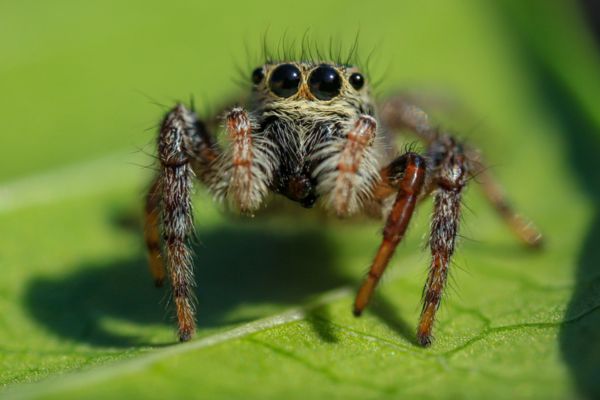
Jumping spiders, belonging to the family Salticidae, are known for their exceptional jumping ability, which they use to pounce on prey or navigate their environment. Unlike many spiders that rely on webs to catch food, jumping spiders use their acute vision, provided by their large, forward-facing eyes, to spot and stalk their prey before leaping onto it. This hunting method, along with their agility and speed, makes them effective predators.
The significance of jumping spiders extends beyond their behavior and appearance. They play a crucial role in controlling insect populations, acting as natural pest control agents in various ecosystems.
Discovering the jumping spider’s unique traits and behaviors
Jumping spiders are known for their distinctive physical appearance and size variation, typically ranging from one millimeter to about an inch. These spiders have vivid colors and patterns, which serve as camouflage and play a crucial role in mating rituals. Equipped with four pairs of large eyes, they have a nearly 360-degree field of view, with their large anterior median eyes providing an acute vision that aids in hunting and navigating their environment. This visual acuity allows them to accurately judge distances and execute precise leaps onto prey or across foliage, with some species capable of seeing up to 10 to 12 inches away – a remarkable feat considering their size. Their diet primarily consists of insects and sometimes nectar.
The habitat and distribution of jumping spiders are equally diverse. These adaptable arachnids are found in a wide range of environments, from tropical forests to temperate regions and even urban areas. Among the notable species, the bold jumping spider and the zebra jumping spider are both commonly found in the United States.
How can the jumping spider jump
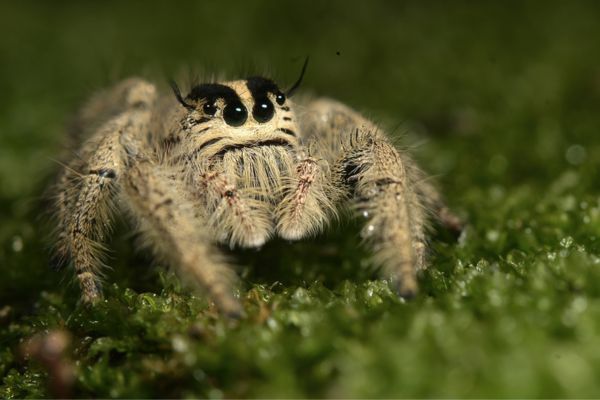
Jumping spiders primarily leap as a method to catch prey, utilizing a unique jumping mechanism that doesn't solely rely on their leg muscles. Instead, they rapidly increase the blood flow, contracting special muscles to increase the flow of blood to their legs. This is complemented by an attachment mechanism involving silk threads that serve as a safety line during jumps. Precision landing is a critical aspect of their leaping ability, facilitated by their excellent vision. Their large, forward-facing eyes provide them with accurate depth perception and visual guidance, allowing them to judge distances accurately and execute complex maneuvers mid-air. This combination of physical adaptations and behaviors enables jumping spiders to navigate their environment and hunt efficiently.
The life cycle of a jumping spider
Jumping spiders typically live for about a year, though this can vary based on species, environmental conditions, and predation risks. Their life cycle begins with the egg stage, where the female lays eggs in a secure, hidden location. Once hatched, the spiders enter the spiderling stage, during which they are highly vulnerable and undergo several molts, shedding their exoskeleton to grow. As they progress to juveniles, they continue to molt and develop, gradually taking on the characteristics and behaviors of adults. Upon reaching maturity, jumping spiders engage in mating, with females then laying eggs to continue the cycle.
How to prevent jumping spiders in your home
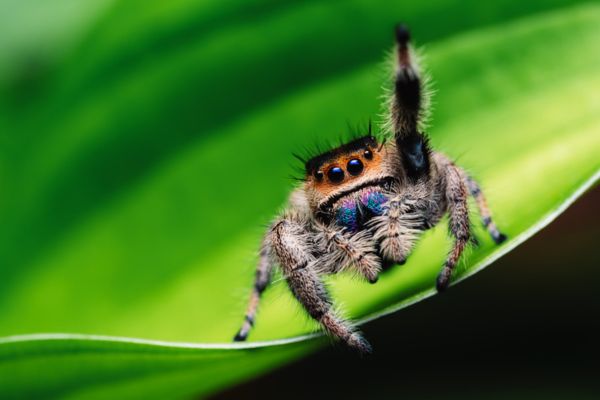
If you find a jumping spider in your home, it's important not to panic. These spiders are generally harmless to humans and can even help control pests. However, if their presence is unwelcome or if you're dealing with a significant infestation, there are steps you can take.
At Terminix, our technicians can assess your home for potential entry points for spiders and other pests and provide treatments that reduce the likelihood of future infestations. Help prevent these pests from taking up residence in your home and get spider control from Terminix today.