Spiders
How to identify a spider in your house
Spiders come in a wide range of shapes, sizes, and colors. From the tiny, common house spider to the more intimidating black widow, each species has unique traits that can impact how they should be managed or avoided.
Being able to identify the type of spider in your home can help you determine whether the spider is harmless or poses a potential threat. Additionally, proper spider identification can guide treatment methods when dealing with a spider infestation.
What does a spider look like?
Regardless of species, spiders share a few key physical characteristics that can make spider identification easier. All spiders have:
- Eight legs, which are segmented and allow for excellent mobility
- Their bodies are divided into two main segments: the cephalothorax, which combines the head and thorax, and the abdomen, where vital organs are housed
- Spiders also have multiple eyes, usually eight, arranged in specific patterns that vary by species
- They possess fangs (chelicerae) connected to venom glands, which they use to immobilize prey
While these characteristics are consistent, other features vary significantly across spider families, including their size, color, web structure, habitat preferences, and hunting techniques.

Common spiders in the U.S.
There are approximately 3,500 species of spiders found in the United States. These species vary widely in size, behavior, and habitat. Being aware of some of their characteristics can help with spider identification. Some common spiders that can be found in the U.S. include:
- The Joro spider is an orb-weaving spider known for its striking yellow, blue, and red coloration. Females can have up to a three-inch leg span. This spider weaves large, intricate webs, often in high places like trees and power lines. While its presence may be intimidating, the Joro spider is not dangerous to humans and is considered beneficial for controlling insect populations. The spider is not found across the U.S. and has only been found in Alabama, Georgia, South Carolina, North Carolina, and Tennessee. Other native orb weavers look similar and are found throughout many areas of the United States.
- Jumping spiders are small spiders known for their incredible jumping ability, which they use to hunt prey and navigate their environment. These spiders are small, typically about a quarter-inch to one-inch long, with a compact body and large, forward-facing eyes. They usually have a hairy or fuzzy appearance, and their colors can range from black to brown, with some species displaying vibrant patterns or iridescence.
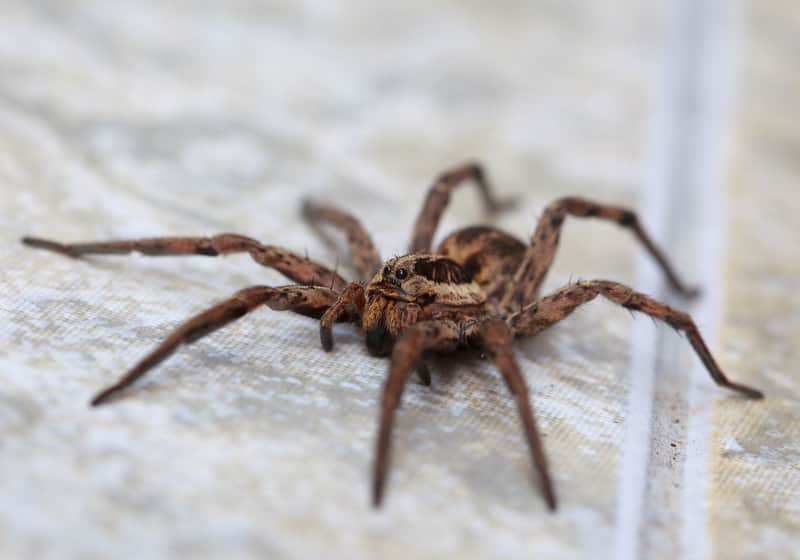
- A wolf spider's body typically ranges from a half-inch to two inches long. They can have brown, gray, or black hairs with distinct dark markings or stripes. They have long, powerful legs and prominent forward-facing eyes that help them see at night. Wolf spiders do not spin webs to catch prey and will actively chase and ambush their prey. Wolf spiders are generally harmless to humans, although their bite may cause mild irritation.
- Tarantulas are typically large spiders, with leg spans ranging from four to 11 inches, depending on the species. Their bodies alone can be up to four and a half inches long. They have a distinctive appearance with a wide, flat body and long legs covered in bristles. Tarantulas are generally not aggressive towards humans but can deliver a painful bite if threatened.
- The spiny-backed orb weaver is a small spider recognized by its distinctive, spiky, red or orange abdomen. These spiders create intricate orb-shaped webs that can be found in gardens and wooded areas. Despite their intimidating appearance, they are harmless to humans and primarily feed on small insects trapped in their webs.
- The yellow sac spider is a small spider, typically about a quarter of an inch to ⅜ an inch long. Its body is pale yellow to light green, with darker brown markings on its mouthparts and legs. These spiders are known for their silk sacs, where they hide during the day. Indoors, they can be found in corners or along walls.
- Cellar spiders, often referred to as "daddy long legs," are a common type of spider known for their incredibly long, thin legs and small bodies. Despite their nickname, they are not to be confused with harvestmen, which are also called daddy long legs but are not true spiders. Cellar spiders have a small, pill-shaped body that is typically pale yellow to light brown or gray. They prefer dark, damp places like basements, crawl spaces, and corners of ceilings. Although venomous to their prey, their venom is harmless to humans, as their fangs are too small to pierce human skin.
- The huntsman spider is a large, fast-moving spider known for its long legs, which can span five inches or more. They have a flat, crab-like body that typically measures about one inch long. Huntsman spiders are usually brown or gray with darker markings, and they have hairy legs that help them grip smooth surfaces. Despite their intimidating size, they are generally non-aggressive and not dangerous to humans.
- Woodlouse spiders typically measure about 3/10 of an inch to ⅗ inches long. They have a distinctive reddish-brown body with a shiny, rounded abdomen that is pale yellow or beige. Its most notable feature is its large, powerful fangs, which it uses to prey on woodlice. Despite its fearsome appearance, the woodlouse spider is generally not harmful to humans.
Spider identification can be complex, as many species can have similar appearances. If you’re concerned about spiders inside or outside your home, it's best to call a professional for removal.
Recognizing venomous species of spiders
What does a spider look like if it’s a venomous species? There are a few that can be found in the United States. Some of the most notable include:

Black widow spiders are known for their shiny black bodies and distinctive red hourglass marking on the underside of their abdomens. Adult females are typically larger and have a black body with a bright red hourglass marking on the underside of their abdomen. Males are usually smaller and lighter in color and may have less pronounced or absent hourglass markings. They can be found throughout the U.S., and their venom can cause severe pain and muscle cramps but is rarely fatal.

The brown recluse spider is typically found in the central and southern U.S. Brown recluses have a violin-shaped marking on their backs. Their venom can cause significant tissue damage and, in rare cases, systemic symptoms.

Hobo spiders are native to the Pacific Northwest and are known for their fast movements and funnel-shaped webs. Their bite can cause localized pain and, in some cases, necrotic lesions, although the severity of their venom is debated.
Spider identification can help determine whether a spider is harmless or venomous. If you suspect a venomous spider is inside your home, contact a professional for spider removal.
Identifying Spiders by Their Webs
What does a spider look like in terms of its web-building patterns? Spider webs can be used to help identify the spider that created them, as different spider species spin distinct types of webs. Here’s a brief overview of the various kinds of webs:
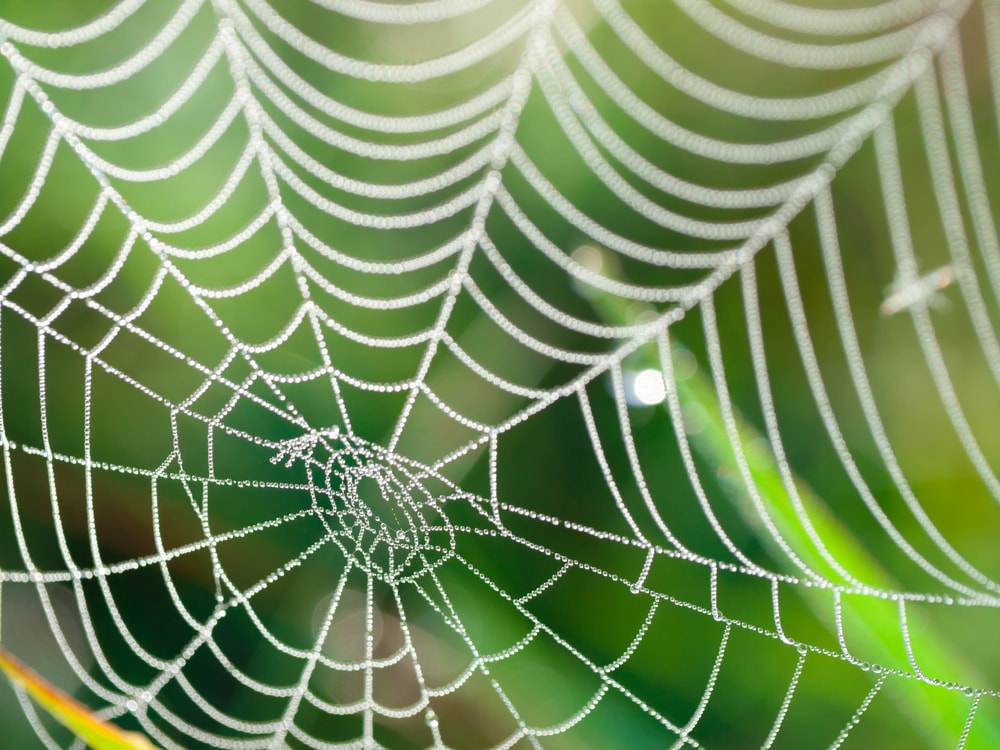
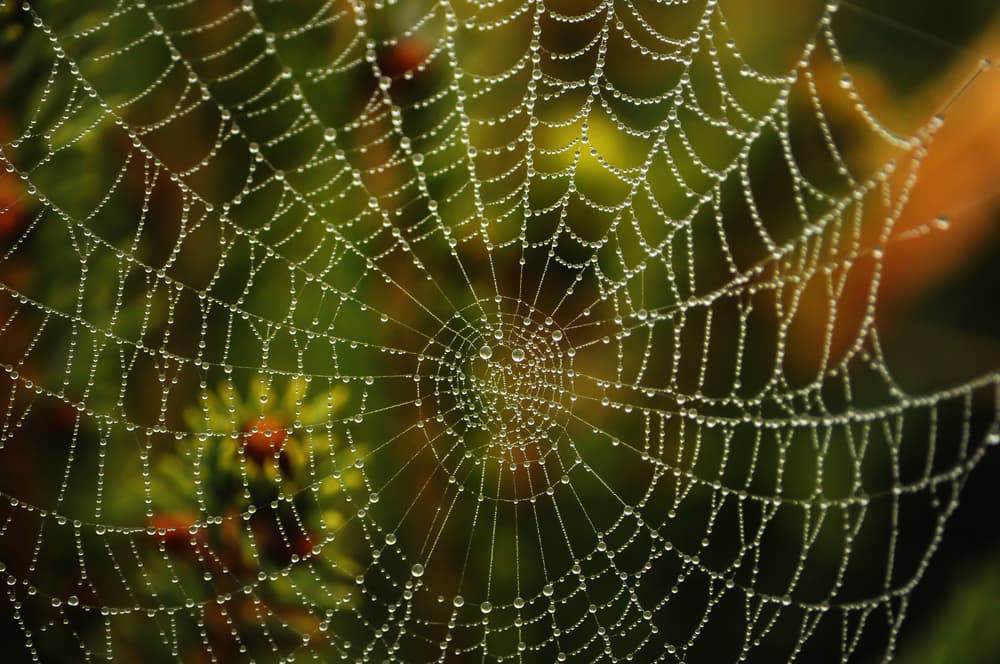
- Orb webs: are circular and wheel-shaped with radiating spokes and a spiral pattern. They are created by orb-weaver spiders, such as the garden spider, and are often found in gardens and near vegetation.
- Cobwebs: are irregular and messy, with no specific shape. They can be found in corners of buildings or under eaves. Spiders, like the house spider, make cobwebs.
- Funnel webs: are shaped like funnels with a tubular retreat at the end. Spiders, such as the funnel weaver, create funnel webs, which can be found in grass or under logs.
- Sheet webs: are horizontal, flat webs that resemble a sheet or blanket, often made by sheet weavers or money spiders. These webs are usually found in low vegetation or on the ground.
- Trapdoor webs: are made by trapdoor spiders in the ground. They have a hinged, camouflaged door that opens to reveal a burrow.

What to Do Once You’ve Identified a Spider
You can help prevent spiders in your home and get rid of them in a few ways:
- Regularly dust and vacuum to remove spider webs and eggs. Clean corners, behind furniture, and other less-frequented areas.
- Close gaps around windows, doors, and other potential entry points to prevent spiders from entering.
- Minimize clutter, especially in basements and attics, where spiders can hide and build webs.
- Keep shrubs and trees trimmed and away from your home’s exterior. Remove any piles of leaves or wood near the foundation.
- If spiders persist despite your efforts, contact Terminix. Our technicians can provide targeted treatments and long-term solutions to help keep spiders out of your home.
PestFree365, our ongoing pest control plan, can help keep spiders away and prevent them from returning. Our PestFree365 plan1 helps protect you from 25 common household pests, while our PestFree365+ plan2 helps protect you from 14 additional household pests, including the brown recluse and black widow spider, which can be costly to eliminate.3Schedule your inspection today!
1Coverage includes: "House" Ants, Bird Mites, Indoor Ticks, Cockroaches, Carpet Beetles, Fabric Moths, Overwintering Insects, Ground Beetles, Centipedes, Crickets, Earwigs, Firebrats, Millipedes, Clover Mites, Pillbugs/Sowbugs, Psocids, Scorpions, Silverfish, Paper Wasps, Springtails, Spiders, Stored Product Beetles, Stored Product Moths, Mice, and Rats.
2Coverage includes: Black Widow Spiders, Brown Recluse Spiders, Voles (interior only), Bed Bugs, Fleas (interior only), Bumble Bees, Carpenter Bees, Solitary Ground Bees, Yellowjackets, Hornets, Baldfaced Hornets, Crazy Ants, Carpenter Ants, and Fire Ants.
3If infestation of bees, fleas, indoor ticks, cockroaches, brown recluse spiders, carpet beetles, fabric moths, stored product pests, mice, or rats is present at the time of the initial inspection, a curative upcharge will apply.