What are hobo spiders?
(Tegenaria Agrestis)
Hobo spiders, scientifically known as Eratigena agrestis, get their common name from the fact that this spider is a resident of fields and the outdoors. Hobo spiders often avoid human habitats and structures, as their major competitor for food is the giant house spider, which is also a predator of the hobo spider.
While they may seem intimidating due to their size and distinctive appearance, hobo spiders play a vital role in our ecosystem. They help manage insect populations by preying on a variety of smaller bugs, which helps contribute to the natural balance of the environment.
Identifying hobo spiders
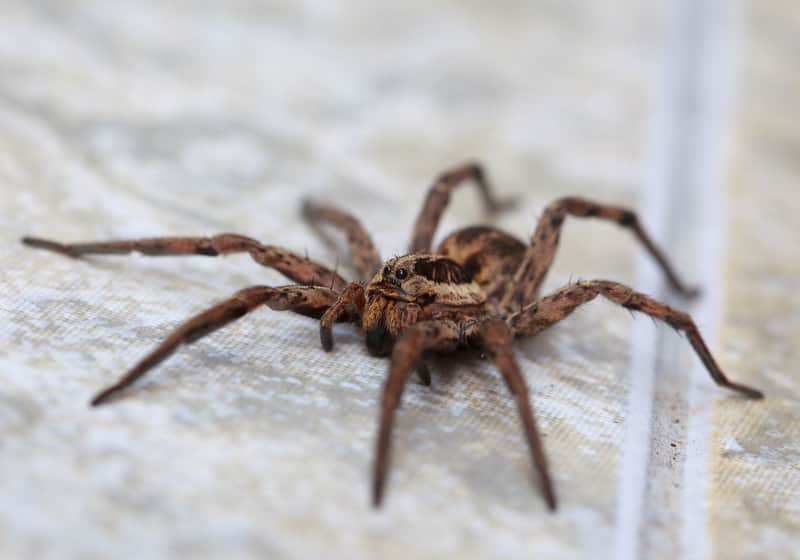
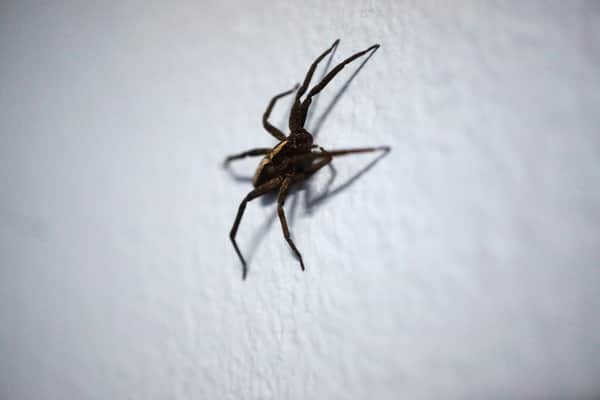
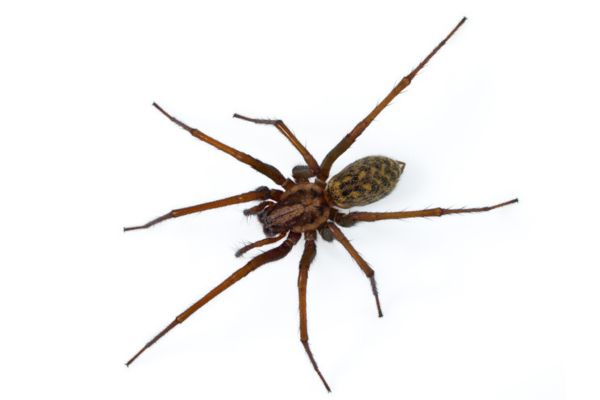
While some spiders can be identified by their unique characteristics, hobo spiders are not one of them. The only way to accurately identify a hobo spider from a giant house spider, and many other spider species, is to look at the sexual organs under a microscope. However, being aware of what a hobo spider looks like can still be beneficial.
- Size: Hobo spiders are medium-sized, with body lengths ranging from about a half inch to one inch long. Their leg span can extend up to two inches.
- Color: They are usually light brown to yellowish-brown, but their coloration can vary, sometimes appearing darker or lighter depending on their habitat.
- Body and markings: Hobo spiders have a relatively robust and slightly flattened body. They often have a pattern of darker markings on their abdomen, which can be somewhat irregular or vaguely banded.
- Legs: Their legs are long, slender, and covered in fine hairs. They are usually a lighter brown with dark bands or stripes.
- Eyes: Hobo spiders have eight eyes arranged in two rows of four.
Hobo spider behavior and diet
Hobo spiders primarily feed on insects and other small arthropods. Their diet includes bugs such as ants, flies, and beetles, which they capture with their unique hunting style.
Hobo spiders are skilled funnel weavers, creating distinctive funnel-shaped webs. Their webs feature a tubular retreat where the spider hides during the day and a horizontal sheet that serves as a hunting platform. Hobo spiders use their webs to detect vibrations made by struggling prey, which they then ambush from their retreat. This web construction strategy allows them to trap and consume their prey.
Are hobo spiders dangerous?
While hobo spiders are venomous, as are all spiders, they are not considered dangerous to humans. The venom from a hobo spider bite can cause irritation, but it typically does not result in medical issues.
Where do hobo spiders live?
The hobo spider is found only in the Pacific Northwest in Washington, Idaho, and Oregon. Their habitats include:
- Indoors: Hobo spiders often inhabit dark, undisturbed areas such as basements, crawl spaces, and storage rooms.
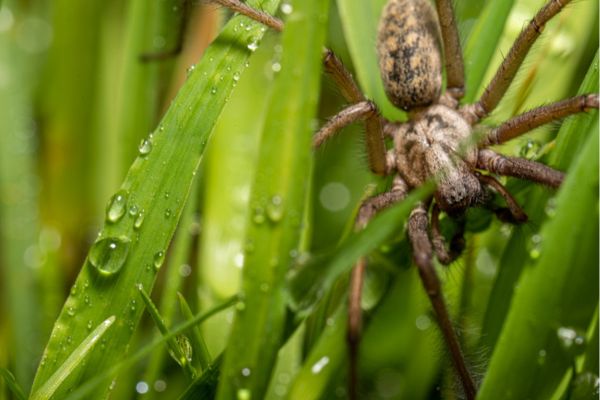
- Outdoors: They can be found in wood piles, garden sheds, and under rocks or debris. Hobo spiders favor cool, damp places where they can build their funnel-shaped webs to trap prey.
Hobo spiders are particularly drawn to areas with minimal disturbance, like holes and cracks, that allow them to construct their webs and hunt effectively.
Brown recluse vs. hobo spider
Brown recluse and hobo spiders may look somewhat similar from afar, but these two spiders should not be confused as they are never found in the same areas. Brown recluse spiders are found east of the Mississippi and hobo spiders are only found in the Pacific Northwest. There are also a few differences in their appearance, behavior, and web building styles.
- Appearance:
- The brown recluse has a distinct violin-shaped marking on its back. It is light to medium brown and has six eyes arranged in three pairs.
- The hobo spider is brown with a lighter, sometimes yellowish, marking on its abdomen. It has eight eyes arranged in two rows of four. Their bodies also have a hairy texture compared to the smooth appearance of the brown recluse.
- Size:
- The brown recluse typically measures between a quarter of an inch to half an inch long, with a leg span of one to two inches.
- The hobo spider is slightly larger, with a body length of about half an inch to one inch long and leg spans that can reach up to two inches.
- Web construction:
- Brown recluses construct irregular, messy webs in secluded areas. It does not use its web to catch prey.
- Hobo spiders build funnel-shaped webs in corners and crevices. The web traps prey and the spider waits at the funnel's entrance to ambush its victims.

How to help prevent hobo spiders in your home
If you find a hobo spider in your home:
- Avoid contact: Do not attempt to handle the spider.
- Seal entry points: Inspect your home for cracks, gaps, or other entry points and seal them to prevent more spiders from getting inside.
- Clean and declutter: Regularly clean and declutter your home, particularly in basements, attics, and storage areas where hobo spiders tend to hide.
- Contact Terminix: If you're unsure or concerned about a potential infestation, contact a professional to assess and address the situation.
While many spiders are harmless, finding them in or around your home is uncomfortable for many. Terminix’s spider control services can help remove spiders and prevent future infestations. Our skilled technicians will thoroughly inspect your home's exterior and interior to locate and eliminate spiders, webs, and egg sacs. We’ll treat hiding spots, set up monitors, and seal gaps to help keep spiders out. Schedule your inspection today!
1Information provided by the CDC