Learn about skunk habits and behaviors
Updated on: April 16th, 2025
Skunks (Mephitidae) are well-known for their distinctive black-and-white fur and potent defense mechanism. These nocturnal mammals belong to the order Carnivora and are closely related to weasels, badgers, and otters. While skunks can help control insect and rodent populations, their presence near homes can also be a nuisance.
If skunks have taken up residence on your property, professional wildlife control is the safest and most effective solution. Our experts understand skunk habits and behaviors, allowing them to safely relocate skunks and implement exclusion techniques to help prevent their return.
What do skunks look like?
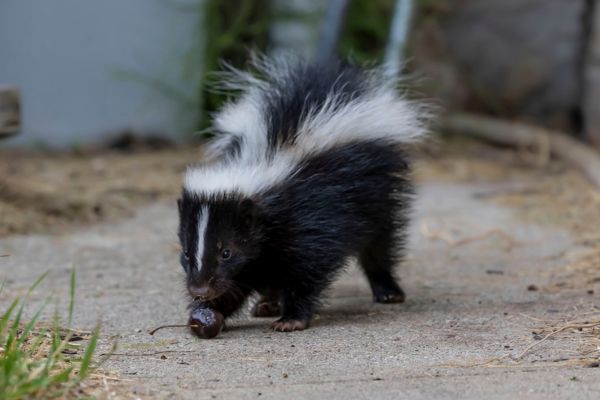
So, what is a skunk? Skunks are small to medium-sized mammals that can be easily recognized due to their unique appearance. The various skunk species share a few common appearance traits, including:
- A stocky body with short legs
- Bold black-and-white coloration
- Typically range in size from 15 to 37 inches long, including their bushy tails
- Weigh between three and 14 pounds
- Strong forelimbs
- Sharp claws
- Small, rounded ears
In addition to their distinct appearance, they also exhibit common skunk behavior and anatomical traits:
- Anal scent glands that contain a potent sulfur-based spray for defense
- Excellent night vision
- Keen sense of smell

There are 12 recognized species of skunks, divided into four genera: Mephitis (striped and hooded skunks), Spilogale (spotted skunks), Conepatus (hog-nosed skunks), and Mydaus (stink badgers, found in Southeast Asia). Depending on the species, skunks may have different stripe patterns, spots, or swirls across their fur. The most common species in North America include:
- Striped skunk (Mephitis mephitis) – The most widespread species, known for its distinct white stripe running from head to tail.
- Spotted skunk (Spilogale spp.) – Smaller and more agile, with broken white spots and stripes across its body.
- Hog-nosed skunk (Conepatus leuconotus) – Recognizable by its elongated snout, used for digging up insects and roots.
Why do skunks spray?
Skunks spray as a defense mechanism when they feel threatened, using a potent, sulfur-based liquid released from their anal scent glands. The spray is a strong deterrent against predators, causing irritation, nausea, and a lingering stench that can last for days. The smell of skunk spray is notoriously foul, often described as a mix of rotten eggs, burning rubber, and garlic. It is incredibly strong and can travel up to a mile, making this skunk behavior one of nature’s most effective chemical defenses.
Skunks don’t spray freely, as their scent glands take time to replenish—typically up to 10 days. Because of this, they often give warning signs before spraying, such as stomping their feet, hissing, or raising their tails.

While skunks are known for their strong odor, they are generally non-aggressive and prefer to avoid confrontation. However, they can be a nuisance and pose health risks, including:
- Their spray can cause eye irritation and nausea
- They may carry rabies or other diseases
- Their digging can damage lawns, gardens, and foundations
- They may raid poultry farms, eating eggs and chicks
Skunk behavior and lifestyle
Skunks are primarily nocturnal, meaning they are most active at night. They spend their evenings foraging for food and tend to rest in dens during the day. While they are generally solitary animals, skunks may den together in colder months to conserve warmth.
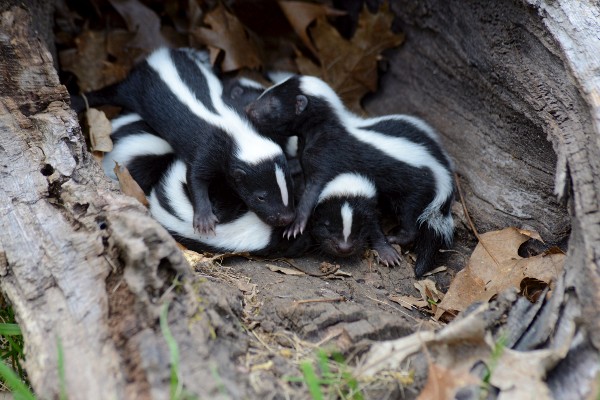
Skunks typically live two to four years in the wild, but they can live up to seven years in captivity. Mating season occurs in late winter to early spring, with females giving birth to a litter of four to seven kits after a 60—to 75-day gestation period. The young are born blind and helpless but develop quickly, staying with their mother for several months before becoming independent.
What do skunks eat? Skunks are omnivores, meaning they eat plants and animal-based foods. Their diet includes insects, small rodents, eggs, berries, fruits, and scavenged food. They are opportunistic feeders and will dig in lawns for grubs or rummage through garbage if food sources are scarce.
Skunk habitats and distribution
Skunks are highly adaptable and can be found across North and South America in various habitats, including forests, grasslands, and suburban areas. They prefer locations with plenty of cover, such as wooded areas, brush piles, fields, and beneath structures like decks, sheds, and porches. While they often dig their own dens, skunks may also take over abandoned burrows from other animals.
Skunks can sometimes be detected by faint odors lingering in areas where they have traveled or foraged. Skunk dens are usually found in slight depressions where grass is sparse, and the entrance may have two-inch-long hairs nearby. They may also leave behind track marks, droppings, or small holes where they have dug for food.
Skunks are drawn to areas that provide food, shelter, and water. Common attractants include:
- Pet food, birdseed, or unsecured garbage
- Compost piles or fallen fruit
- Lush, insect-rich lawns (grubs and earthworms)
- Sheltered areas like crawl spaces, woodpiles, and under sheds
What to do if you see a skunk near your home
If skunks have taken up residence on your property, you may notice:
- A faint, lingering skunk odor, even if they haven’t sprayed
- Small holes (one to three inches wide) in your lawn or garden from digging for food
- Tracks with five toes and visible claw marks
- Droppings near feeding areas
- Scratching or rustling noises at night under decks, porches, or sheds
To help reduce the chances of skunks settling on your property:
- Secure trash cans with tight-fitting lids
- Remove outdoor pet food at night
- Install motion-activated lights to deter nighttime visitors
- Fill in burrows and block access to denning sites
- Use fencing or other materials to seal off spaces under porches and sheds
If you suspect a skunk problem, professional removal is the safest option. Terminix’s wildlife control experts understand local regulations and can help safely trap and relocate skunks away from your home. Our professionals will also implement exclusion techniques to help prevent future infestations. Schedule your free wildlife inspection today!