

How to tell if you have mice in your house
The presence of mice in your home can be alarming. While they may be small, these crawling critters can pose significant risks to your health, home, and peace of mind. Early detection of mice infestation signs plays a critical role in managing and resolving an infestation before it escalates into a more serious problem. It not only helps prevent the extensive damage these creatures can cause to your property but also reduces the health risks they pose. Knowing the signs of mice is the first step in keeping these pests out of your home.

Understanding mice behavior
To understand why mice choose to infiltrate our homes, it’s important to understand their characteristics and living habits. Mice usually look for refuge in quieter, less-disturbed areas where they can nest and still have access to food sources. Our homes, sheds, and garages are the perfect hiding spots for these creatures. They often build their nests from soft materials like paper and fabric in secluded spots, including wall voids, storage boxes, and under appliances or furniture. Mice are primarily nocturnal creatures, being most active during the nighttime. This nocturnal activity aligns with their breeding patterns, which can occur rapidly and throughout the year, leading to significant infestations if signs of mice in the house go unnoticed.
Signs of mice in your home
Mice can be sneaky, and it’s easy to overlook their presence in our homes. Luckily, there are many common signs of mice, from subtle clues like tracks and unusual noises to more clear signals like sightings and gnaw marks. Here are some of the signs of a bad mice infestation:
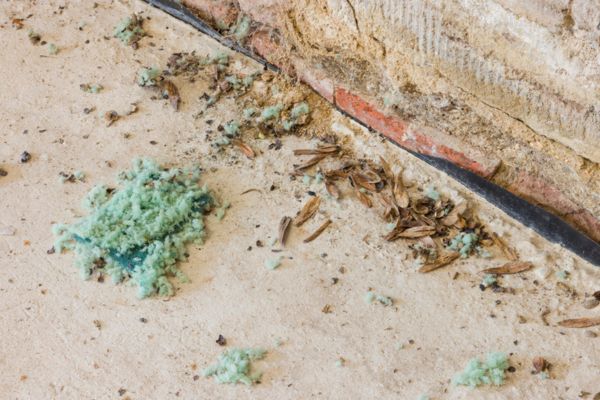
Droppings
One of the easiest signs of mice to spot is the presence of droppings. Typically, mouse droppings are about the size of a grain of rice, usually about ¼ of an inch. They tend to have a rod-shaped structure and are pointed at both ends, with black or brown coloring. Kitchens and pantries are prime locations to see these signs of mice in the house, as they are near food sources. Some of the most common places to spot these droppings are along walls and baseboards, cabinets, and under sinks.
Tracks, footprints, and marks
Another mice infestation sign is the presence of tracks, footprints, and other marks in the house. Mice have oily fur, and as they repeatedly travel along the same routes, they often leave behind distinctive rub marks along walls and baseboards. On dusty surfaces, you might see footprints or tracks, which can provide a clear indication of the paths frequently traveled by these rodents.
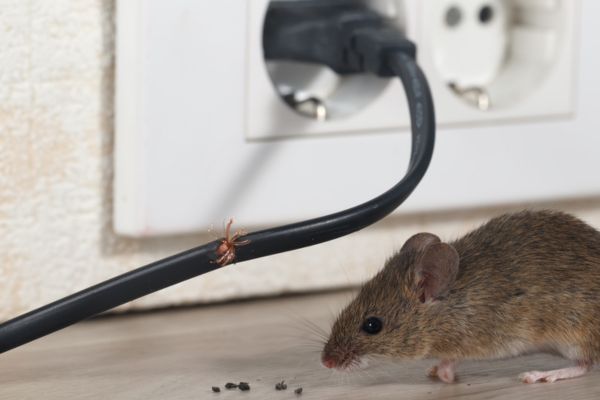
Gnaw marks and damage to stored food
Mice are notorious for their need to constantly gnaw or chew on the items in our homes. This is because mice have teeth that continuously grow, and chewing on hard materials can help keep their teeth shorter. This habit leads to visible marks on food packaging, furniture, wires, and even structural elements of a building. Newer gnaw marks tend to appear lighter in color and become darker as they age, which can help in assessing the signs of a bad mice infestation and its recency.
Regarding damage to food, these critters might visit a known food source as many as 20-30 times each day. Mice do not need a constant source of water, as they can absorb the required moisture from their food. In a single day, adult mice will eat about three to four grams of food, showing a preference for items like cereal grains, seeds, nuts, meats, and sweets.
Nocturnal noises
Mice are mostly active during the night, and hearing scratching, scurrying, and gnawing during this time is a common sign of mice. These noises can be heard in areas where mice like to hide, such as attics, walls, and enclosed spaces. You may also hear high-pitched squeaking noises during active periods, as this is a common way for mice to communicate.
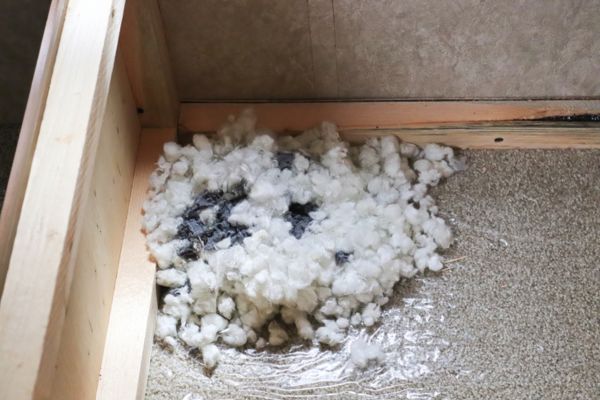
Nests
Another sign of mice is the presence of nests, which are crafted using materials readily available in their environment. These nests are often composed of shredded paper, fabric, and insulation—materials that mice find soft and suitable for the comfort and protection of their young. A mouse nest is often no larger than the size of an adult hand closed into a fist. Typically, they favor secluded spots that offer safety from predators and human activity. Their nests are commonly found in hidden corners, inside walls, and attics, where disturbance is minimal.
Unusual odors
A musky or ammonia-like smell can also be a common sign of a bad mice infestation. These odors are strongest in areas where mice are most active or have established their nests. Additionally, urine trails, which are common pathways used by mice to navigate between their nests and food sources, can also emit a strong odor that is characteristic of an infestation.

Sighting a mouse
The most definitive sign of mice in the house is seeing a live or dead mouse. Mice are most active at night, which means seeing a live mouse during the day can suggest a significant population, as it indicates that competition for food and nesting spaces is driving them to venture out. On the other hand, finding a dead mouse can pose serious health risks, as mice can carry diseases that are transmissible to humans.
What to do if you see any of these signs
Recognizing the signs of mice early on is crucial for effectively managing and eradicating the problem. Keep an eye out for any indicators, such as damage to items in the home or droppings that suggest the presence of pests, as this can be a sign of a bad mice infestation. If you suspect mice have invaded your home – it’s time to call the mice control experts at Terminix. Our technicians know where these pests like to hide and can safely remove them from your home. Plus, with our PestFree365 plans, you can stay protected from mice along with 38 other common household pests.1
Schedule your free mice inspection today.
1. Covered Pests defined in your Plan. Autopay is required. Voles and fire ants are only covered if they are in the home; we will not treat the lawn. Home must be free of bed bugs during initial service to qualify for bed bug coverage under PestFree365+ Plan. Single-family, free-standing, owner occupied homes only. Other limitations apply. See Plan for details.