

Learn about baby mice and how to get rid of them
If you find a baby mouse in your home, it’s a sign of a larger issue. Baby mice, often called pups, are a clear indicator that mice are nesting nearby. Knowing what a mouse is and its early life stages is crucial to addressing and preventing an infestation. Learn how to identify baby mice, tackle the problem, and keep them out of your house for good.
Jump to section:
What do baby mice look like?
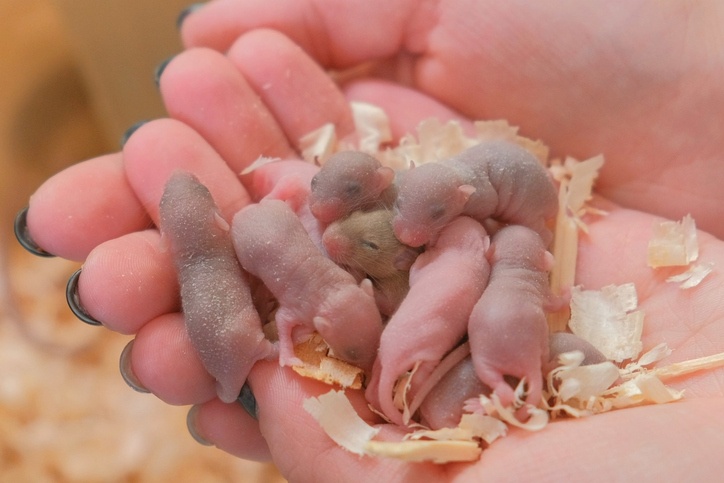
A baby mouse, also known as a pup or a pinkie, looks quite different from a common mouse. Baby mice are born hairless and have translucent skin that shows their veins. They are also born completely blind, with their eyes sealed shut, and deaf, with their ear canals closed. This makes them entirely dependent on their mother for survival. Unlike small adult mice, baby mice can’t move around freely or fend for themselves. At around two weeks, a baby mouse’s fur will grow, and their ears and eyes will open, allowing them to explore their surroundings and begin venturing out of the nest. These traits make it easy to differentiate a baby mouse from a small adult mouse and help assess the severity of an infestation.
Lifecycle and development of mice
Female mice are highly productive breeders, entering a period of estrus, or “heat,” every four to five days. After a short gestation period of about three weeks, they give birth to litters ranging from five to twelve pups. A single mother mouse can be pregnant up to ten times per year, producing nearly 300 baby mice over her two-to-three-year lifespan. In fact, it’s not uncommon for a mother mouse to nurse one litter while pregnant with the next.
During the baby mouse stage, pups remain in the nest, completely dependent on their mother for food and warmth. By two weeks, they begin developing the ability to explore, and at three to four weeks, they are weaned and ready to leave the nest. These young mice quickly become independent, capable of reproducing as early as six weeks old, contributing to how fast the mouse population grows. Understanding this lifecycle is crucial for addressing infestations effectively and preventing them from escalating.
Are baby mice dangerous?
A baby mouse may seem harmless, but its presence can signal serious risks to your health and home. Although they are born blind, hairless, and dependent on their mother, baby mice quickly mature and begin eating solid food, which includes anything they can find in your kitchen. This can lead to contamination of food and surfaces, as well as damage to your home since mice have unique habits and are known for eating through wire, insulation, and furniture. Whether it’s a baby mouse or a fully grown common mouse, their droppings and nests can spread bacteria and allergens.
When dealing with baby mice, safety is critical. Avoid direct contact because even young mice can carry harmful pathogens. Always wear gloves and sanitize areas with a disinfectant after cleaning. Seal contaminated materials in plastic bags before disposing of them and thoroughly wash your hands afterward. For the safest and most effective solution, contact Terminix to handle the problem professionally.
Finding baby mice in your home
Finding a baby mouse in your home is often a sign of a larger infestation. Mice are known to build their nests in secluded areas where they feel safe and have access to food. Here’s how to recognize a baby mouse infestation and where to look:
Signs of nesting: Look for shredded paper, fabric, or insulation in secluded areas. These materials are commonly used by mice to build nests.
Common nesting areas: Mice prefer spaces like behind kitchen appliances, inside cabinets, basements, attics, and empty spaces in walls.
Evidence of activity: Droppings, gnaw marks, and grease smudges along baseboards and walls are strong indicators of mouse activity.
A baby mouse typically doesn’t venture far from its nest, so spotting one suggests that adult mice are actively breeding in your home. Look for additional signs of an infestation, such as droppings, gnaw marks, or grease smudges along baseboards and walls. Recognizing these signs early is key to controlling the problem. If you’re wondering what a mouse infestation’s impact is or how to deal with it, professional help is often the most effective solution to eliminate the issue and prevent its return.
How can you get rid of baby mice?
Getting rid of baby mice requires a combination of immediate action and long-term prevention. Because baby mice are dependent on their nest, addressing the problem means eliminating both the young mice and the adults responsible for the infestation. Here’s how to start:
Identify nesting areas: Search for signs like shredded materials, droppings, and grease smudges in hidden spaces such as cabinets, basements, or behind appliances.
Set traps and baits: Use mouse traps and bait stations to control the population, but keep in mind their effectiveness is limited if nests remain undiscovered.
Seal entry points: Prevent further infestations by sealing gaps and cracks in walls, floors, and around pipes with materials like steel wool or caulk.
For more thorough and lasting results, consider professional services like those offered by Terminix. Terminix experts use advanced techniques to locate nests, remove rodents, and prevent future infestations. They provide customized plans to protect your home and ensure the problem is fully resolved.
If you’re dealing with baby mice in your home, schedule a free inspection with Terminix today to take control of the issue safely and effectively.