

Other Pests
The life cycle of a weevil
How long do weevils live? Learn their life cycle from weevil eggs to adults.
Worldwide, there are more than 60,000 different species of weevils. The life cycle of a weevil can vary from species to species, but they do have some things in common. Get to know the life cycle of weevils and what to do if you see a weevil in your home.
The phases of a weevil life cycle
Because there are so many species of weevils, there is still a lot that scientists do not know about the weevil life cycle. We do know the life cycle of a weevil has four main stages. They start as an egg that hatches into larva to feed. Then, weevils form a cocoon in the pupal stage and finally emerge as an adult. How long is the life cycle of a weevil? On average, an adult weevil’s lifespan is around two to three months, and it takes weevils around three months to reach adulthood. Here, we’ll explore the life cycle of weevils.
Egg
Weevils start their life cycle as small white weevil eggs. Many species of weevils lay their eggs in clusters on the ground near a host plant. For some weevil species, the females will bore a hole directly into the plant stem, seed, or grain to lay weevil eggs. For example, rice weevils will lay their eggs directly inside rice kernels. After laying eggs in a bored hole, the female weevil will then cement it shut.
How fast do weevils multiply? Generally, a female can lay up to 250 eggs at one time, and the eggs take up to three days to hatch. Weevils prefer warmer environments for reproduction, so colder temperatures can slow how fast weevils, like the rice weevil, spread. That said, weevils can mate and lay eggs multiple times during their life cycle. There are also a few species of weevils that are parthenogenetic, which means they can produce eggs without mating.
Larva

Weevil larvae look like white to yellow worm-like grubs and do not have legs. When weevil larvae hatch, they burrow into the soil and eat their host plant's roots or feed internally on seeds, grains, or rice kernels, in the case of rice weevils. The larval stage can take up to two months before the weevils enter the pupal stage.
Pupa

In the pupal stage, weevils, like the rice weevils, transform from larvae to a protective cocoon. During this stage, the weevil is encased in a small, immobile form that is typically found within the grain or roots of the plant it has been feeding on. This stage is crucial for development as the weevil transitions from a larva to an adult. A weevil in the pupal stage is small, white, and looks like a tiny oval. Pupae gradually harden as they prepare to emerge as an adult weevil. This phase lasts about three weeks.
Adult
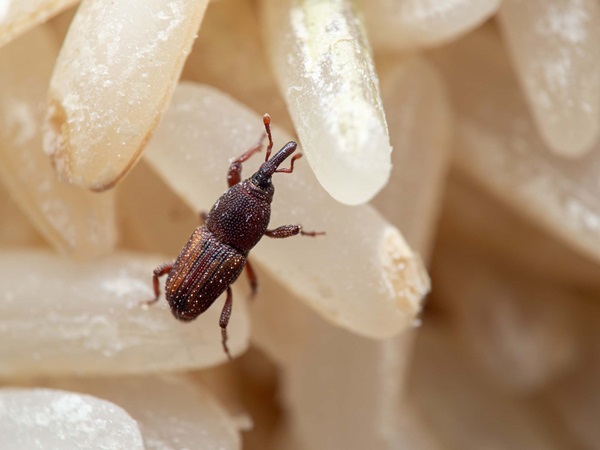
In their final stage, weevils leave the pupal stage and emerge as adults. Most adult weevils are under a quarter inch and have a pear-shaped body, six legs, a snout-like mouthpiece, and short antennae. Their size and color can vary by species. For example, adult rice weevils are generally less than one-eighth of an inch and are dark brown with light-colored patches on their wing covers.
Outdoors, adult weevils will emerge and feed on the surface portions of their host plant. Weevils, like the rice weevil, will emerge as adults and feed on whole rice kernels. Rice weevils can live for two to three months in adulthood. Weevils reproduce quickly, and some species are capable of flying great distances in search of food or a new place to lay eggs. Studies have shown that some species, like the red palm weevil, can fly more than half a mile per day.
What to do if you see a weevil
If you spot a weevil, it's important to take action quickly to prevent an infestation from spreading. The best approach is to discard any infested food sources immediately and thoroughly clean the areas where weevils were found. While Terminix does not specifically cover weevils, our experts can help identify whether you have a weevil infestation or another type of pest problem. Hiring a professional takes out the guesswork, so you can quickly identify pest issues with certainty. See how our team at Terminix can help protect your home from pests.