

The average stink bug life cycle
Stink bugs, known for their distinctive odor, typically have a lifespan of about six to eight months, progressing through various stages from egg to adult. A stink bug’s life span can vary based on species, environmental conditions, and other factors.
The stink bug life cycle involves three main stages: egg, nymph, and adult. The length of each stage can vary among species. Some species may be in the nymph stage longer before maturing into adults, while others may have shorter nymphal stages.
Life of a stink bug
Understanding the stink bug life cycle is crucial for effective pest management. By knowing when and where stink bugs are most active, homeowners and pest control professionals can implement targeted strategies to prevent infestations and effectively control populations.
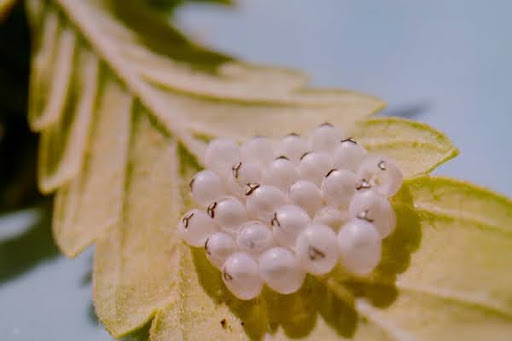
Stink bug egg
The stink bug life cycle begins when a female stink bug deposits eggs in a protected location. They’re typically laid on the underside of leaves or plant stems. The egg stage varies among species but generally lasts five days up to two weeks.
Stink bug eggs are smooth, barrel-shaped, and tiny, only measuring about 0.03” in diameter (about the size of a nail head). The color of stink bug eggs can vary, ranging from pale yellow to light green.
Stink bug nymph
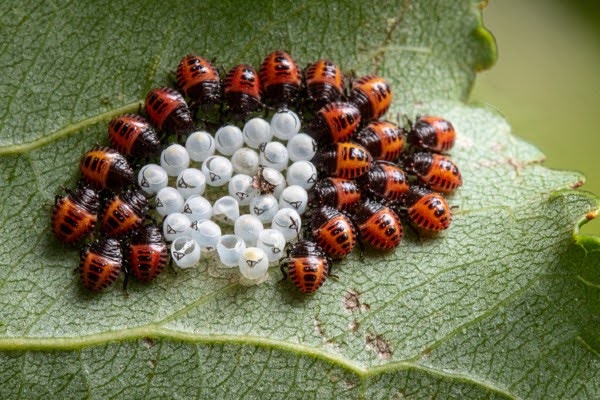
During the nymph stage, which typically lasts about four to six weeks, young stink bugs emerge from their eggs. Nymphs initially live close to the egg cluster, feeding on nearby vegetation. As they grow, they may move away from the original egg cluster to find more suitable food sources, sometimes causing them to venture into homes or gardens.
As nymphs progress through the stink bug life cycle, they undergo a series of molts, shedding their exoskeletons to accommodate their increasing size. This phase is crucial for their development as they transition from tiny, wingless creatures into fully formed adults.
Stink bug adult
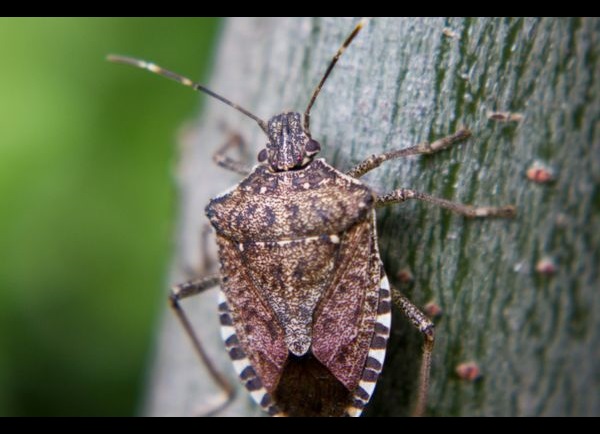
During the adult stage, stink bugs have fully developed. They now have wings, which allow them to fly and disperse over larger areas. Stink bugs play a role in pollination and act as prey for some predators, contributing to ecosystem balance. Their natural predators include birds, spiders, and insects like assassin bugs.
Reproduction is a significant focus during this phase. Males attract females by releasing pheromones. Once mating occurs, females lay clusters of eggs, repeating the stink bug lifecycle.
What to do if you find a stink bug
To tackle stink bug problems, focus on eliminating their hiding spots and consider professional control methods. For swift and effective eradication, rely on Terminix's expert technicians, who understand stink bug behavior and can provide tailored solutions.