
Understanding rollie pollies around your home
(Class Crustacea, Order Isopoda)
A rollie pollie, also known as a roly poly or a pill bug (Class Crustacea, Order Isopoda), is a common bug that came from Europe and can now be found all over the world. Learn more about these tiny creatures and how to deal with a roly poly infestation either in your house or outside.
What are rollie pollies?
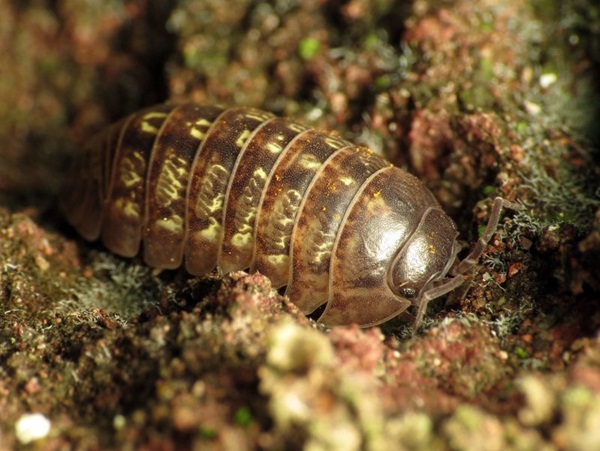
A rollie pollie is a nickname for a pill bug. It gets that name from its ability to roll into a tight ball in a process known as conglobation. When triggered by stimuli such as pressure or vibrations, the pill bug uses this as a defense mechanism to protect itself from predators.
Up to ½ an inch long and gray in color, rollie pollies are usually nocturnal and prefer moist environments. They can be found under objects lying on the damp ground and within leaf litter, mulch, and other types of vegetative debris. If they make their way inside, they may quickly die of dehydration unless they find a reliable moisture source.
Pill bugs vs. sowbugs
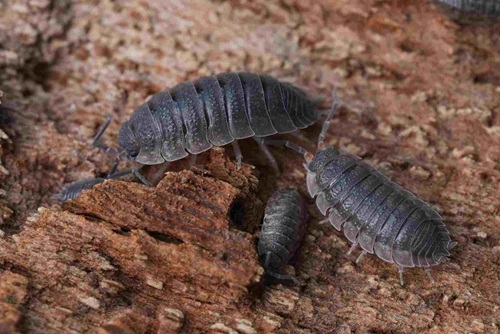
Both pill bugs and sowbugs are crustaceans that have completely adapted to terrestrial habitats. They have the same lifecycle and similar diets, and they both prefer damp environments. Sowbugs have flat, oval bodies and have two small appendages extending from the rear. Because of these appendages, the main difference between the two insects is the fact that sowbugs cannot roll into a ball.
What are pill bugs attracted to?
Pillbugs are primarily attracted to moisture. If they come indoors, they can survive in damp basements, cellars, and crawl spaces and may be found living within homes where a constant moisture source is available due to a water leak.
The ecological role of rollie pollies
Pillbugs are scavengers, and they mostly eat decaying plant matter and other decomposing material. They serve an important role as decomposers, breaking down decaying material by eating it and then returning the nutrients to the soil. They can be beneficial for gardens because they speed up the decomposition process and turn organic matter into soil faster which, in turn, speeds up plant growth.
Rollie pollies are also a food source for other creatures, such as centipedes, frogs, toads, ants, and birds.
Do I need to exterminate pill bugs?
While a few pill bugs aren’t dangerous or cause for concern, large populations can become a nuisance both outside and inside. In areas prone to more rain and flooding, they may start feeding on emerging seedlings, ruining vegetable gardens and crops in the process. A more aggressive and targeted approach might be required in these situations.
Indoors, a pill bug infestation is a major sign that you have a moisture problem that could lead to water damage and mold. Take them as a sign to investigate further and make any adjustments. If you eliminate the moisture problem, the pill bug population will shrink, and there is usually no need for targeted pill bug extermination measures.
How to get rid of pill bugs in your home
Without moisture, pill bugs can’t survive for long. Removing rollie pollies in houses starts with checking for water damage, repairing leaks, and removing excess humidity. Once that is done, if you still have a pill bug problem, call the experts at Terminix for a more thorough inspection and pest control plan.
Think you have a roly poly infestation? We can help with pest control strategies that are tailored to your needs.