
What are Mediterranean flour moths?
( Ephestia Kuehniella)
A Mediterranean flour moth or mill moth (Ephestia Kuehniella) is a moth of the Pyralidae family. They are found throughout the world, especially in countries with mild climates. They like to live and breed in warm places with stored grain products like flour mills and bakeries.
Identifying Mediterranean flour moths
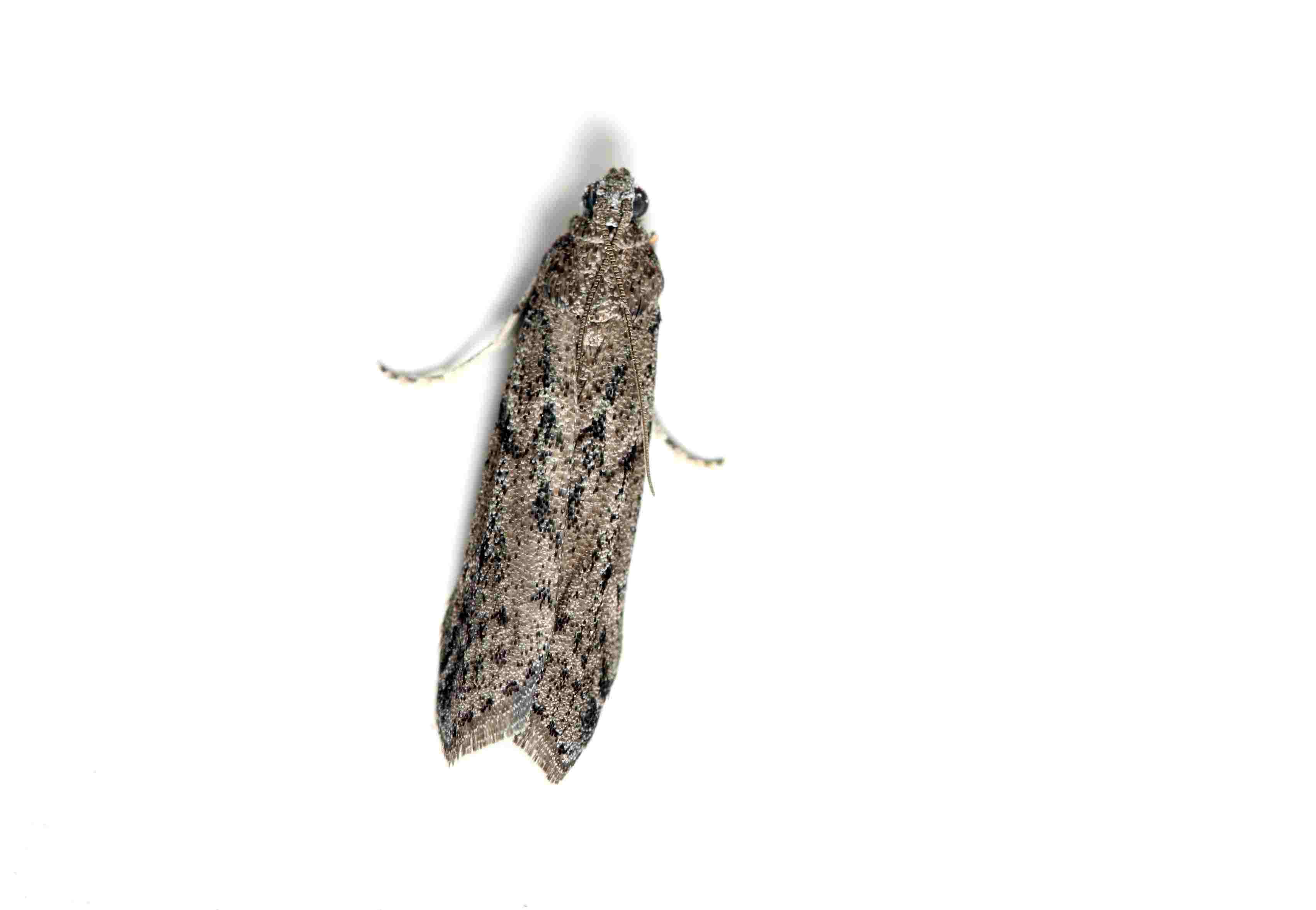
There are at least 160,000 species of moths in the world and up to 11,000 species in the U.S. alone. Mediterranean flour moths are a common pest of grains, especially flour. Adults are about 5/8ths of an inch in length with a wingspan of up to 1 inch. They have pale gray bodies and gray forewings with black zigzag markings and off-white hindwings.
The larvae are white or pink with black spots and dark heads. Pupae are reddish brown.
The life cycle of Mediterranean moths
Female Mediterranean flour moths can lay anywhere from 116 to 678 eggs at a time. They deposit the eggs on or near the food material the future larvae will infest, fastening onto the food particles. When the eggs hatch, the young larva spins silken tubes around themselves and spend 40 days maturing.
The full-grown larvae then pupate in a cocoon within the flour or on the surface of the flour. They may also pupate in cracks or crevices either within or without a cocoon, often migrating from the food source in search of a pupation site.
Adult moths emerge in 8 to 12 days. Adults don’t feed and will just reproduce and die off within 10 days. The life cycle from egg to adult can be completed in four to six weeks in heated buildings, with six or more generations occurring per year.
How do Mediterranean flour moths get inside
Mediterranean flour moths are attracted to a wide range of stored food, so they are always on the lookout for a way into warehouses, mills, barns, silos, and retail stores with food storage areas. They can get inside via food and product shipments and simply by flying in through open doors and windows as well as cracks in foundations.
They generally don’t infest residential homes in large numbers, but it’s possible to see a few in stored pantry food like grains and flour. It is a common species in Britain, North America, and Australia, especially in temperate climates.
Mediterranean moth damage
This moth is a significant pest of flour and is a serious pest of mills and warehouses. They also infest nuts, chocolate, seeds, beans, biscuits, dried fruits, and stored foods of many kinds. Mediterranean flour moth larvae produce webbing that can clog animal feed dispensers and machinery in food processing plants.
Signs of their presence can include:
Webbing in stored food
Larvae in stored food
Dead or live adult moths found in traps or in food
Lumps found in dry, finely ground food—this could be caused by webbing or shed skins left behind by the larvae
How to help get rid of flour moths in your home
Mediterranean flour moths are found more often in warehouses and other locations with a high volume of stored food. But they can also get into your home and start breeding in your pantry and kitchen given the chance. Here are a few ways to get rid of and prevent a moth infestation in your home:
Discard infested foods in outdoor trash. Infested decorations (flowers, wreaths, etc.) should also be discarded. Fall wreaths with wheat, other grains, or berries on them should be sealed in heavy garbage bags, or in wreath storage totes to reduce the chance of infestation.
Freeze suspect foods at zero degrees Fahrenheit for six days.
Clean cabinets and shelves where infested foods are stored by vacuuming and by using soap and water.
Inspect the home to find and remove as many cocoons as possible that may be located in corners, behind pictures, etc.
Store all dried food goods, including dried pet foods and birdseed, in a glass or plastic container with a tight lid. If moths are in that food product then the infestation will be contained and not spread to other foods.
Consider storing cereals and similar foods in the refrigerator or air-tight containers to limit stored product pest problems.
Consume older food products prior to newer purchases of the same food. Products purchased in larger quantities (e.g., from a wholesale food warehouse) are more likely to become an infestation source if these are stored for long periods of time – especially if they are not stored in containers with tight-fitting lids.
Need advice on Mediterranean flour moth control? We can help with moth control strategies that are tailored to your needs.