

What you need to know about lice
Lice may be small, but they can bring big problems and discomfort in our lives. These tiny, unwelcome guests are more than just a nuisance; they're a common problem that can affect anyone, regardless of age or hygiene habits. Understanding lice is the first step in managing and ultimately overcoming infestations in your home.
So, what exactly are lice? Lice are parasitic insects that feed on human blood and can be found on the human body, including the head, body, and pubic area. They are highly adaptable creatures that have coexisted with humans for thousands of years, causing itchiness and discomfort wherever they go. Knowing how to identify and deal with these pests is crucial to help keep them at bay.

What do lice look like?
Lice are a common concern affecting people of all ages, making it crucial to understand the different types that exist. There are over 5,000 species of louse in the world, each with its own characteristics and preferred habitats. These species include:
- Bird lice: Although they are not a common problem for humans, bird lice can sometimes find their way onto human hosts, primarily if one is in close contact with birds. These lice have a flattened body, allowing them to move easily through the feathers of their bird hosts. They are usually pale in color, ranging from white to gray or light brown, which helps them blend into their environment and remain undetected. Bird lice are generally small, with many types measuring less than three mm in length.
- Human head lice: The most widely recognized and common type, head lice make their home in the hair on your head, causing itchiness and discomfort. They are especially prevalent among school-aged children but can affect adults as well. Adult head lice are about the size of a sesame seed, roughly two to three mm long. They range in color from white to gray to brown, often becoming darker after feeding. Head lice have a somewhat oblong shape with a flattened body and six legs.
- Pubic (crab) lice: These lice infest the pubic hair and sometimes other coarse body hair like eyelashes, armpits, and beards. They're known for their distinctive broad, round body, somewhat resembling a crab. They are usually yellowish-gray or dusky red after feeding but can vary in color. Crab lice are tiny, ranging from one to two mm in length, making them somewhat smaller than head lice.
- Body lice: These lice, measuring between two to three mm in length, live in clothing and bedding and only move to the human body to feed. Their coloring can range from white to grey or tan, often appearing darker after they have fed due to the blood they've ingested. These parasites have an elongated, flattened body that allows them to navigate easily through the fibers of clothing and bedding, which is where they primarily reside and lay their eggs.

What do lice eggs look like?
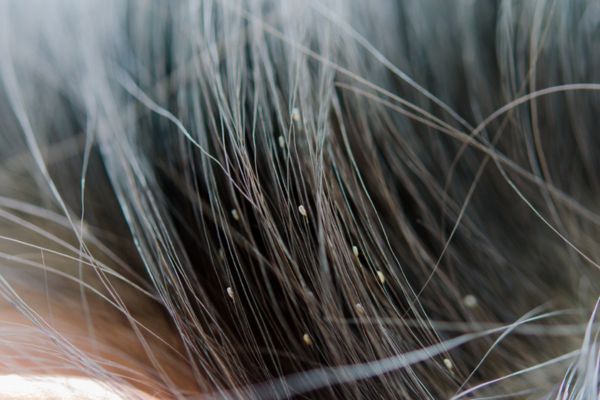
Lice eggs, also known as nits, are tiny and oval-shaped. They are often mistaken for dandruff because of their small size and light coloration, typically pale yellow or white. Nits are laid by adult lice at the base of a hair shaft near the scalp, where the temperature is ideal for their incubation. They are incredibly small, about the size of a poppy seed, making them difficult to see without close inspection.
One of the distinguishing features of lice eggs compared to dandruff or other hair debris is their strong attachment to the hair. Unlike dandruff, which can be easily brushed off, nits are glued firmly to the hair shaft by a substance secreted by the adult louse, requiring a special comb or fingernails to remove them effectively.
Where do lice come from?
Lice are parasitic insects that spread through direct contact with an infected person or through sharing personal items like combs, hats, and clothes. Lice infestations are common worldwide and can affect anyone, especially children, the elderly, and chronically ill persons.
The misconception that lice infestations are a result of unclean conditions is inaccurate; these pests are equally likely to thrive in clean environments as long as they have access to blood, which they feed on. Their ability to spread easily, especially in crowded settings like schools, makes them a persistent issue.

The life cycle of lice
The life cycle of lice involves several stages, starting from the egg (nit), nymph, and finally, the adult louse. The entire life cycle, from egg to adult, can be completed in about three to four weeks under ideal conditions. The first stage begins when the egg is laid on a hair shaft close to the scalp, where it hatches into a nymph after about eight to nine days. These nymphs go through three molting stages over approximately nine to 12 days before becoming adult lice. Adult lice can live on a host for up to 30 days, feeding on blood several times a day. If they fall off the host, their survival is drastically reduced; lice typically cannot live longer than 24-48 hours without a host to provide warmth and food.
Lice vs fleas
Lice and fleas are two common pests that can infest humans and animals. While they might seem similar at first glance, there are several key differences that can help tell them apart. First, lice are typically pale and larger, about the size of a sesame seed, and can be seen with the naked eye. Fleas, on the other hand, are smaller, darker, and more agile, capable of jumping distances much greater than their body length. Another distinction is their habitat preference; lice tend to stay close to their host's scalp or body, while fleas prefer to live in carpets, bedding, and furniture. Additionally, the type of irritation they cause can be a clue; lice infestations are characterized by intense itching and the feeling of something moving in the hair, while flea bites typically result in small, red, itchy bumps, often around the ankles or on the lower legs.
How to check for lice
Checking for lice helps ensure that your home remains lice-free. Start by examining the scalp under good lighting; you're looking for tiny, brown insects or their white, egg-like nits attached near the base of hair shafts. It's easier to spot head lice around the ears or the base of the neck. For a thorough inspection, use a fine-toothed lice comb on wet hair, as this can help in catching any head lice or nits you might have missed during the visual check.

Tips to help you get rid of lice
Dealing with lice can be a frustrating experience, but focusing on practical actions can significantly help eliminate these pests. An essential first step is to regularly check your hair and scalp for any signs of head lice, especially if you or someone close to you has been exposed. When it comes to your home and belongings, maintaining cleanliness is key. Washing your clothing, bed linens, and towels in a high-heat setting can kill lice and help prevent them from spreading. This is especially important for items acquired secondhand. By combining regular checks with diligent cleaning practices, you can effectively tackle a lice infestation and help prevent future occurrences. If you suspect a lice infestation has taken over your home – seek medical attention for the best treatment options.