

Identifying the different types of ladybugs
Ladybugs, sometimes referred to as ladybeetles or even ladybirds, are a fairly common type of beetle. They can be found across the United States in a variety of habitats.
While many people may think of ladybugs as bright red beetles with black spots, they can actually be many different colors with a range of markings. So, how many ladybug varieties are there?
Common ladybug varieties
From the Coccinellidae family, there are about 5,000 different species of ladybugs around the world. The U.S. is home to both native and introduced ladybugs that have many similarities, such as their preferred diet (aphids) and their appearance at first glance (red with black spots).
The most common types of ladybugs include:
Seven-Spotted Ladybug (Coccinella septempunctata)
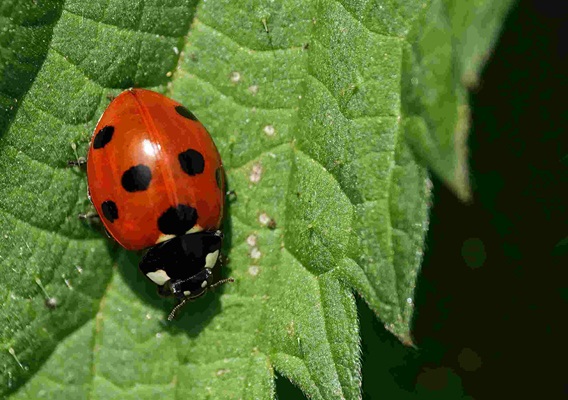
The seven-spotted ladybug is the most common type in Europe and is also found in North America and Central and Eastern Asia. It was introduced to the U.S. numerous times as a biological control agent to fight aphid populations, as they are capable of eating up to 5000 aphids in their lifetime.
Appearance: Up to ½ of an inch long with a red, dome-shaped body and a black head and thorax. They have two white splotches near the head and exactly seven black spots spread across the top of the body.
Lifespan: They go through four life stages: egg, larva, pupa, and adult, and will live anywhere from several weeks to several months, depending on conditions like climate and food availability.
Habitat: They can be found across the U.S. and thrive in almost any habitat where aphids live. Adults are good fliers and can easily migrate to new locations when needed.
Convergent Ladybug (Hippodamia convergens)
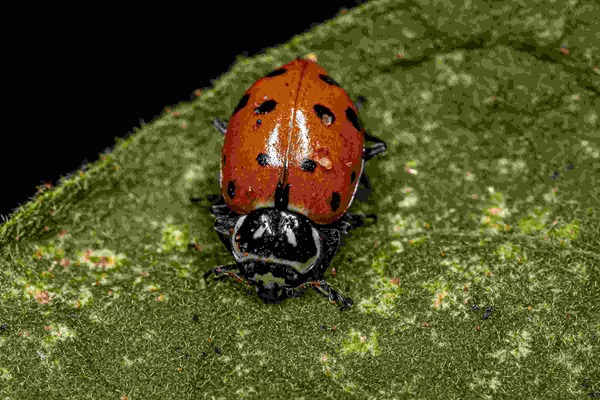
The convergent ladybug is commonly found across North America, from Southern Canada through the U.S. all the way down to South America. While many different ladybugs can be helpful for controlling a wide variety of garden pests, the convergent ladybug is the species that is often sold by insectaries for such control.
Appearance: Up to 1/3 of an inch with a slightly elongated shape and the typical red with black spots coloring. The most distinctive trait of the convergent ladybug is the black-and-white pattern on its pronotum, the section immediately behind the head, with white lines that converge.
Lifespan: Convergent ladybugs can live up to one year and often go into diapause for periods of time. Females lay anywhere from 200 to 1000 eggs over the spring and summer.
Habitat: They thrive in warmer temperatures and prefer to live around crops with high aphid activity.
Nine-Spotted Ladybug (Coccinella novemnotata)
The nine-spotted ladybug is a native ladybug and the official insect of New York State. While the nine-spotted ladybug used to be prolifically found in theNortheastern United States, its numbers have unfortunately been declining since the late 1980’s for unknown reasons.
Appearance: 1/3rd of an inch with nine spots, four on each elytra (the hardened forewing covering the ladybug’s flight wings), and one split down the middle to total nine.
Lifespan: They are most active from May to November and have shorter lifespans in warmer climates where development from egg to adult can take 15 to 20 days. Adults overwinter and re-emerge in the spring to breed again.
Habitat: They may occupy gardens, agricultural fields, parks, meadows, and prairies, feeding on aphids as well as nectar and pollen.
Two-Spotted Ladybug (Adalia bipunctat)
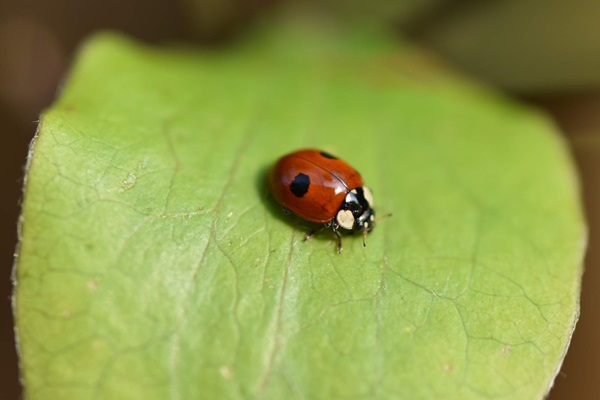
Once one of the most common native species in North America, the two-spotted ladybug has been declining in numbers and is designated a “Species of Greatest Conservation Need” in New York. This ladybug is also native to Europe, not just the U.S.
Appearance: They vary widely in appearance but are usually bright orange to red in color with exactly two black spots.
Lifespan: Emerging in early to late spring, two-spotted ladybugs mature into adults in a little under a month and can live for one to two years.
Habitat: They can be found in a range of habitats like fields, meadows, agricultural crops, and gardens, feeding on aphids and other soft-bodied insects.
Introduced and invasive ladybugs
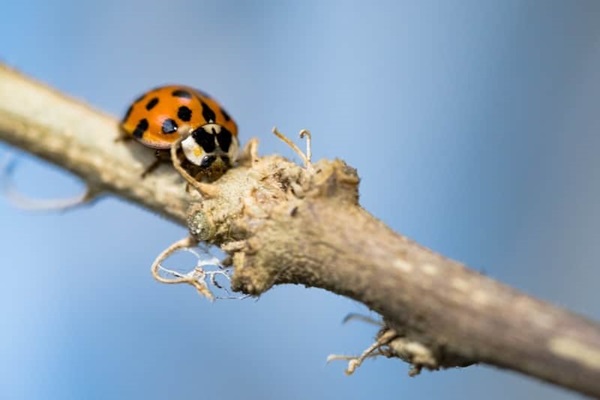
A few of the common ladybug species were introduced to North America, but that doesn’t make them an invasive species. Like many others, the Asian ladybeetle is a type of ladybug that was introduced to North America and Europe in an effort to control aphids. It is considered an invasive species due to its reputation as a voracious predator and its ability to out-compete other native ladybug species for food and survive diseases that native ladybugs aren’t as resistant to.
Asian lady beetles are about 1/3rd of an inch long and can be orange, yellow, or red with black spots. While their color and number of spots vary, they can usually be identified by the M-shaped mark on the thorax behind their head. They can thrive in both rural and urban settings but generally prefer gardens, farmlands, and areas with lots of vegetation. They can damage crops and plants in their search for food, which is soft-bodied crop pests like aphids.
The ecological benefits of ladybugs
Aphids can be a big problem for crops, gardens, and other types of plants. Ladybugs do their part by eating aphids and keeping the population lower than it would be otherwise. This is a natural way to ensure crops and vegetation continue to thrive without relying on chemical or more invasive interventions.
As mentioned above, some types of ladybugs are slowly declining in population because of climate factors, landscape changes, and biological shifts. Since they play an important role as a natural pest control agent, ladybug conservation is crucial.
What you can do about a ladybug infestation
While they are generally considered beneficial and harmless to humans, some types of ladybugs that bite can cause an allergic reaction. They can also become structural pests if they start breeding in large numbers indoors.
The most important prevention strategy for ladybugs is sealing up any entry points around doors and windows and making sure the perimeter of your home is secure. If you do notice a ladybug inside your home, simply vacuum or sweep it up. A larger infestation is unlikely, but it can usually be managed on a spot-cleaning basis.