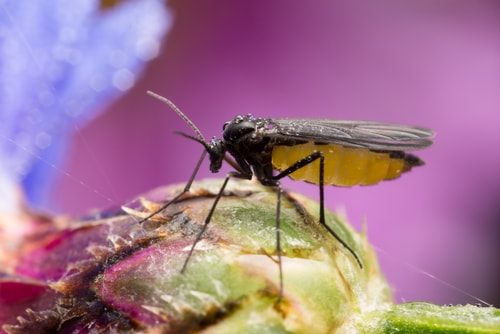
Flies
The lifespan of a fly
How long do flies live?
While there’s a common belief that flies only live for 24 hours, this is a myth. The lifespan of a fly depends on the species and environmental conditions. On average:
House flies, which are one of the most recognized and widespread insects, live 15 to 30 days, with females laying hundreds of eggs in their lifetime.
Fruit flies have a shorter lifespan, typically surviving 10 to 14 days, but they reproduce rapidly.
Gnats vary in lifespan, with some species living seven to 10 days and others lasting up to a month.
Cluster flies can survive several months, especially if they overwinter in homes.
Temperature, availability of food, and predators can all affect how long flies live. Warmer temperatures speed up their development, while colder conditions can extend the larval or pupal stages. Flies also have an enhanced perception of time, seeing movement up to four times faster than humans, making them difficult to swat. So while it feels like that newspaper swat happened very quickly, the fly saw it in slow motion.

The fly life cycle
Like all flies, house flies go through a complete metamorphosis with four life stages: egg, larva, pupa, and adult. The entire fly life cycle can take anywhere from seven to 50 days, depending on environmental conditions such as temperature and food availability. Below is a breakdown of each stage and what to expect.
Eggs
Female flies lay their eggs in decomposing organic matter, ensuring that their larvae will have an immediate food source upon hatching. Each female can lay five to six batches of eggs in her lifetime, producing 75 to 150 eggs per batch.
Here’s what you need to know about fly eggs:
Appearance: Fly eggs are tiny, oval-shaped, and white, measuring about one to two mm long, and can be difficult to spot with the naked eye.
Location: Found in rotting food, garbage, compost, feces, or other decaying organic material where larvae can feed immediately after hatching.
Duration: Eggs hatch quickly, usually within eight to 20 hours, depending on temperature and humidity.
Larvae (Maggots)
Once hatched, baby flies, known as maggots, enter the larval stage. This is when they rapidly grow while feeding on decaying material. Here’s what you need to know about fly larvae:
Appearance: Small, legless, pale white or cream-colored worms that squirm as they move. They lack wings and other distinguishable body parts.
Behavior: Maggots are focused on feeding and growing, consuming as much decaying organic matter as possible. They move constantly, burrowing deeper into their food source to avoid predators and extreme temperatures.
Duration: The larval stage consists of three molting phases, lasting anywhere from three days in warm weather to eight weeks in cooler conditions.
Pupae
During this stage, maggots develop into fully-formed adult flies while enclosed in a protective shell. Here’s what you need to know about fly pupae:
Appearance: Brown or dark red, oval-shaped pupal cases that harden as the fly transforms inside.
Behavior: This is a resting and transformation stage. Inside their hardened casing, pupae do not move or eat as their bodies undergo metamorphosis, developing wings, legs, and adult features.
Duration: The pupal stage lasts four to six days in warm weather, but in colder conditions, it can take longer.
Adults
Fully grown flies emerge from their pupal cases, ready to feed and reproduce within 24 to 48 hours. Here's what you need to know about adult flies:
Appearance: House flies are grayish with red compound eyes, transparent wings, and short bristly hairs covering their bodies.
Behavior: Adult flies emerge fully developed and ready to reproduce within 24 to 48 hours. Their primary goal is to find food, mate and lay eggs to start the fly's life cycle again. They are highly mobile, constantly seeking food sources, moisture, and suitable locations for egg-laying.
Duration: Adult flies typically live 15 to 30 days, with females producing hundreds of eggs throughout their lifespan.
With flies capable of completing their entire life cycle in as little as seven days, their populations can grow rapidly if left unchecked. Knowing their different stages can help prevent infestations before they start.
What the fly life cycle means for you
Since flies reproduce rapidly and develop in just a matter of days, a small problem can quickly turn into a full-blown nuisance. Eliminating breeding grounds, maintaining sanitation, and using effective fly traps can help break the cycle and keep fly populations under control. By taking proactive measures, you can prevent these pests from invading your home and avoid the frustration that comes with a growing fly infestation.