

Fruit flies
(Drosophila melanogaster)
Updated: May 25, 2025
One of the most common types of flies you can find in the house is fruit flies (Drosophila melanogaster). Also known as vinegar flies or pomace flies, these tiny insects are well known for swarming kitchens and multiplying quickly. The name fruit fly comes from their strong attraction to overripe or fermenting fruit, but they also seek out sugary liquids, trash, and damp areas in the home.
While fruit flies don’t bite, they can still be a major annoyance and a potential health risk. Their rapid reproduction makes them difficult to eliminate, and once a fruit fly infestation starts, it can quickly spiral out of control. Knowing what attracts them and learning how to get rid of fruit flies is essential to protect your home.
Identifying fruit flies
Fruit flies are often confused with other tiny flying insects, but their physical characteristics and behavior set them apart.
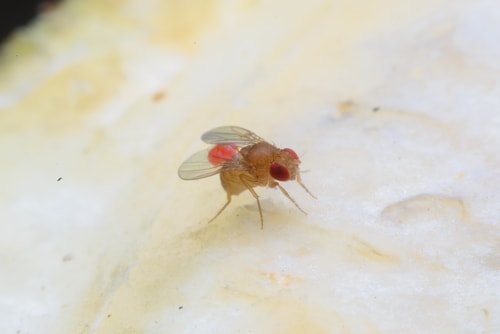
- Size and appearance: Adult fruit flies are about one-eighth of an inch long, with a compact, rounded body.
- Distinctive features: They have large, bright red or dark-colored eyes, short antennae, and transparent wings that allow them to hover and dart quickly.
- Color variations: Most fruit flies are yellowish-brown, but some species may appear darker, reddish, or orange-tinted.
- Preferred environments: These pests thrive in warm, humid environments, making kitchens, trash bins, and drains common hotspots for them.
Fruit flies are most active in late summer and early fall when temperatures are warm, but they can infest homes year-round, especially when food sources are available. Because they reproduce quickly, identifying them early is key to preventing a fruit fly infestation from getting out of control.
Fruit flies vs gnats
Although both fruit flies and gnats are small and often confused with each other, they actually have key differences that can be useful for telling them apart:
- Appearance: Fruit flies are slightly larger and have rounder bodies with red or dark eyes, while gnats are smaller, more delicate, and have long legs.
- Behavior: Fruit flies hover near ripening fruit and sugary liquids, whereas gnats are often found near moist soil, drains, and decaying plant matter.
- Breeding sites: Fruit flies lay eggs in rotting food and organic debris, while gnats prefer damp environments like potted plants and standing water.
Identifying whether you have fruit flies or gnats can help you choose the right removal method. Fruit fly traps and eliminating overripe produce can help control fruit flies. Reducing excess moisture and treating the plant soil is best for gnats. Proper identification means you’re using the right approach to prevent and eliminate these pests from your home.
Fruit fly lifespan and life cycle
In general, the average fly life cycle lasts for a relatively short time. However, the fruit fly life cycle is incredibly fast-paced, allowing their populations to grow rapidly. Under ideal conditions, fruit flies can develop from egg to adult in just one week. Let’s take a look at the different stages of the fruit fly life cycle:
- Eggs: Female fruit flies lay up to 500 eggs in fermenting fruit, trash, or other organic material. The eggs hatch within 24 to 30 hours.
- Larvae (maggots): Tiny, white maggots emerge and immediately begin feeding on their surroundings. This stage lasts four to six days, during which larvae consume as much food as possible to grow.
- Pupae: The larvae form a protective casing and begin transforming into adult flies. This stage lasts four to six days.
- Adults: Fully mature fruit flies emerge and are ready to reproduce within 24 to 48 hours. Adults typically live 30 days, but during that time, females can lay thousands of eggs.
Since fruit flies reproduce so quickly, infestations can escalate quickly. To stop them, it is essential to break their life cycle by eliminating food sources and using targeted control methods.
Where do fruit flies come from?
Did you know that some people think fruit fly eggs are naturally found in fruit and hatch once the fruit goes bad? Thankfully, this is not true. Fruit flies are drawn to any environment with decaying organic matter, where they can find food and lay eggs. They are attracted to:
- Overripe or decaying fruit and vegetables
- Sugary spills, alcohol, and fermenting liquids
- Trash bins, compost piles, and drains with organic buildup
These pests enter homes through open doors and windows or by hitching a ride on contaminated produce. Once inside, they find a breeding site and multiply quickly. If a sudden fruit fly infestation appears, the likely cause is unsealed food, rotting produce, or a hidden moisture source.
Fruit fly health risks
If you’re asking yourself, “Do fruit flies bite?” you can rest assured that they don’t bite. However, they can still pose health concerns. Since they breed in rotting food, garbage, and drains, they pick up bacteria and pathogens that they can transfer to food and surfaces.
- Contamination: Fruit flies land on food and kitchen surfaces, potentially spreading bacteria that can cause foodborne illnesses.
- Fruit damage: Female fruit flies lay eggs inside fruit, leading to premature rotting and spoilage. Infested fruit may contain tiny larvae, making it unappetizing or unsafe to eat.
- Invasive species risk: Some species of invasive fruit flies pose a significant threat to agriculture by damaging crops and affecting fruit production.
While fruit flies may seem harmless, their ability to spread bacteria and contaminate food makes them a pest worth eliminating. Taking steps to clean surfaces, store food properly, and address potential breeding sites can help prevent an infestation and reduce health risks in your home. For persistent issues, additional control methods may be necessary to fully eliminate these pests.
Fruit fly traps and other types of control
Fruit fly traps are one of the most effective ways to catch adult flies, but getting rid of fruit flies requires more than just trapping them. A combination of cleaning, eliminating food sources, and using the right control methods is the best for effective control and prevention.
If you’re looking to get rid of fruit flies from your home quickly, here’s what you can do:
- Set up fly traps: A DIY vinegar trap made of apple cider vinegar and dish soap can lure in flies and prevent them from escaping.
- Remove food sources: Discard overripe fruit, empty trash regularly, and clean up sugary spills.
- Clean drains and garbage bins: Fruit flies can breed in moist, organic buildup, so regular deep cleaning is essential.
For additional fruit fly prevention tips, here are some actions you can take to help keep yourself protected:
- Use sticky traps: These adhesive traps capture adult flies and reduce their population.
- DIY repellents: Essential oils like peppermint, lemon, and lavender may help deter fruit flies from landing on indoor surfaces.
- Check produce: Inspect fruits and vegetables for signs of damage or eggs before storing them.
Whether you’re using DIY solutions or store-bought traps, consistent efforts to clean drains, store food properly, and remove attractants will help break the fruit fly infestation cycle and keep these pests from coming back.
Fruit flies in science
Although they’re very annoying, did you know that fruit flies actually play a crucial role in scientific research? Their short lifespan, genetic similarities to humans, and rapid reproduction make them valuable for studies in genetics, disease research, and even space exploration.
Here are a few of the ways that fruit flies are used within science:
- Genetic research: Fruit flies were among the first organisms used in genetic studies, helping scientists understand DNA, mutations, and inheritance.
- Diseases research: Researchers study fruit flies to model human diseases, including neurodegenerative disorders like Parkinson’s and Alzheimer’s.
- Space exploration: NASA has sent fruit flies to space to observe the effects of microgravity on biological development.
The discoveries made through fruit fly research continue to shape our understanding of biology and medicine. Though they may be useful in labs, most homeowners would prefer to keep them out of their kitchens. So, whether you're interested in their scientific contributions or just looking for ways to get rid of fruit flies, understanding their behavior is the first step in managing them effectively.