


What are firebrats?
(Thermobia Domestica)
Firebrats are very similar to silverfish in their biologies and habits. Both are part of the order Zygentoma which includes over 500 known species that share a similar segmented anatomy. Firebrats aren’t considered harmful or dangerous to humans or pets.
What are firebrats?
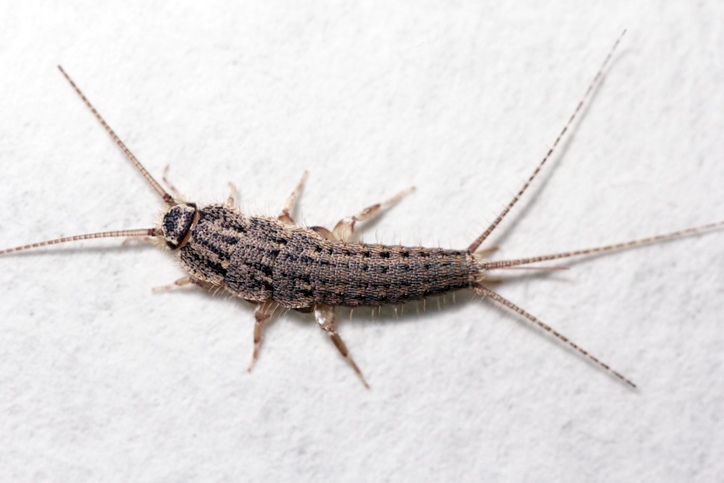
Firebrats are a type of silverfish and have many of the same habits. They are slightly larger at up to ½ an inch long with a silvery appearance mottled with patches of light and dark scales. They have a carrot-shaped body that tapers from front to back and a pair of long antennae on their heads. They are sometimes called “bristletails” because of the three long bristles at the back of their bodies.
Firebrats lay eggs in batches of about 50 that will hatch within a couple weeks. They live for about three to four years, molting multiple times along the way. Some people wonder if firebrats bite and the answer is no. They also aren’t known to spread disease or be harmful to humans and pets.
Where do firebrats live?
Firebrats prefer warmer temperatures; they are often found near sources of heat such as furnaces, water heaters, boiler rooms, etc. They can survive in drier conditions than most insects. For example, they have been found living in attics where temperatures have been known to reach 130°F and where the relative humidity is very low.
Firebrats and silverfish are present in most parts of the world and, if outdoors, are usually found under rocks and plant matter.
What do firebrats eat?
Firebrats are scavengers and feed on mold, dead insects, and other organic debris, including crumbs, glue, starch, and paper products. They also will infest, and attack stored food products, particularly stored oats and similar grain products, especially if the food is moist and has some mold.
Firebrats are also known to be pests of old books and will feed on the pages. They may also feed on and damage wallpaper. They are extremely resistant to starvation and may be kept alive in a glass jar without food and water for weeks.
Signs of a firebrat infestation
The signs of a firebrat infestation and a silverfish infestation are similar, and both insects can be present at the same time. Look for the following signs that you might have firebrats in your home:
Tiny holes in the pages of old books
Yellow spots on newspapers
Droppings that resemble spilled pepper
Loose scales in your flour and cereal
Visible insects
How to help get rid of firebrats
Firebrats can be very difficult to control. Efforts should be focused on areas that stay quite warm, although firebrats can be found throughout a home or building. Humidity control can help keep firebrats and silverfish populations to a minimum.
In addition, firebrats often live in the soffits and behind the fascia board behind gutters. Individual firebrats then invade the interior of the home from this “reservoir” site. Blown-in insulation compounds the problem because it prevents a professional from safely venturing into the attic to look for active harborages. A pest control professional should be consulted when firebrats are a regular problem.
Areas that may require attention and possible treatment include:
Furnace rooms, boiler rooms, etc.
Voids where plumbing is located
Voids behind electrical outlets
Molding around windows and doorways
Attic, crawl space, and basement
Soffits
Need help with firebrat control? We can help with silverfish and firebrat control strategies that are tailored to your needs.