


Jerusalem Cricket
(Stenopelmatus Spp.)
Also known as stone crickets or potato bugs, Jerusalem crickets are a group of flightless insects from the Stenopelmatus family. There are at least 100 species of Jerusalem crickets found in the Western U.S. between California and Oklahoma.
Jerusalem bugs didn’t originate in Jerusalem and instead got their name because their size and appearance startle people into saying “Jerusalem!” a polite euphemism for expletives.
What do Jerusalem crickets look like?
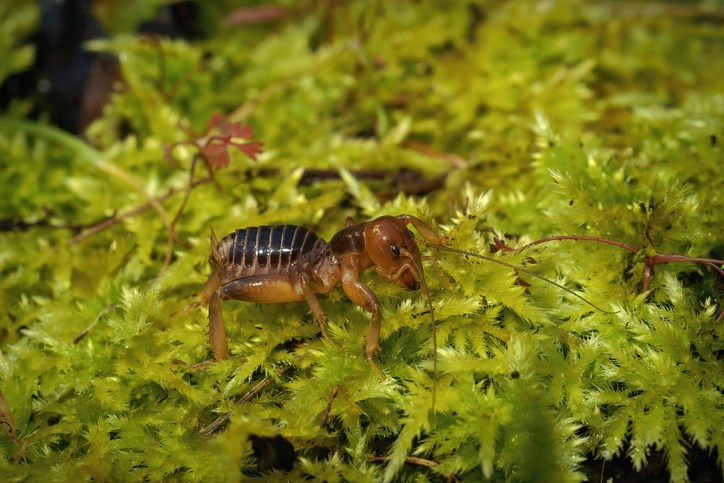
Jerusalem crickets are large, stout insects with big orangish-yellowish heads. Their eyes are set far apart on either side of their heads, with antennae to accompany them. They are brown with black bands on the abdomen, six legs, and powerful mandibles that can easily cut through plastic and fabric.
Jerusalem cricket adults can grow up to 2 inches long and can appear somewhat intimidating if one catches you by surprise.
Life cycle and lifespan
Jerusalem crickets go through the typical egg, nymph, and adult stages. When they are ready to mate, both male and female Jerusalem crickets will beat their abdomens on the ground producing a drumming sound. The vibrations travel through the soil to attract mates.
After mating, the female will lay eggs before eating the male. After a few weeks, the eggs hatch into nymphs that will grow and molt 10 or more times, taking anywhere from two to five years to reach adulthood.
Once an adult, they complete the mating cycle themselves and die off after two to six months.
Habitat and distribution
Jerusalem crickets are found in the western United States along the Pacific Coast eastward into parts of Montana and south to New Mexico. About 40 species are known to be native to California.
Jerusalem crickets like sandy environments and prefer to live under natural cover like rocks, logs, or dead plant matter. They are also commonly found in home spaces such as garages. They burrow into loose soil, especially underneath rocks or boards, and they will sometimes wander into homes. Buildings located in the foothills, canyons, and mountains may be more prone to problems with Jerusalem crickets.
Jerusalem crickets stay active all year round but may become more visible in the spring during mating season.
Jerusalem cricket diet and behavior
Jerusalem crickets are mostly nocturnal and are highly active at night. They will make an appearance during the day in the spring months for mating season.
They use their strong mandibles to slice through plant roots and tubers, which are their primary food sources, in addition to decaying plant matter. They will also eat other insects, even their own kind, if necessary.
Crickets communicate using sound, scent, and touch. Jerusalem crickets make a hissing-like sound by rubbing their rear legs next to their abdomen. They also communicate by tapping their abdomens against the ground to create ground vibrations that are meant to attract mates.
Are Jerusalem crickets dangerous?
Jerusalem crickets pose very little threat to humans. They aren’t aggressive insects and will choose to find an escape route rather than attack if they feel threatened.
So, do Jerusalem crickets bite? Thanks to their large, powerful mandibles, they can, but there is no venom or poison to cause lasting effects. They may seem intimidating because of their size, but Jerusalem crickets don’t do much damage to homes and are more of a threat to crops than anything else.
What to do if you have a cricket infestation
In general, no treatments are necessary when Jerusalem crickets are found indoors. Indoor invasions are uncommon, and you’re more likely to discover these crickets when working outdoors while gardening.
Placing sticky board traps along walls in areas where they may be found easily traps individual crickets. If a single cricket is found inside, it can easily be captured by placing a cup or jar over the insect, slipping a piece of paper underneath, then flipping the container over. The cricket can then be released outside away from the structure.
If you have a cricket infestation in your yard, there are a few strategies to get them under control, including keeping outdoor areas well maintained, eliminating excess moisture, and cleaning up debris like rocks, logs, and woodpiles.