

Crickets: Identification, behavior, facts
Imagine stepping outside on a warm summer evening, the air filled with the sound of chirping that seems almost orchestrated by nature itself. This music to our ears? It's largely the work of a small but fascinating creature—the cricket. But what are crickets, and how can we identify these creatures that serenade us through the night?
What does a cricket look like?
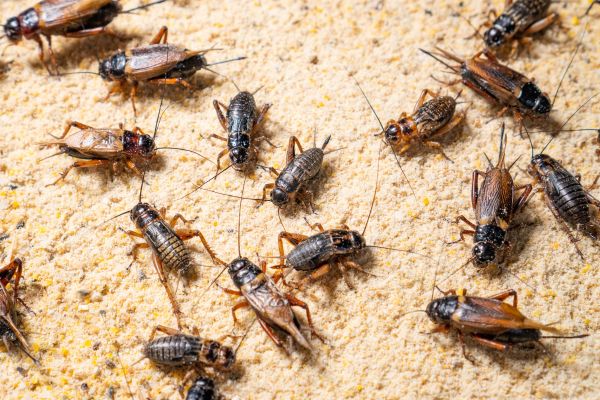
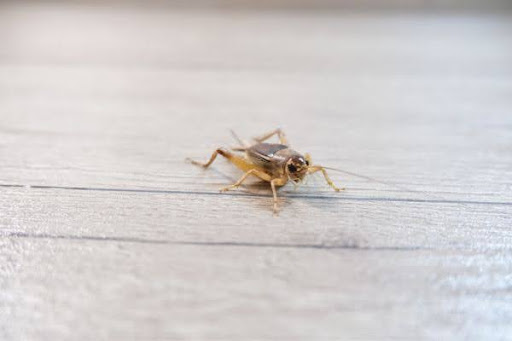
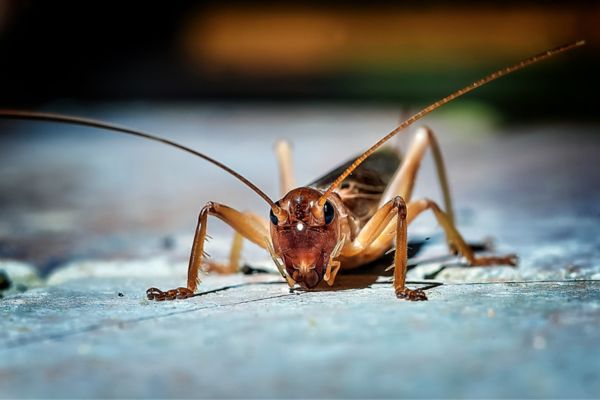
Crickets can be of various colors, from black and brown to green and sometimes even yellowish shades. As adults, cricket bugs are about one to two inches long with elongated bodies and large, powerful hind legs adapted for jumping. Crickets are also recognizable by their long antennae, which can be as long as or longer than their bodies, and by their wings, which lay flat on their backs. Some species have wings that are functional for flight, while others have wings that are more adapted for chirping.
Common types of crickets
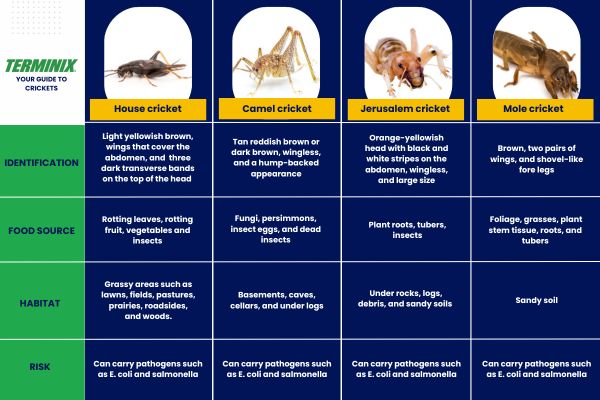
Each cricket bug has distinct features and behaviors that set them apart. From their preferred habitats to their unique adaptations, understanding these common crickets, such as house, field crickets, camel, Jerusalem, and mole crickets, can help you identify which species has invaded your home.
Are crickets dangerous?
Crickets, while not usually dangerous, can be a nuisance. Crickets are not typically poisonous for pets, but if ingested, their exoskeletons may irritate the stomach lining, potentially causing vomiting. Additionally, cricket feces can harbor worms, posing a risk of parasitic infections if ingested by pets.
Cricket bugs are generally not considered harmful to humans, but some individuals may experience allergic reactions after frequent contact with them. Beyond health concerns, crickets can also damage personal property, as they tend to feed on fabrics, especially those soiled with sweat or food. Certain species, like mole crickets, can harm your yard by burrowing in the soil and can also damage indoor and outdoor plants due to their omnivorous feeding habits.
Do crickets bite?
Crickets can bite. However, they aren't strong enough to puncture human skin. If they somehow manage to do this, the bite can lead to an infection because crickets can carry such pathogens as E. coli and salmonella on their bodies. And while crickets typically will not bite, their waste can carry these pathogens, as well as tiny worms, making them an unwanted presence in your home.
How long do crickets live?
Crickets typically live for about eight to ten weeks. Their lifecycle comprises several stages, starting with the egg, where they are laid in the soil and hatch within one to two weeks. The next stage is the nymph stage, during which they resemble adult crickets but lack wings. In this stage, they go through five to ten molts over the course of one to two months as they grow. Finally, they reach the adult stage, where they develop wings and are capable of reproduction, living for a few weeks before their lifecycle ends.
Cricket habitat and behaviors
Cricket habitats are diverse, ranging from meadows and forests to caves and even inside houses. While many species have wings and are capable of flight, not all crickets fly. Their diet mainly consists of plants, fungi, and sometimes other small insects. Predators of crickets include birds, spiders, and small mammals. Cricket bugs are well-known for the chirping sounds they produce, which males primarily make by rubbing their wings together to attract females or deter other males, a behavior known as stridulation. This sound is a crucial part of their mating rituals and territorial behaviors.
What’s the difference between grasshoppers and crickets?
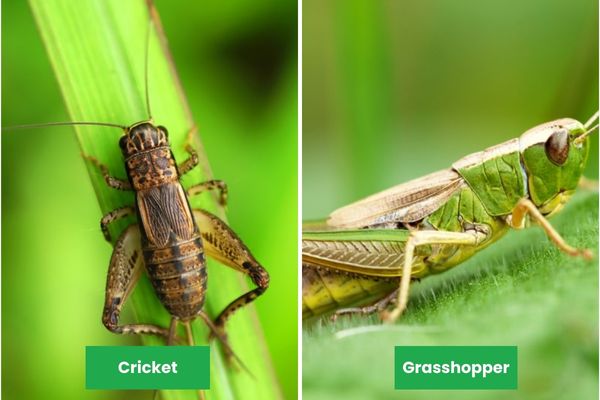
Since crickets and grasshoppers are related, it can be hard to tell them apart. The key difference between these two insects is the length of the antennae. Crickets have long antennae, sometimes as long as their bodies, while grasshoppers have shorter antennae.
There is also a difference in the way these two insects make sounds. A cricket will rub both of its wings together to make a chirping sound. Conversely, a grasshopper will rub one of its rear legs against its wing to make noise.
What attracts crickets to my house?
Crickets may come to your house when running from extreme weather conditions and predators. Light sources can attract cricket bugs and entice them into your home through open doors, windows, and cracks in walls, foundations, or siding. Crickets will establish themselves in a home with plenty of food, water, and dark, moist hiding places.
Since crickets are often larger than most household pests and insects, it's easy to notice when they take up residence in your home. If you find chewed-up fabrics and hear loud chirping sounds at night, it's safe to say you may have crickets.
How do I get rid of and keep crickets out of my house?
If your home is infested with crickets, there are a few steps you can take to help tackle the problem. Seal all cracks and holes in your property's structure and eliminate warm and moist spots. Make sure any garbage – especially garbage containing leftovers – is neatly tied up and disposed of properly. Be sure to wash clothing and fabrics, as cricket bugs can be attracted to fibers soiled with food or perspiration. If you find crickets or their eggs in your house, you can use a vacuum cleaner to remove them.
Unfortunately, DIY methods rarely work to tame a cricket problem. If you’re dealing with crickets in your home – contact the Terminix cricket experts for cricket control.
Crickets are one of the 25 pests covered with a Terminix PestFree365 pest control plan.
![best protection logo]()
Pestfree365+ Plan
- Interior and exterior pest inspection
- Protection from 39 pests, including 14 pests that may be costly to eliminate
- Regularly scheduled pest treatments
- Terminix It Guarantee which means if pests come back between treatments, so will we — at no additional cost
PLUS unlimited protection from out-of-pocket costs
