


What are cicadas?
Cicadas are insects well-known for their distinctive buzzing or clicking sounds, which males produce to attract mates. They are found worldwide, with the highest diversity occurring in tropical regions. While their loud mating calls can be a nuisance to some people, they are a fascinating part of the natural world and can signal summer has arrived.
Cicadas (Cicadoidea) are grouped into the family Cicadidae and belong to the Hemiptera order, along with leafhoppers, aphids, and whiteflies. Though one species of cicadas is sometimes referred to as the 17-year locust, this is incorrect as cicadas are not locusts.

The cicada life cycle
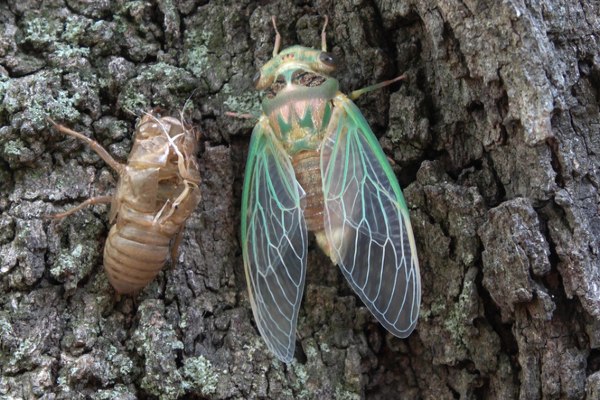
The cicada lifecycle begins with an adult female laying eggs in slits she created in tree branches or stems. Once the eggs hatch, the nymphs fall to the ground and burrow into the soil, feeding on plant sap for several years. Once the mature nymphs have emerged from the ground, they’ll firmly attach themselves to a tree branch or other natural element to molt and transform into an adult. From here, they’ll live for approximately four to six weeks.
Cicada lifespan
The lifespan of cicadas varies depending on the species and whether they are annual or periodical cicadas. Annual cicadas typically live for four to six weeks as adults.
Periodical cicadas have much longer lifespans due to their extended nymphal periods, which can last either 13 or 17 years, depending on the species. Once they emerge, they also live for a few weeks. Overall, the adult lifespan of cicadas is relatively short compared to their time spent underground as nymphs.
Annual cicada emergence
Annual cicadas emerge every year, hence the term "annual." The exact timing of their emergence can vary depending on the local climate and species. Generally, annual cicadas emerge during the warmer months, typically in late spring or summer.
The emergence of annual cicadas is primarily driven by environmental cues such as temperature and soil conditions. Once the soil temperature reaches a certain threshold, typically around 64°F (18°C), nymphs begin to emerge from the ground as adults.
13- and 17-year cicada emergences
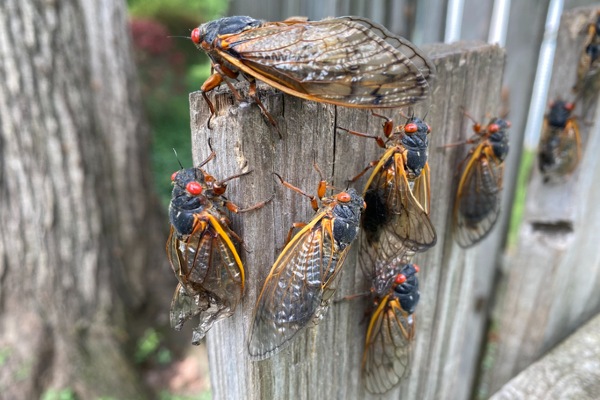
Periodical cicadas have synchronized mass emergence patterns, with specific broods emerging every 13 or 17 years. Similar to annual cicadas, this emergence is driven by biological cues such as temperature and soil conditions.
What do cicadas look like?
Cicadas have distinct physical characteristics that make them easily recognizable.
- Body: They have stout bodies, usually about 0.8” to two inches long, although sizes can vary depending on the species.
- Head: Their heads are broad and feature large, bulging compound eyes that are spaced widely apart. They also have three simple eyes known as ocelli located between their compound eyes.
- Wings: Adult cicadas have two pairs of transparent, membranous wings. The wings are often veined and can be tinted with various colors, including shades of green, brown, or black.
- Coloration: Cicada bugs are typically green, brown, black, or a combination of colors. These colors help them blend in with their natural surroundings, such as tree bark or foliage. Some cicada species may have vibrant markings or patterns on their wings or bodies, including hues of orange, red, blue, or yellow.
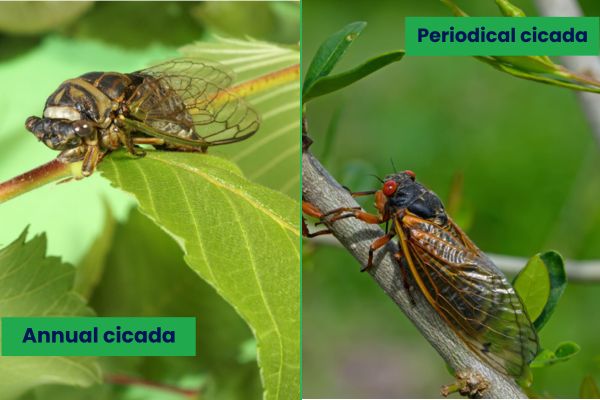
Cicadas are capable of agile and sustained flight. Their ability to fly is crucial for various aspects of their life cycle, including finding mates, searching for suitable egg-laying sites, and escaping predators.
Common types of cicadas
In the United States, there are several common types of cicadas, including annual and periodical cicadas. Some of the most notable species include:
- Annual cicadas
- Dogday cicadas: This species is widespread across the United States and is known for its loud buzzing calls during summer.
- Swamp cicadas: Found in wetland habitats across the eastern United States.
- Dusk-singing cicadas: These cicadas are typically found in wooded areas and are known for their calls during the evening hours.
- Periodical cicadas
- 17-year cicadas: These cicadas emerge every 17 years in massive broods in various parts of the eastern United States. They are known for their synchronized emergences and loud chorus.
- 13-year cicadas: This cicada species emerges every 13 years in synchronized broods. They are found in different regions of the eastern United States.
The science of cicada sounds
Cicadas produce a distinctive buzzing or clicking sound, often described as a loud, high-pitched whine. The sound is generated by the rapid vibration of specialized structures called tymbals, which are located on the sides of the abdomen in male cicadas.
So, what are cicadas doing when they make this noise? The purpose of the cicada's loud mating call is to attract females. Female cicadas are drawn to the sound and will approach males that produce the loudest and most vigorous calls. Aside from mating calls, cicadas may also produce alarm or distress calls in response to threats or disturbances.
The impact of cicadas
Cicadas play significant roles in ecosystems, with both positive and negative impacts:
- Nutrient cycling: When cicada bugs emerge as adults, mate, and eventually die, their bodies provide a rich source of nutrients for various organisms in the ecosystem. Decomposers such as bacteria and fungi break down the cicada carcasses, returning valuable nutrients to the soil. This process enhances soil fertility and contributes to nutrient cycling in forest ecosystems.
- Food source: Cicadas serve as an abundant food source for numerous predators, including birds, mammals, reptiles, and even some insects.
- Plant damage: While cicadas primarily feed on plant sap during their nymphal stage, they can cause damage to young trees and shrubs due to the slits females create when they lay eggs.
While cicadas can have localized impacts on certain plants and trees, their emergence provides valuable resources for a wide range of organisms.
What does it mean when you see a cicada?
In various cultures and traditions, seeing a cicada can hold symbolic meanings and interpretations:
- Resilience and endurance: Cicadas spend years underground as nymphs before emerging as adults. Seeing a cicada may represent the ability to overcome challenges and adversity.
- Transformation and change: Cicadas undergo metamorphosis, which symbolizes transformation and change. Seeing a cicada may indicate a period of transition or transformation in one's life.
- Renewal and rebirth: Cicada bugs emerge from the ground in large numbers, which symbolizes renewal and the cyclical nature of life. Seeing a cicada may signify new beginnings or opportunities.
The symbolic meanings associated with cicadas can vary widely depending on cultural beliefs, personal interpretations, and individual experiences.