

Understanding centipedes and millipedes
Content Updated: February 19th, 2025
Knowing the difference between centipedes and millipedes is essential for effective pest control. While both creatures may seem similar, they have different behaviors and habitats, which impacts how you should address them if they invade your home. By identifying which one you’re dealing with, you can choose the proper methods to manage them, helping ensure a safer and more efficient approach to protecting your living space.
What are centipedes?
Centipedes are venomous predators of the class Chilopoda and have many legs (though not always 100!). They hunt insects and other small creatures, injecting venom to kill their prey. While usually not aggressive towards humans, their bites can be very painful, especially from larger species. Some people may have severe allergic reactions to their venom. Common types include house centipedes, giant centipedes, and stone centipedes. Recognizing centipedes is key to getting rid of them, as centipedes require different control methods than harmless millipedes.
What do centipedes look like?
Centipedes are found in numerous colors, but most are reddish-orange or brown. The type most prevalent in homes is the European and North American house centipede, as its name suggests. It has long legs compared to other centipedes' shorter, more hook-like legs. The thick brown stripes running down its segmented body can also easily identify the house centipede. Although the more common house centipede is only one inch to 1.5 inches in length, other centipedes can be significantly longer and bigger. Soil centipedes grow to as large as nearly eight inches.

What are millipedes?
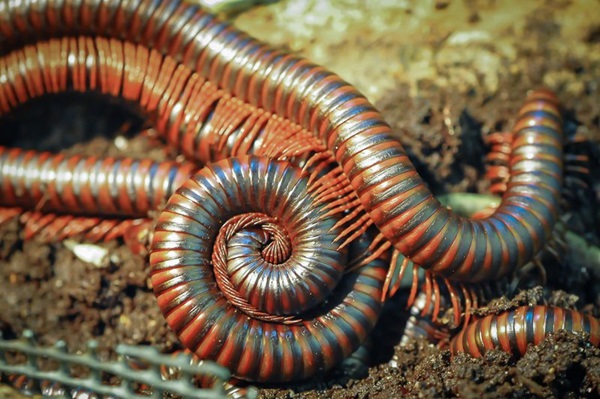
Millipedes, scientifically known as Diplopoda, are arthropods with two pairs of jointed legs on many of their segments, with two segments fused to form each double-legged section. Most millipedes are detritivores, feeding on decaying plant material like rotting leaves. While they typically don't pose problems for humans, they can become pests in homes and gardens, particularly in greenhouses, where they may harm young plants. North America has about 1,400 species, including common types like the garden millipede and the common millipede.
What do millipedes look like?
Millipedes have numerous pairs of legs and resemble tiny earthworms. They have leg pairs ranging from 40 to 400 pairs, although some can have up to 750 legs! These foragers are typically brownish or black in hue, and most range from 1/10" of an inch to one inch, although some can exceed 5 inches in length.
What are the differences between millipedes vs. centipedes?
While centipedes and millipedes may appear quite similar, there are a few differences. Millipedes have two pairs of limbs in each segment, positioned directly beneath their bodies. On the other hand, centipedes have one pair of legs in every segment positioned on the flank. Centipedes have a flatter body when viewed from the side, whereas millipedes feature a rounder shape.
Bites and other dangers
Centipedes can bite humans, though it's not common. Their bites are typically painful and can cause localized swelling, redness, and temporary numbness. Millipedes do not bite but can secrete a defensive fluid that can irritate the skin, eyes, and mucous membranes. Centipedes and millipedes can also be nuisances in homes, particularly in damp areas. While they are not typically considered dangerous to pets, some may be sensitive to their bites or secretions.
Lifecycle
Centipedes and millipedes have different lifecycles and lifespans. Centipedes hatch from eggs into larvae that resemble more miniature adults and grow by shedding their outer skin, a process called molting. Depending on the species and environmental conditions, this process can take several weeks to a few months. Depending on the species, centipedes typically live for about one to six years.
Millipedes also start as eggs but grow more slowly. They add more body segments and legs each time they molt, and depending on the species and their environment, this process can take several months to a couple of years to reach maturity. Millipedes generally have a longer lifespan, from two to over 10 years.
Diet
Centipedes are carnivores and do not eat plants. Instead, centipedes eat various small insects, such as silverfish, spiders, crickets, moths – and sometimes even other centipedes. Millipedes are omnivorous, although they typically eat dead or decaying plants. However, if it is the only option available, they will eat live plants or dead animals.
Millipedes are omnivorous, although they typically eat dead or decaying plants. However, if it is the only option available, they will eat live plants or dead animals.
Habitats and behaviors
Centipedes favor damp, dark places. They can often be found in soil beneath stones or under mulch and wood piles. Centipedes can lurk indoors in moist, humid areas such as bathrooms, closets, or basements/attics. On the other hand, millipedes prefer to reside in moist places outdoors, such as in loose soil. When temperatures turn cold, and the ground becomes hard, they may migrate indoors. Millipedes in the home tend to stick to lower floors, such as the basement, although the damp nature of a bathroom is particularly favorable and hospitable for these arthropods.

Leg movements
Centipedes and millipedes have very different ways of moving due to their unique leg structures. Centipedes are known for their quick and agile movements; they have one pair of legs per body segment, which allows them to move swiftly as they hunt for prey. Their legs are positioned on the sides, giving them a flatter appearance and enabling them to dart around quickly. In contrast, millipedes move much more slowly and steadily. They have two pairs of legs on each body segment, which creates a wave-like motion as they crawl.
Signs of a centipede or millipede infestation
If you suspect you might have a centipede or millipede infestation in your home, look for these signs:
Sightings of live centipedes or millipedes, especially in damp areas
The presence of shed skins or molts
Small, visible droppings that resemble tiny black or brown pellets
An increase in other pests, like insects that may attract centipedes for food
Egg cases or clusters of eggs hidden in dark corners or soil
Unusual odors, especially from decaying plant material
How Terminix helps you with centipede and millipede control
At Terminix, we understand that finding centipedes or millipedes in your home can be unsettling. Our expert pest control technicians are trained to identify and help eliminate these arthropods using targeted treatments tailored to centipedes' and millipedes' specific behaviors and habitats. Trust Terminix to provide the reliable, professional support you need to reclaim your space from unwanted pests.
Centipedes/Millipedes are one of the 25 pests covered with a Terminix PestFree365 pest control plan.
![best protection logo]()
Pestfree365+ Plan
- Interior and exterior pest inspection
- Protection from 39 pests, including 14 pests that may be costly to eliminate
- Regularly scheduled pest treatments
- Terminix It Guarantee which means if pests come back between treatments, so will we — at no additional cost
PLUS unlimited protection from out-of-pocket costs
