

What are boxelder bugs?
(Boisea Trivittata)
Also called the box bug or maple bug, a boxelder bug is a species of bug native to eastern North America. Its close relative, the western boxelder bug, is found on the opposite coast.
The boxelder bug is classified as a Hemiptera or “true bug”, which includes over 80,000 different species.
Identifying boxelder bugs
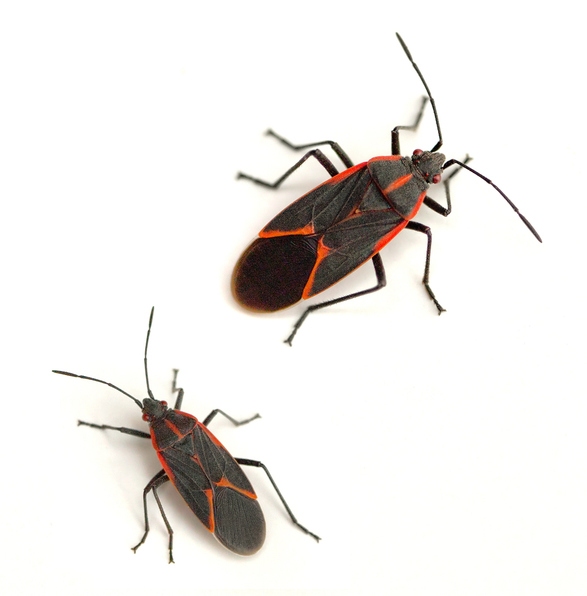
Boxelder bugs range from gray to black with a distinctive red crisscrossing stripe pattern on the wings and grow up to ½ an inch long. They are sometimes mistaken for stink bugs due to their size and shape.
Nymphs are bright red with black wing buds. Boxelder bugs are usually found on boxelder trees as well as maple and ash trees where they feed on developing seeds.
What attracts boxelder bugs to my home?
To get through colder seasons, boxelder bugs are attracted to heated buildings. As the weather cools in late summer and early fall, the sun warms the southern and western walls of buildings. The warmth attracts large groups of these insects to buildings, where they crawl inside cracks, stay there for the winter, and remain active behind siding and inside walls.
Once the home's heating system turns on for the season, the insects may mistake it for springtime and try to enter the home in search of food and water. Once inside inhabited areas of a home, a boxelder bug infestation may leave behind excreta that could stain upholstery, carpets, and drapes, and they may feed on certain types of house plants.
Boxelder bug life cycle
Adult boxelder bugs emerge in the spring from their overwintering locations and lay red, oval-shaped eggs on the leaves and bark of trees.
A few days later, these hatch into nymphs that immediately start feeding on seeds, foliage, twigs, and fruit. Nymphs molt multiple times before reaching adulthood over the summer and begin reproducing right away.
The cycle completes one more time, and the second generation of adults will overwinter and emerge the next season to continue the process.
What do boxelder bugs eat?
Boxelder bugs feed on the seed pods and newly developing leaves of their host trees—usually ash, maple, and boxelder—and other similar species by sucking the sap out of them. Sometimes, they will also feed on fruit trees, including cherry, plum, peach, and apple.
If found indoors, they do not feed on human food, but they may turn to indoor plants if they are available and have been known to feed on certain types of fabrics, such as curtains and upholstery.
Are boxelder bugs dangerous?
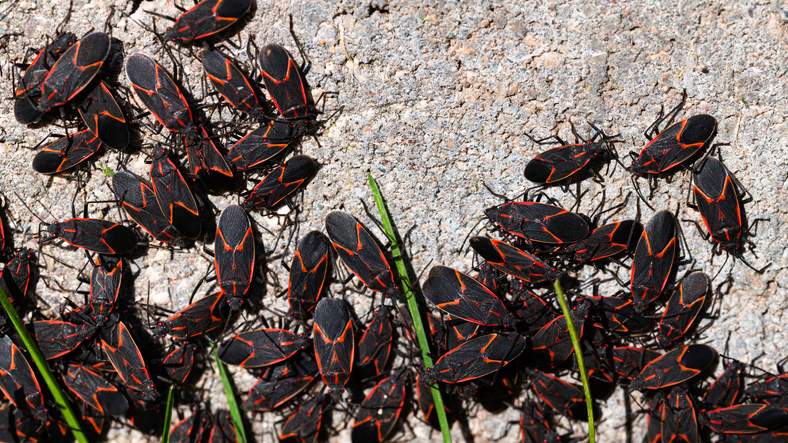
Boxelder bugs are considered harmless to humans and animals. They don’t carry or transmit diseases, and they don’t bite. They can be a nuisance if they make their way inside your home, but they aren’t known to cause extensive damage.
A large infestation can stain surfaces with their feces and may produce a foul smell, but overall, they are unlikely to be dangerous or harmful.
How to help get rid of boxelder bugs
The best way to control boxelder bugs is by prevention. If it’s too late and they are already inside, it takes a professional to find and treat the right areas to minimize the number of pests seen inside. If your home has experienced a problem with overwintering pests, take the following steps next summer to prevent a recurrence:
Seal as many cracks and holes on the outside of the home as possible, especially on the south and west walls where the sun heats the home during the late summer and fall.
Be sure that all foundation and attic vents have tight-fitting screens.
Check the soffit vents and any gable vents or turbine vents on the roof.
Have your Terminix® professional treat the outside west and south walls of the home near the eaves. This treatment should be completed in mid-to-late August
Need help with boxelder bugs We can help with pest control strategies that are tailored to your needs.