

When to use cellulose insulation
Choosing the right insulation for your home is an important decision – but it doesn’t have to be difficult. Cellulose insulation is a popular choice for many homeowners thanks to its eco-friendliness and ability to regulate hot and cold temperatures. At Terminix, our high-quality cellulose insulation, which has a pest control additive, can replace or be added on top of your existing insulation to help increase your home’s energy efficiency and comfort all year long.1 So, is cellulose insulation right for your home? Explore the benefits of our attic insulation services.
What is cellulose insulation?
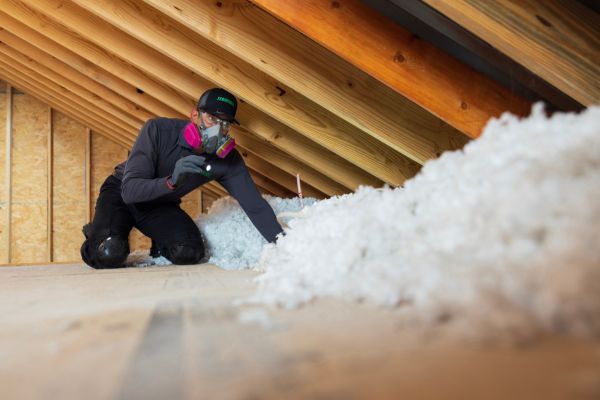
Cellulose insulation is made from at least 85% recycled paper treated with a fire-retardant chemical. This versatile insulation is available in two primary forms: blown-in cellulose insulation and spray-applied. Blown-in cellulose insulation involves mechanically installing loose-fill cellulose into wall cavities or attics using special equipment to ensure a seamless, snug fit. Spray-applied cellulose is mixed with water and applied wet. It is also available as a dense pack or in batts.
Regardless of the application method, cellulose insulation's effectiveness in resisting heat transfer is measured using its R-value. The higher the R-value, the stronger the insulation, and depending on the climate where your home is located, you may need to choose an insulation with a stronger rating. Cellulose insulation has a competitive R-value, typically around 3.2 to 3.8 per inch, which is the highest R-value of the loose-fill options available.

Advantages and disadvantages
Cellulose insulation is an eco-friendly option for homeowners. It has excellent thermal properties, keeping homes warmer in winter and cooler in summer.1 This type of loose-fill insulation does not settle as much as other types and is made from recycled paper products, mainly newspaper.
Homeowners often ask if cellulose insulation is more flammable than other types of insulation since it is made of paper; however, it is treated with fire retardant chemicals and has a Class 1 fire rating. It also has strong ratings for low smoke development and fire spread. Another key factor when considering cellulose insulation is that it can also be treated with boric acid – an effective pesticide. When certain insects ingest or come into contact with boric acid, it kills them so they cannot infest your insulation.2
Blown-in cellulose vs. fiberglass insulation
Blown-in cellulose and fiberglass insulation are both popular choices for insulating homes. Cellulose is made from recycled paper treated with fire retardant, while fiberglass is made from extremely fine glass fibers. Because cellulose insulation can be blown into a space, it is often used in attics, where spacing can be cramped. Fiberglass insulation can be blown in but is more often cut from larger sheets or rolls and fitted into the space. Cellulose insulation has a higher R-value than fiberglass, making it a more practical choice for homes in any climate.

Cellulose insulation services from Terminix
Blown-in insulation can help keep your home energy-efficient and protected from pests all year long. At Terminix, our cellulose insulation services can range from optimizing your current insulation to installing brand-new insulation from scratch. For example, we install insulation to the recommended R-value either on top of your existing insulation or directly between the joists.
Once you schedule your free inspection, a technician will determine the right approach and walk you through your treatment plan.
Schedule your attic insulation service with Terminix today.
1 Savings vary and depend on use patterns, the home’s current insulation, home and system efficiency and products purchased.
2Insulation’s control effect begins only after affected insect/arthropod contacts insulation. Visit Terminix.com/home-services/attic-insulation/ to learn more about affected insects/arthropods. Product brand availability varies by location. Control of affected insects/arthropods is limited to contact with insulation and does not extend outside of the insulation. Use of insulation does not substitute for holistic pest management. For active pest infestations, you should consult a licensed pest control operator.