Bed Bugs
How to Know if You Have Bed Bugs
Contributed by: Tim Best
Updated on: November 11, 2024
Bed bugs are a nasty and uncomfortable problem. Bed bug signs can be hard to detect and even trickier to treat. To the untrained eye, bed bug bites can be confused with bites from other biting insects. Find out how to identify the early signs of bed bugs and when to seek help from a Terminix technician.
How to check for bed bugs
If you're trying to spot bed bug signs, start in the bedroom. Bed bugs can have many hiding places but tend to congregate near where their host (often human or, sometimes, household pet) sleeps. This is typically where the aggregations will form. To spot early signs of bed bugs, here are some areas to check in your bedroom:
Unfortunately, it can be hard to confirm that you have bed bugs, especially in the early stages of a bed bug infestation.
What are signs of bed bugs?
Knowing the common signs of a bed bug problem can go a long way in treating an infestation. While these signs may indicate that you have bed bugs in your home, enlisting the aid of a qualified Terminix technician can help you eliminate the problem.
1. Bed bug bites
People only think about bed bugs once they've left their mark. The appearance of flat, red welts in zigzag lines, straight rows, or small clusters may be an early sign that bed bugs have been having a blood meal at the expense of their human hosts.
Although they don't spread disease-causing pathogens to humans via their bites alone, their bites are irritating, and scratching them can lead to bleeding and secondary infection. Should you develop those itchy welts while laying in bed, it's possible bed bugs are the problem. The presence of bites alone should not be used to identify a bed bug infestation.
2. Blood stains
Bed bugs are ectoparasites, meaning they live on the outside of their host and feed on its blood. After bed bugs feed on humans, blood stains resembling small rust spots may be found on bedding and clothing. They feed between five to seven days whenever a host is present, so if you see signs of bloodstains on your sheets or pajamas, it may be one of the early signs of bed bugs.
3. Fecal spots
Another sign of bed bugs is liquid waste, which they typically leave wherever they go. Bed bug fecal spots differ from blood stains. Since bed bugs feast on the blood of their hosts, the fecal stains from the insects may be tinged with the color of blood. Fecal spotting tends to resemble a felt-tipped black marker on fabric and raised bumps on solid surfaces that are dark brown or even black because the blood meal has been digested.
4. Bed bug shells or molted skins
Another early sign of bed bugs is to look out for empty bed bug shells where they harbor. Bed bugs grow by shedding their exoskeletons, or shells, to grow larger through five nymphal stages on the way to maturity. This process is called molting. A blood meal is required in each stage for the insect to molt. The molting process (called ecdysis) leaves this telltale bed bug sign behind.
When bed bug infestations grow large, there will be hundreds if not thousands of tiny molted skins left behind, regardless of the duration of the infestation. These shells look almost identical to the bed bug itself but are actually translucent upon closer inspection. They also appear in different sizes due to the different life stages.
If you find bed bug cast skins, stop your search immediately. Continuing the search or cleaning up can disturb the living bugs, causing them to scatter and hide. This potentially spreads the infestation to other parts of your home. Instead, call Terminix® to get rid of the bed bugs in your home.
5. Bed bug eggs
Immature bed bugs are categorized by the life stage that they're currently in. These stages include eggs, nymphs, and adults. Female bed bugs can lay up to 500 eggs in their lifetime and up to five eggs each day. Their eggs are small and pearly white– almost as thick as a dime. When looking for bed bug eggs, check in tight cracks or crevices for clusters of these eggs before they hatch. It can take two weeks for eggs to hatch and the immature bed bugs to start immediately feeding.
6. Unpleasant, musty odor
A strong, unpleasant, musty odor like a wet towel is another sign of bed bugs. Bed bugs release pheromones, and the smell can be quite strong when in large numbers. Should you find your bedroom smelling like a dirty locker room, you may want to perform an inspection.
7. Live bed bugs
It can be difficult to spot live bed bugs firsthand. They prefer to come out at night and only emerge under a particular set of circumstances. Bed bugs are attracted to sleeping humans by the presence of carbon dioxide, our body’s heat signature, and other biochemical signals we emit while sleeping. This combination gives bed bugs an “all clear" sign to come out and get an easy blood meal from a sleeping human host.
Can you see bed bugs?
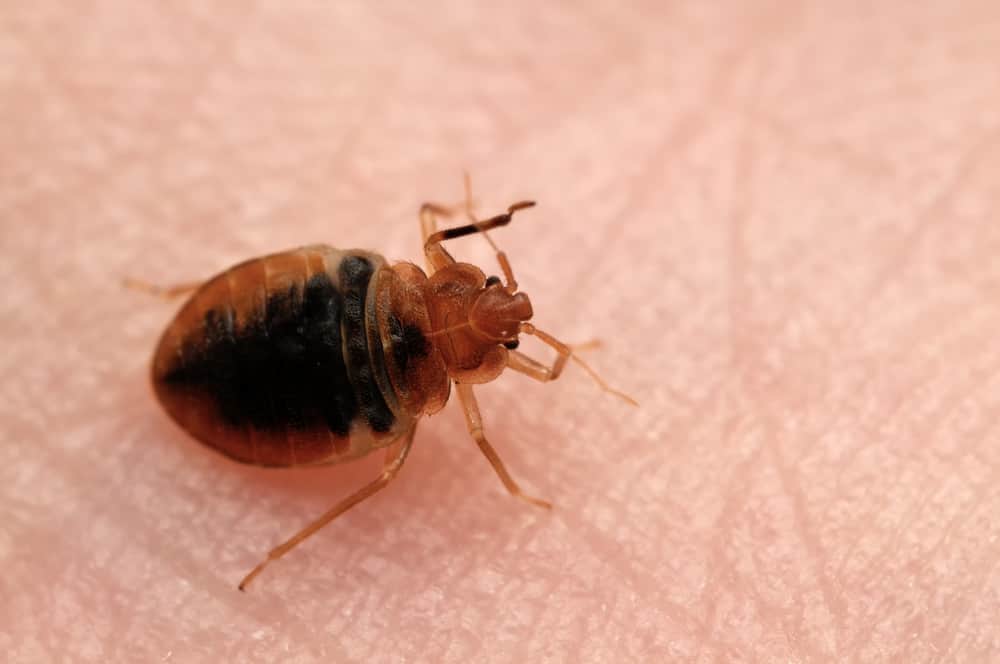
Adult bed bugs can be seen with the naked eye—no equipment is required. Mature bed bugs are about the size of an apple seed (approximately five millimeters). They are reddish-brown, wingless, and flat, although they swell up like a torpedo after a blood feeding.
Immature bed bugs can also be seen by the naked eye, though the bed bugs in their youngest stage are very difficult to spot. Bed bug eggs are even smaller and much harder to see but can provide another sign to tip you off to their presence. Eggs are pearly white, found in clusters, and are about one millimeter long.
How do you get bed bugs?
Through no fault of your own, bed bugs can easily find their way into your home. These pests are known hitchhikers, often clinging to your clothes, shoes, or luggage when you travel. As the population grows it is likely that some hosts will spread into nearby areas, putting high-density residences like apartment buildings at a higher risk for an infestation. Buying used furniture can also bring these pests into your home.
Unfortunately, bed bugs are challenging to get rid of. That's why it's essential to contact a knowledgeable and trained professional in time-tested bed bug control methods to inspect your home and help determine an appropriate course of action. Terminix® has the experts you need. Reach out today for a quote to help get rid of bed bugs in your home.