Home Garden
Why are dead cockroaches on their backs?
Many people likely agree that a dead cockroach is the best kind of cockroach to come across. But have you ever noticed that you tend to find these insects belly up? Why do cockroaches die on their backs?
While finding a dead cockroach doesn't necessarily mean you have a severe infestation, it should prompt you to examine your home for any signs of roach activity. If you suspect roaches have infested your home, you can count on Terminix’s cockroach control services to help remove these pests and prevent future infestations.
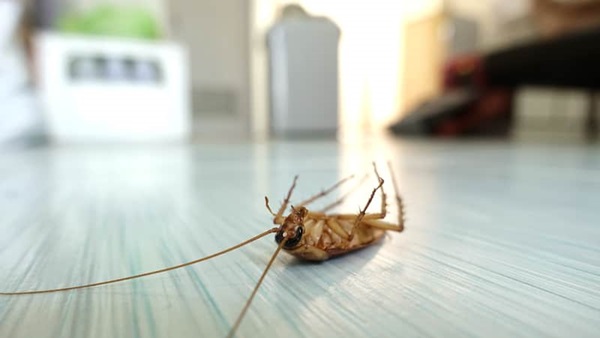
How cockroaches die in nature
Cockroaches in the wild do not always die with their feet in the air. It’s far more likely that they’ll meet their end in the stomach of a predator, among other reasons:
Predators: Cockroaches are preyed upon by various animals, including birds, amphibians, reptiles, small mammals, and other insects.
Environmental conditions: Cockroaches thrive in warm environments and can struggle to survive in freezing or sweltering conditions.
Lack of resources: Cockroaches can survive without food for up to a month but need water more frequently. A lack of water or prolonged food deprivation can lead to their death.
Natural aging: A cockroach’s life cycle can last from a few months to a few years. They eventually die of old age.
Diseases or parasites: Fungal infections, bacterial diseases, and parasitic wasps can significantly reduce their populations.
Accidents: Natural accidents, such as getting trapped, drowning, or being crushed, can also kill cockroaches.
Why do cockroaches die on their backs?
Certain cockroach species can make their way into our homes. Most are searching for food and water, or are accidentally brought inside on items. When they die, they can die on their backs due to a combination of physiological and environmental factors:
Loss of muscle control: When cockroaches are exposed to toxins or become weak due to old age, they lose muscle control, which makes it difficult for them to maintain their balance and maneuver effectively.
Center of gravity: Cockroaches have a high center of gravity and a rounded back, which makes them prone to tipping over. Once a cockroach is upside down, it struggles to gain traction on flat surfaces, making it hard to flip back over.
Effects of pesticides: Many pesticides affect the nervous system of cockroaches, causing spasms and loss of coordination. This often results in the insect flipping onto its back.
Smooth surfaces: Cockroaches often die on smooth surfaces like floors and countertops in homes. These surfaces do not provide the grip the cockroach needs to flip back over.
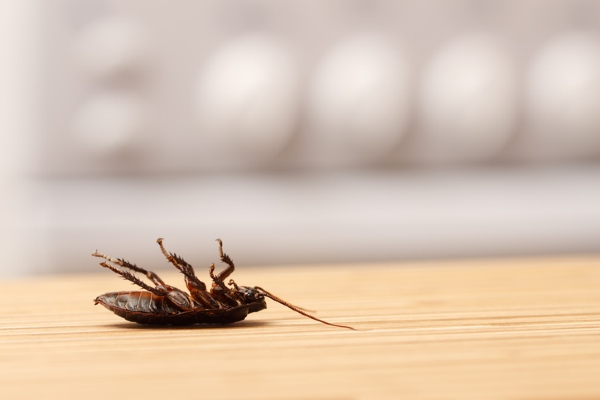
If you find a cockroach upside down but aren’t sure if it's dead, look for these signs:
Lack of movement: A dead cockroach will not move at all, even if you gently poke it with a stick or other object. Live roaches may twitch or attempt to scuttle away.
Position: Many dead roaches lie on their backs with legs in the air.
Unresponsive antennae: Antennae will be still if the roach is dead.
Decomposition: Signs like drying out, shriveling, or a foul odor indicate death.
What to do if you’re finding dead roaches
Dead cockroaches are typically not directly harmful but can pose risks. Their body parts, droppings, and shed exoskeletons can trigger allergies and asthma. They may also carry bacteria and pathogens that contaminate surfaces near food areas. Additionally, a dead cockroach can attract more roaches because they are scavengers.
A single dead roach does not necessarily indicate an infestation. Removing dead roaches promptly can help prevent attracting more pests. Use gloves and a tissue to pick them up and place them in a sealed plastic bag. Discard the bag in an outdoor trash bin promptly and clean the area where the roach was found with soap or disinfectant to remove allergens and pathogens.
If you’re concerned about roaches entering your home, consider our ongoing pest control plan, PestFree365, to help eliminate and prevent future roach infestations.1 Our PestFree365 plans include a multipoint interior and exterior inspection and regularly scheduled pest treatments.
1If infestation of bees, fleas, indoor ticks, cockroaches, brown recluse spiders, carpet beetles, fabric moths, stored product pests, mice, or rats present at time of initial inspection, a curative upcharge will apply.