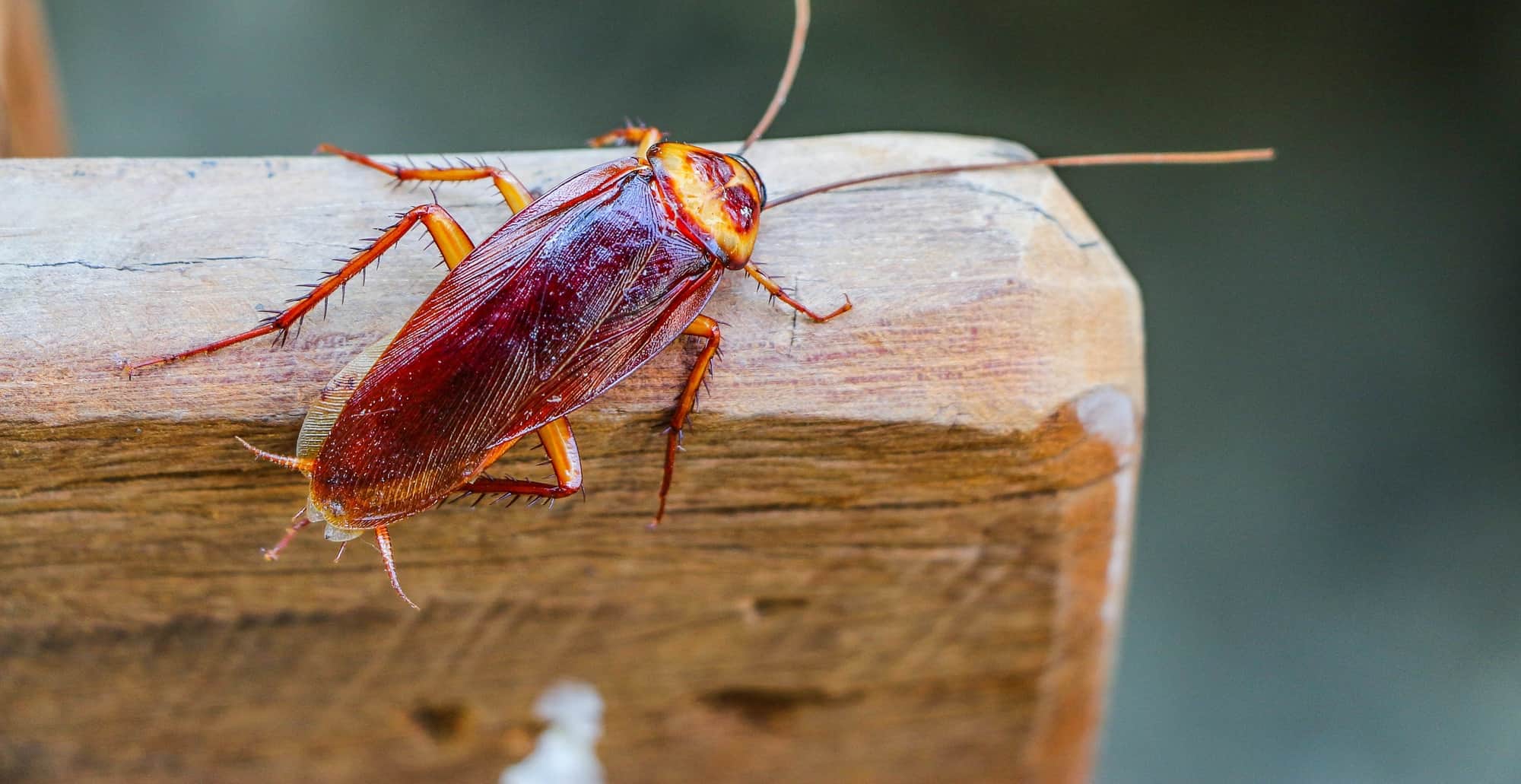
Cockroaches
Cockroach swimming abilities: Can cockroaches survive in water?
Content updated: May 8th, 2026
Key takeaways
- Cockroaches prefer to live near a water source, but they can’t survive in water for long periods of time.
- Cockroaches can hold their breath underwater for about 40 minutes, and while they can’t “swim” in the traditional sense, they can travel through water by floating.
- Cockroaches don’t breathe through their mouths. Instead, oxygen enters their bodies through small openings located on their thorax, called spiracles.
- Since a cockroach doesn’t breathe through its mouth, it can technically live without a head for up to a week. After that, it will die because it needs a mouth to eat and drink.
Jump to section:
Can cockroaches survive in water?
Can cockroaches live without a head?
Scientists believe that cockroaches originated on Earth more than 250 million years ago during the Carboniferous Period. It is estimated that there are more than 4,500 species of cockroaches worldwide. Many myths about this insect have developed over the years, including that cockroaches can hold their breath for hours at a time. Here are the answers to some frequently asked questions, such as ‟can roaches swim?” and ‟how do they fare in the water?”
Can cockroaches survive in water?
Many species of roaches prefer to live near a water source, but few can survive in water for long periods of time. If fully submerged in water, roaches can ‟hold their breath” for up to 40 minutes.
How do cockroaches breathe?
Roaches don’t breathe through their mouths. Instead, oxygen enters their bodies through small openings located on their thorax. These breathing holes are called spiracles. The oxygen travels throughout a system of trachea tubes, and is distributed to all parts of the insect’s body.
Can cockroaches swim?
Some species of cockroaches can swim, but not in a fashion you might expect. Actually, their method of ‟swimming” is better described as ‟floating.” While it’s not common for roaches to ‟swim” up through floor and toilet drains to enter structures, it does happen.
Roaches simply close their spiracles so that no water can enter their bodies, and then travel up the drain.
Can cockroaches live without a head?
When there’s a low need for oxygen, roaches close their spiracles. This regulates water loss, so precious water vapor within their bodies won’t be expelled. Because roaches don’t use their mouths to breathe, they can live in this state for up to a week, even without a head. The headless roach will eventually die because it can’t eat or drink without its mouth.
So, can cockroaches survive in water? Absolutely. They can even survive without a head. With unique abilities such as these, it’s easy to see why cockroaches have survived for millions of years. But those in your home won’t be around for long once you contact the pest management professionals at Terminix®.