Education
What is a gopher? Identifying a gopher
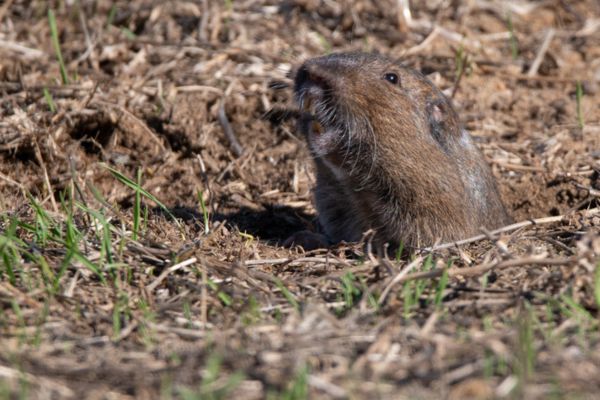
Gophers are small to medium-sized rodents that live underground and are widely considered to be pests. These creatures are characterized by their powerful forelimbs and large cheek pouches for carrying food. They are often called pocket gophers, earning the name from their fur-lined cheek pockets that they use to carry food and materials to build their nests.
Gophers are equipped to live underground, relying mostly on touch to navigate around their elaborate tunnel network. They have small eyes and ears and short fine fur and use their whiskers and tails to guide their movements. Their underground gopher tunnels can extend from 200 to 2,000 square feet and contain multiple gopher mounds. Learn everything you need to know about these pests and what to do if you find one on your property.
How to identify a gopher
Gophers have several key characteristics that can help you identify these pests. The most distinct characteristic is their cheek pockets, which they use to carry and store food like chipmunks do— giving them the nickname pocket gophers.
- Color: The color of gopher’s fur can vary based on species but typically ranges from white to brown or black, usually blending in with soil.
- Body characteristics: Gophers have short, almost hairless tails that measure about three inches or so. At the front of each foreleg are claws used for digging. They also have short necks and small ears and eyes, giving them a squat, cylindrical appearance.
Gophers are often mistaken for other pests, like moles and groundhogs. In comparison to moles, gophers have a more robust build, while groundhogs, on the other hand, are significantly larger than gophers and have a more visible tail.

Signs of gopher activity in your yard
Gophers can leave behind distinctive signs of their presence. They are known to eat a wide variety of plants and can often be found near gardens and landscaping. One of the primary indicators of gopher activity in your yard is the presence of gopher tunnels. These tunnels are mounds of fan-shaped dirt, which is a direct result of the gophers' digging activities.
Gophers can often be confused with moles, but there are some key differences in their tunnels. Gopher tunnels tend to be larger and result in bigger mounds of dirt, whereas mole tunnels are often smaller and can create volcano-shaped mounds.

The average life of a gopher
Typically, gophers can live up to three years, and a single acre of land can house as many as approximately 60 gophers at a time, depending on species and region. These pests do not hibernate and are active at all hours of the day. However, they rarely come to the surface, and tunnel-building activity may stop or slow during the colder months.
Mating usually occurs during late winter or early spring. Gophers can have one to three litters a year, each typically consisting of five to six young, depending on the region and environmental conditions. The young will reach maturity by approximately one year old and then proceed to establish their own territories.

Types of gophers in the U.S.
There are 13 species of gophers in the United States and three main groups, or genera, within this region. Genera can be categorized by the size of a gopher’s forefeet, claws, front teeth, or incisors. The three main categories in which gophers fall are:
- Western pocket gophers (Thomomys) are found only in the Western Hemisphere. This group of gophers ranges in size from five to 13 and a half inches, depending on the region. Their fur varies in color from brown to black to almost white.
- Eastern pocket gophers (Geomys) are identified by the two grooves on each of their upper incisors. They also have large forefeet and claws. This genus ranges from seven and a half to 14 inches in length, and their fur varies in color from brown to almost black.
- Buller’s pocket gophers (Pappogeomys), like Geomys, also have large forefeet and claws, but they only have a single groove on each upper incisor. This group ranges from five and a half to seven and a half inches in length. Their fur color varies from reddish brown to a yellowish color, with underfur varying from white to yellow.
How to help prevent and get rid of gophers
Managing a gopher problem can be challenging—but not impossible. DIY methods, such as traps and repellents, can be an effective way to control gopher populations; however, they do not eliminate the entire colony. Additionally, exclusion techniques such as underground barriers can prevent gophers from accessing desirable areas such as gardens. Other solutions include using natural repellents like caster oil and dish soap and pouring the combination into gopher tunnels.
While these methods may not guarantee complete eradication, they can help significantly reduce gopher activity and damage. Working with a professional for gopher control will provide you with the best results.