Education
All about Aphids
Aphids are a diverse group of insects that belong to the Aphidoidea superfamily. Aphids fall in the family Sternorrhyncha, as well as scales and mealybugs. They are commonly referred to as plant lice, greenflies, blackflies, or whiteflies. Found worldwide, aphids originate from various habitats, including gardens, farms, and wild vegetation. They come in numerous species, each adapted to specific host plants or environments. These tiny insects are found in colors that range from green and black to pink and almost every shade in between. So, what are aphids? And how can you keep these pests out of your garden?
Identifying aphids
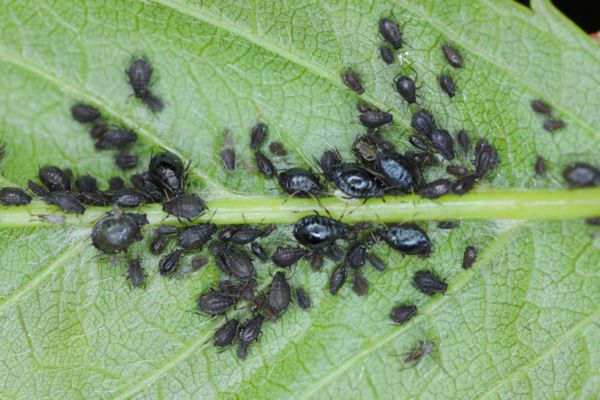
Aphids are small, soft-bodied insects that can be found in various colors, including green, black, brown, and pink. They typically measure less than 1/4 an inch in length and are known for their pear-shaped bodies. They have two long tubes, called cornicles, projecting backward from the end of their abdomens. These pests are commonly found in gardens, hiding on the underside of leaves, stems, and sometimes roots of a wide range of plants. They commonly congregate at the point where a leaf vein meets the main stem of a leaf. See picture below.
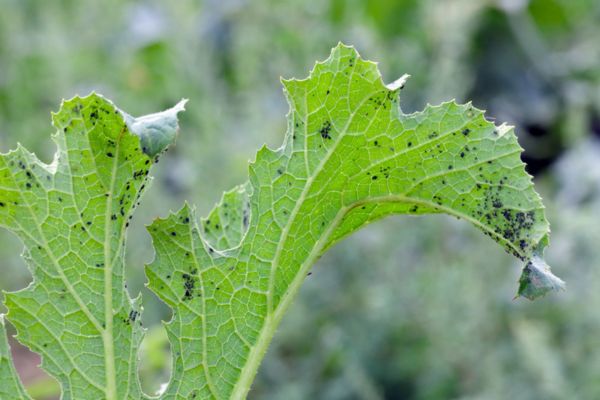
Aphids prefer tender, new growth, which allows them to extract sap easily using their piercing mouthparts. Due to their small size and the waxy or powdery substance some species produce, they are often mistaken for other common garden pests, such as mealybugs. Their saliva is a plant hormone inhibitor, which can lead to deformed growth.
How long do aphids live for?
Throughout their lifetime, female aphids can give birth to dozens of offspring, allowing their populations to increase rapidly under favorable conditions. Aphids can live for about one month, depending on the environment and the presence of predators. As for their presence in our homes, aphids can infest houseplants, especially those that are stressed or weakened, as these provide ideal conditions for aphids to feed and reproduce. They typically enter through open windows and doors or by riding on infested plants introduced into the house.
How to help get rid of aphids
Keeping these tiny pests away from your garden starts with prevention. Regularly checking and monitoring your plants for these insects can help prevent them from damaging your outdoor and indoor plants. By fostering an environment that supports the natural predators of aphids, such as ladybugs and lacewings, you can maintain a healthy garden free of aphids. As for your indoor plants, sealing cracks, crevices, and other entry points is key to stopping aphids from entering your home. Using a well-thought-out Integrated Pest Management, IPM, strategy, you can minimize the use of pesticides and maximize the health of your plants. Consult a pest management professional, like Terminix, for more info.