Education
Do hornets make honey?
Content Updated: June 5, 2026
Key takeaways
- Hornets do not produce true honey like bees because they lack the anatomy and hive structure needed to collect, process, and store nectar.
- Unlike fuzzy, pollen-carrying bees, hornets have smoother bodies, build papery nests, and are more likely to hunt insects than gather nectar.
- Despite not producing honey, hornets still benefit ecosystems by controlling various insects and contributing to some pollination.
- Hornets can pose risks if nests are built near people, animals, or structures, since they can sting multiple times and become aggressive if disturbed.
Jump to section:
Are hornets good for anything?
The dangers of hornets vs. their pollinator benefits
It’s common knowledge that bees serve as essential pollinators for much of the world’s food and flowering plants. Because bees produce honey in addition to pollinating, many people wonder: Do hornets make honey, too?
The short answer is no. Hornets do not make honey the way honey bees do. While some hornet and wasp species may store small amounts of sugary liquid for food, it is not true honey and is not commonly produced or harvested. If hornets are becoming a problem around your property, Terminix stinging insect control services can help remove nests and prevent future infestations.
Identifying bees vs. hornets
Bees and hornets can look similar at first glance, but there are a few key differences. Hornets are actually a subset of wasps, which helps explain why they share several traits with other wasp species while still having some distinct characteristics of their own.
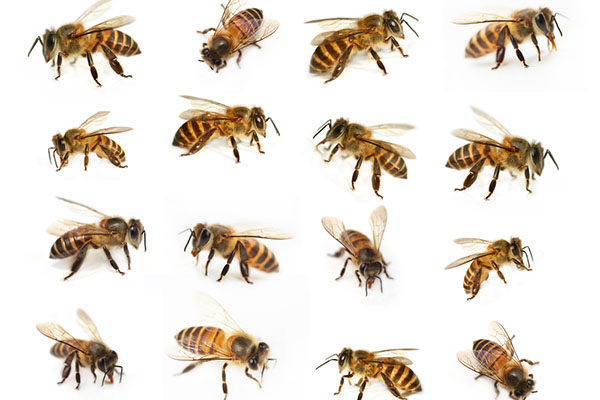
- Appearance: Bees are usually fuzzy and stout, while hornets have smoother, shinier bodies with a narrow waist.
- Size: Bees are small and lightweight, typically around half an inch long, about the size of a small paperclip. Hornets are generally larger and thicker-bodied, often closer to ¾” to 1¼” long, similar in size to a large grape.
- Coloring: Most bees are golden-brown with black bands, while hornets tend to have brighter yellow, black, white, or reddish markings.
- Behavior: Bees mainly collect nectar and pollen, while hornets are more likely to hunt insects or scavenge for food.
- Nests: Bees build wax comb nests, while hornets create papery nests from chewed wood fibers.
Can hornets make honey?
No, hornets can not make honey. While they do collect sugary liquids like honeydew and plant juices for energy, they don’t have the anatomy or nest structure needed to produce or store honey. Bees have specialized “honey-making” adaptations, such as dense body hairs for collecting pollen. Hornets’ smooth bodies are better suited for hunting other insects than gathering and processing nectar in bulk.
Hornet nests also aren’t designed for storage. Instead of wax honeycombs like a beehive, hornets build papery nests that prioritize brood rearing rather than long-term food storage. Because of this, there’s no system in place to convert nectar into honey or preserve it for later use.

Wasps that produce honey
Hornets are a type of wasp, but most wasps and hornets do not produce honey. They are primarily predatory insects that feed on other insects and do not have the same honey-making behavior as bees.
However, there are a few rare species of social wasps that can produce and store small amounts of a honey-like substance, but not in the same quantities or consistency as honey bees. One of the most well-known examples is Brachygastra mellifica, commonly known as the Mexican honey wasp. This species can store nectar in its nest and convert it into a honey-like food source for the colony.
Are hornets beneficial for the environment?
Yes, hornets are beneficial insects in many ecosystems, even though they’re often viewed as pests. They play an important role as natural pest controllers by feeding on flies, caterpillars, spiders, and other insects that can damage crops and plants.
Do hornets pollinate as bees do? Hornets contribute to pollination to a limited degree. While they are not primary pollinators like bees, hornets may visit flowers for nectar, which can result in some incidental pollination as they move between plants.

The dangers of hornets vs. their pollinator benefits
While hornets do provide some environmental benefits, they can also pose risks to homeowners. Unlike bees, hornets can sting multiple times and may become defensive if they feel threatened. Hornets can also become a concern if they build a nest close to or inside a home, yard, or high-traffic outdoor area. At that point, the risk of accidental disturbance and stings outweighs their benefits.
If a nest is small, distant, and not interfering with human activity, it is often best left undisturbed. On the flip side, if hornets are actively flying in and out of a structure, or the nest is in a location where people or animals regularly pass by, it’s best to contact a pest control professional. If these insects are becoming a problem around your property, our hornet control services are here to help.