Education
Does having a cat help get rid of mice?
Will a house cat eat a mouse? Learn how effective cats are at keeping mice away.
Updated: April 30th, 2025
It’s no secret that cats chase mice and that mice scramble in the presence of cats. This leaves many people wondering—do cats get rid of mice? Here are some things that you should know about the predator-prey relationship between cats and mice.
Jump to section:
The cat-and-mouse relationship
How effective are cats for mice control?
Alternative mice control options
The cat-and-mouse relationship
Do cats eat mice? Cats are natural hunters with sharp senses and a strong instinct to chase and catch prey like mice. In fact, cats' chasing behaviors may also be a result of biology—or, in this case, genetics. Until recent years, household cats and the European wild cat belonged to the same species – Felis silvestris. While domestic cats are now considered their own species (Felis catus), they still share many behaviors and characteristics with their wild counterparts.

Why are mice afraid of cats?
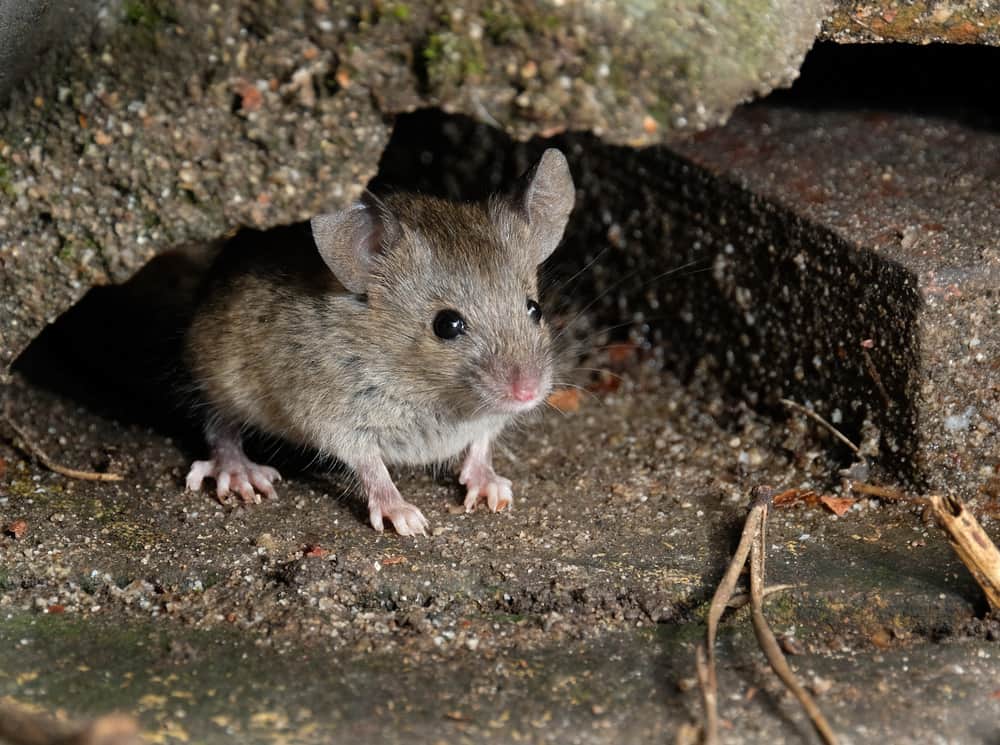
As a prey animal, mice rely on a combination of instincts and heightened senses to identify and survive against predators in the wild. The fear response to certain sights and smells can save mice that have learned to avoid potential predators, like a house cat.
Do cats keep mice away? Mice have a highly developed sense of smell and will use that to identify danger from predators. In a study by The Scripps Research Institute to learn about mice behavior, researcher Lisa Stower discovered mice could smell odor molecules (also called pheromones), indicating the presence of danger. For example, if mice smell cat urine, mice are likely to leave the area to avoid the predator. Pheromones travel through the mouse's nose to the brain, where the pheromones will interact with neurons that stimulate emotions. In this case, it’s the smell of cats that sparks fear in mice. Whether they like it or not, mice are wired to panic in the presence of predators.
Do all cats hunt mice?
Can you count on cats to get rid of mice? Even with their built-in hunting instinct, not all cats are skilled at catching mice. Why is that? Well-fed domestic cats can lack motivation to hunt, and some cat breeds have a lower prey driver than others. A cat’s individual personality can also play a big role. If your house cat isn’t thrilled to chase a toy for more than a few minutes, they likely aren’t going to be an enthusiastic mouser.
How effective are cats for mice control?
While the presence of a cat may deter some mice, it’s not a foolproof solution. Mice are resourceful and may still enter your home, especially if they find access points, isolated areas to nest, and reliable food sources. Plus, one or two cats in the house can’t make a huge difference against a major mice infestation.
Also, once mice detect a predator, they will simply stay out of reach, hiding in small crevices, inside walls, or behind appliances where they can’t be caught by a cat. Once they’ve found a safe place to nest in a home, mice can reproduce quickly and become a real nuisance and health hazard.
Health and sanitation risks for people and pets in your home
Let’s say you have a cat that is good at catching mice. That still may not be the healthiest thing for your pet or for your household. First, mice can carry diseases like Lymphocytic Choriomeningitis and Leptospirosis. Also, dead mice left behind by cats in your home can be a sanitation issue.
Alternative mice control options
The best way to keep mice away is to prevent them from seeing your home as an attractive place to nest and reproduce. Here are a few prevention tips you can follow to deter mice:
Clean regularly: Keep food sealed in airtight containers, clean up crumbs, clean of clutter mice can hide in, and empty trash cans daily.
Seal entry points: Block gaps around doors, windows, and pipes to prevent mice from entering your home. Use materials that mice cannot easily gnaw through, such as stainless steel mesh or sheet metal.
Tidy your yard: Remove outdoor hiding spaces. Mice can first hide in brush, leaf piles, and woodpiles around your home before looking for cozier lodgings inside. Ensure that wood and brush piles are not touching the home.
Are DIY mouse traps worth it?
Other than counting on cats as natural mouse predators, some people turn to DIY methods to get rid of mice. Popular DIY methods include:
Snap traps and glue traps: These can catch mice but need careful placement and regular maintenance to ensure non-target animals are not affected.
Electronic repellents: Devices emitting high-frequency sounds can deter mice, though their effectiveness may vary.
Bucket traps: A DIY trap using a bucket and baited ramp can catch multiple mice at once, but will be no match against an infestation.
Like relying on cats, these DIY solutions can help with small, isolated problems but often fail against the numbers of an infestation. For long-term control, professional pest services are the most reliable choice.
Why choose professional mice control
When it comes to mouse control, you shouldn’t rely solely on cats. Terminix offers comprehensive solutions for mice control, including free inspections to identify problem areas and customized plans to eliminate infestations. Our experts use advanced methods to safely eliminate mice and prevent their return. With wildlife exclusion services and targeted treatments, Terminix ensures your home stays protected with proven rodent control solutions.