DIY
What you can do about flying ants in your pool
Content updated: May 6th, 2026
Key takeaways
- Flying ants are typically attracted to pools due to moisture, light reflections, and nearby food sources.
- It's important to distinguish flying ants from termites, as they have key physical differences, including antenna shape and body structure.
- While flying ants are most active during the late spring and early summer mating season, their presence may vary based on local climate and species patterns.
- To help prevent flying ants from infesting your pool, cover it when not in use, minimize outdoor lighting, and regularly skim the water, but consider professional pest control for long-term solutions.
If you have a backyard, you know that it can be the perfect spot for outdoor activities, such as swimming in the pool, having a barbecue, or hanging out with friends and family. Unfortunately, a backyard may also become a refuge for pests. Whether that means pesky mosquitoes interrupting your time outside, or even more squirm-inducing: flying ants taking a lap in your pool. These ants are often attracted to the pool due to the moisture, light reflections, and potential food sources nearby. Keep reading to learn more about flying ants, how they end up in your pool, and how professional ant control can help.
What are flying ants?
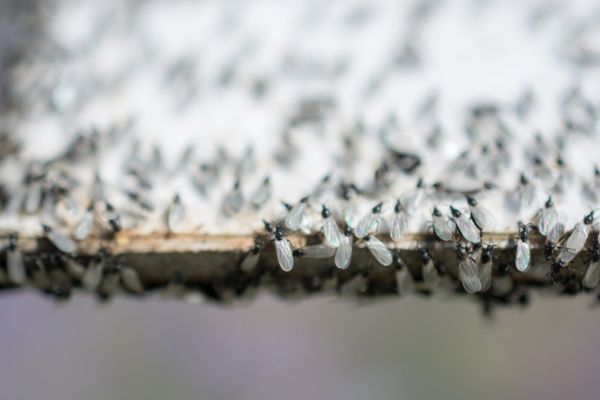
Before we get into any more detail about flying ants in your pool, let’s take a minute to talk about what flying ants actually are. The term "flying ant" is fairly broad and can apply to the alates of most ant species, such as carpenter ants, pavement ants, and odorous house ants. At certain times of the year, many ant species will begin to produce both winged males and winged fertile queens. After they mate, the winged males die shortly afterward, while the fertilized winged queen will find somewhere to establish a new colony. Whenever she finds a suitable location, she will break off her wings and remain flightless for the rest of her life.
Identifying flying ants vs. termites
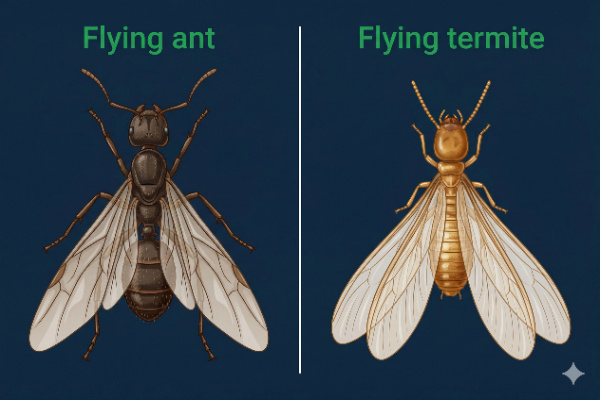
There’s another pesky insect with wings that you might also be familiar with: termites. In fact, sometimes flying ants and flying termites are mistaken for one another. There are a few physical differences between flying ants and flying termites:
- Ants have elbowed antennae, while termites have straight antennae
- Ants have a pinched waist (like a wasp), while termites have straight bodies
- Ants have front wings that are longer and tinted brown, while termites have equally sized wings that are translucent.
Will flying ants go away on their own?
Flying ants are typically most active in late spring and early summer when mating season begins. During this time, it is common to see winged ants in the pool and other outdoor areas. While they are not always a year-round pest, their patterns can vary by local climate and species, so it's not uncommon to see them outside the peak season.
What do I do when there are flying ants in my pool?
If there are flying ants in your pool, it’s best to remove them immediately. This is because the winged form of ants has the same behaviors as their unwinged counterparts, such as biting from carpenter ants and stinging from red imported fire ants. While they can survive for a few hours to a day in water, prolonged exposure will ultimately lead to their demise. To clean up, use a skimmer net or a cup to gently scoop them out. Be sure to check your filter baskets and pump strainer, as these can collect debris, including ants, in your swimming pool.
Do ants near my pool mean there is water damage?
The presence of ants near your swimming pool can indicate potential issues, particularly if they are carpenter ants. Carpenter ants do not eat wood but create tunnels through it for nesting, and they are usually attracted to wood that is moist and deteriorating, which could be a sign of underlying water damage. If you notice these ants around your pool area, it may indicate water damage nearby.
How to prevent flying ants in your pool
Unfortunately, there aren’t any foolproof ways to keep flying ants out of your pool. Keeping your pool covered, turning the lights off when not in use, and frequently skimming your pool can make your outdoor space less attractive to ants. However, these DIY solutions are only temporary and don’t address the cause of an infestation. At Terminix, our technicians are trained to find where ants are hiding, even if it's in your pool.