Commercial
Commercial Pest Guide: Stink Bugs
Since they were first found in North America in 1998, brown marmorated stink bugs have largely been an agricultural pest, but can pose a risk to finished goods by their physical presence while seeking overwintering harborage. When it comes to pest infestations in the average business, stink bugs generally aren't a common problem in the same way that rodents or cockroaches are. That's not to say that stink bugs can't be a nuisance for businesses though, so here's what you should know about stink bugs, their impact on the environment, and what you should do if you notice an infestation in or around your business.
What is a Stink Bug?
Originally from Asia, the brown marmorated stink bug was first identified in Pennsylvania in 1998. Since then, its population has grown into invasive species status, spreading across the U.S. and into Canada.
- Appearance: Usually a mottled greyish-brown color, a brown marmorated stink bug has a triangular-shaped body about ¾ of an inch long and stripped antennae separating it from other stink bugs.
- Diet: Stink bugs feed on a wide variety of plants including fruit like apples, grapes and cherries and vegetables like lima beans, corn and peppers and many others. Their flexible diet makes them a serious agricultural pest with the ability to destroy entire crops if the infestation is large enough.
- Habits: Stink bugs are common in areas with moderate climates. They survive the winter as adults by overwintering inside structures.
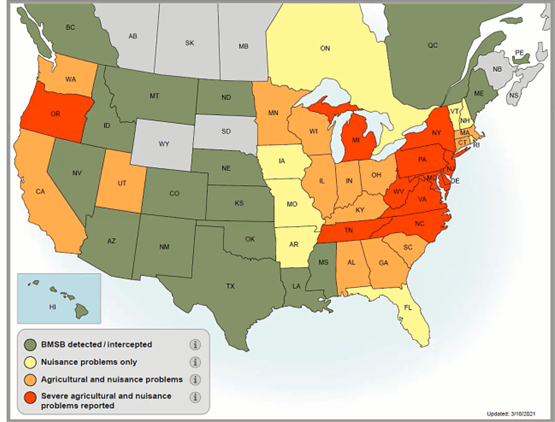
- That means, stink bugs can become a nuisance for any type of business if they get inside. While they don't bite or sting, they do release an unpleasant odor—hence the name, stink bug—when they are threatened or crushed.
You may see stink bugs congregating on the sides of buildings in the warmer months, but as it starts to cool down, they'll be on the lookout for a way inside.
Learn more about our pest control services for businesses.
Stink Bug Prevention
Stink bugs aren't particular about the type of business they may make themselves at home in. If you find them inside your business, it was simply because they were looking for a warm place to spend the winter. For certain types of businesses like restaurants or food packaging facilities though, they can cause a problem for health and safety compliance standards.
Here are some of the things you can do to help prevent stink bugs from getting inside:
- Seal all cracks around window and doors
- Repair any damage or holes in siding and roofs
- Replace damaged door and window screens
- Replace white bulbs with yellow bulbs for outdoor lighting
- Have a professional inspect and treat for stink bugs in the late summer to early fall to ensure they aren't moving in for the winter
- Educate your staff on how to spot stink bugs and how they can become an issue.
Above all, damage to your reputation is the main thing you want to avoid when it comes to stink bugs. By focusing on keeping stink bugs out of your business, you aren't just helping your brand, but you are also playing an important role in helping the local agricultural industry in your area, too. If you don't give stink bugs a warm place to wait out the winter, many of them will die off and the damage they can do to crops will be reduced.
Worried about pests settling in for the winter? Call us now at 877.837.6464 for a free quote or to book a service.