Commercial
Explore bat facts and myths
Bats, often misunderstood creatures of the night, play vital roles in ecosystems through insect control and pollination. However, their nocturnal habits and unique appearance can cause issues for businesses when they roost in buildings, leading to many misconceptions. It's time to debunk these myths and share accurate bat facts.
Bats are flying rodents
MYTH! The idea that bats are flying rodents is a common misconception. While their small size and furry appearance might resemble rodents, bats are mammals and are more closely related to primates and humans. They are the only mammals capable of actual flight, and their wing structure is similar to an elongated human hand. Unlike typical rodents, bats have a thumb with a claw, and their lifespan is significantly longer. Therefore, bats are not rodents but unique flying mammals.
All bats have rabies
MYTH! The fear of rabies often unfairly targets bats. While bats can carry rabies, like any mammal, less than 1% of them do. It's impossible to determine if a bat has rabies simply by looking at it; testing is required. However, any potential contact with bat saliva, such as a bite or scratch, should be taken seriously. Therefore, while caution is necessary, the idea that all bats have rabies is a myth.
Bats are good for the environment
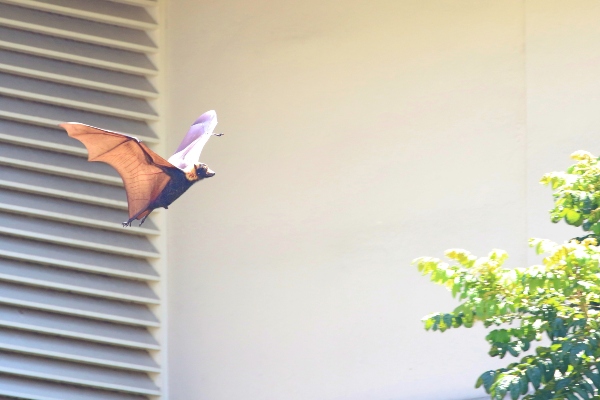
FACT! Bats are actually crucial for a healthy environment. Like bees, they are pollinators and disperse seeds for hundreds of plant species, including bananas and avocados. They also act as natural pest control, eating thousands of insects each night. However, many bat species are protected by law, and there are strict regulations regarding their control or removal. Therefore, consulting with a qualified wildlife management professional is essential if you encounter bats around your commercial property.
Bats are blind
MYTH! The saying "blind as a bat" is inaccurate. Another interesting bat fact is that they can see, and some even have excellent vision. Many bats also use echolocation, a sophisticated sonar system, to navigate and hunt in the dark. They emit high-frequency sounds and listen for the echoes, creating a "sound map" of their surroundings. This allows them to navigate, avoid obstacles, and catch prey in complete darkness. Therefore, bats are not blind but do use a combination of sight and echolocation for seeing.
Bats feed on human blood
MYTH! The myth of bats feeding on human blood can alarm business owners, but it's false. Let's clarify what bats do eat. Most bats are insectivores and consume insects like mosquitoes and moths. Some bat species prefer fruit and nectar and act as important pollinators. And while vampire bats do exist, they feed on livestock and are primarily found in Latin America, meaning they pose little to no concern to most commercial properties in the United States.
Bats sleep upside down
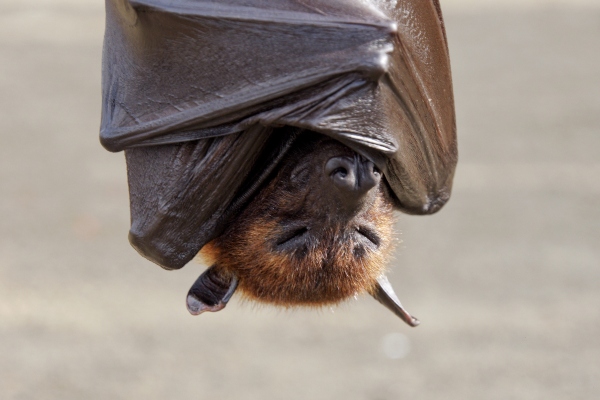
FACT! One unique bat fact is that they are uniquely adapted to hang upside down, even while they sleep. Their hind limbs are rotated, and specialized tendons allow them to cling to roosts without expending energy. This position will enable them to utilize unique spaces in caves and commercial buildings, such as attics, eaves, and other sheltered areas, where they are safe from predators. Hanging upside down allows them to take flight easily by simply dropping and opening their wings.
Bats will fly into your hair
MYTH! The idea that bats intentionally fly into hair is a myth. Bats may fly close to new objects out of curiosity, but they don't build nests and won't intentionally get tangled in hair. Although their flight pattern of dropping down before lifting off might create the illusion of them swooping down, it's simply their natural way of taking flight.
Keep bats out of your business
Now that we have gone over some common bat facts and myths, how do you get them out of your business? At Terminix, we understand that a bat infestation can seriously disrupt your business. Our bat control services are tailored to address your specific needs and help ensure the safe and humane removal of these protected animals. Our trained technicians are well-versed in bat behavior and local regulations, allowing us to implement effective exclusion strategies while minimizing impact on your operations. Don't let bats compromise your business; get started with our bat control services today!