Bed Bugs
How to tell if you’re seeing bed bugs or carpet beetles
When it comes to unwelcome guests in our homes, few pests stir up as much concern as bed bugs and carpet beetles. Bed bugs are tiny, blood-sucking insects that thrive in our sleeping spaces. On the other hand, carpet beetles are a bit more benign; they munch on natural fibers found in rugs and clothing, but are not a threat to humans. Despite their different habits, these two pests are often confused for one another due to their similar sizes and shapes. Understanding the distinctions between bed bugs vs. carpet beetles can help you safeguard your home and enjoy peaceful nights without the worry of unwelcome visitors!
Identifying bed bugs vs. carpet beetles
Whether dealing with a carpet beetle or a bed bug, understanding their basic physical characteristics is key to identifying which pest it is. Here are some features to help you determine a bed bug vs. carpet beetle:
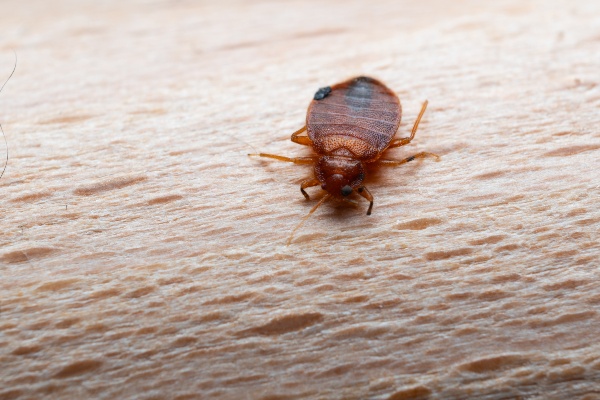
Bed bugs
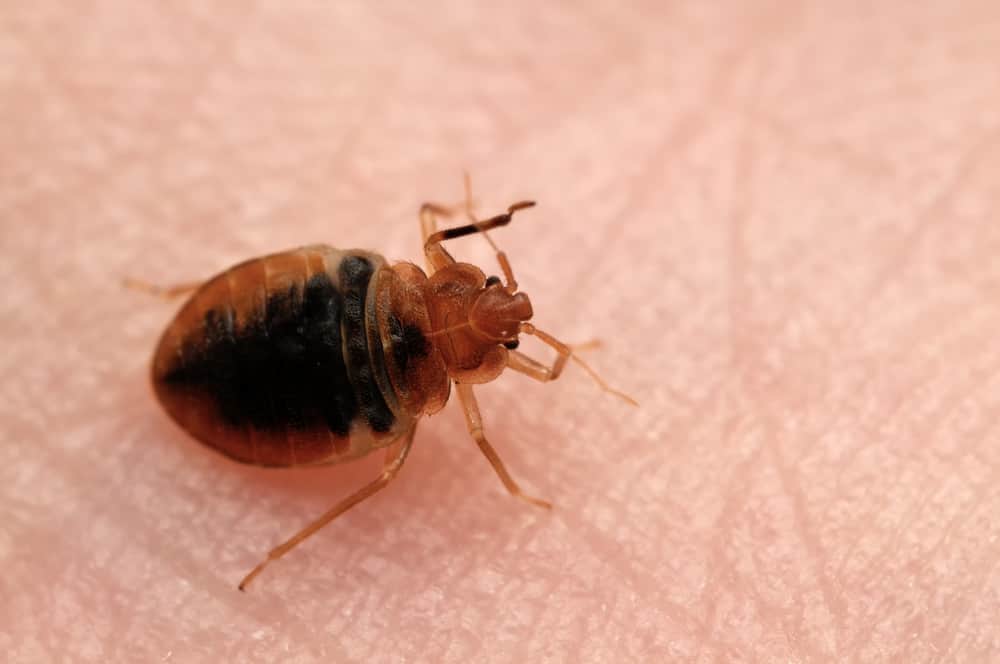
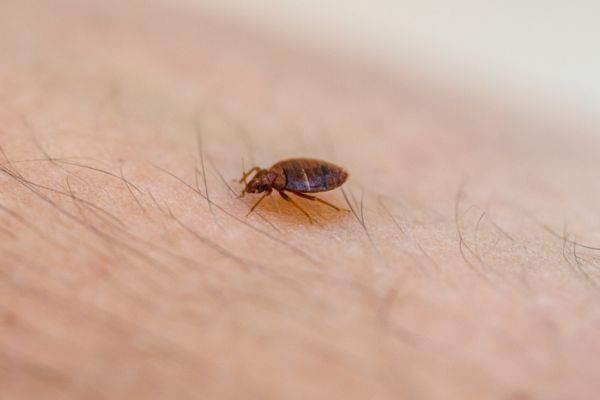
Size: Small, adults are about the size of an apple seed.
Shape: Flat, oval-shaped body that becomes more elongated and swollen after feeding.
Color: Adults are typically brownish, becoming reddish-brown after feeding.
Antenae: Long and thin without a clubbed section.
Carpet beetle
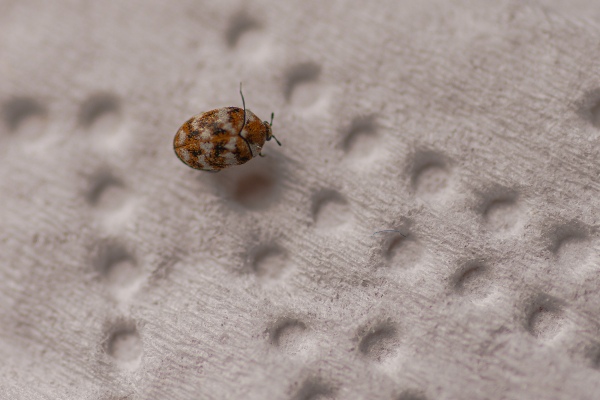
Size: Small, typically a few millimeters in length.
Shape: Adults have an oval-shaped body.
Color: Depending on the species, it is often a combination of black, brown, white, yellow, or orange.
Antennae: Short, contains a clubbed section.
Carpet beetle larvae vs. bed bug nymphs
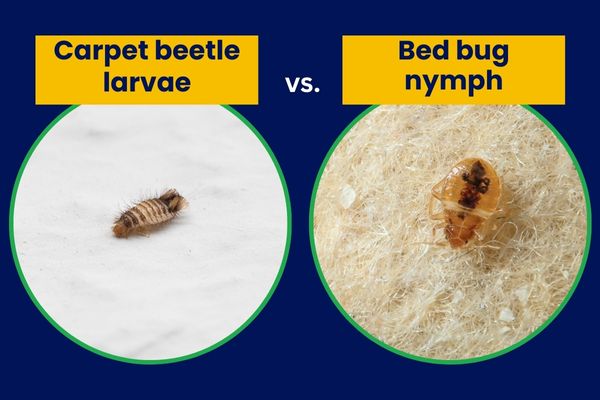
Carpet beetle larvae and bed bug nymphs look, live, and behave differently. Carpet beetle larvae are often fuzzy or bristly, resembling small, hairy worms, and you'll typically find them in hidden spots where they can feed on natural fibers like carpets, clothing, and stored food. They move slowly and aren't usually seen out in the open. On the other hand, bed bug nymphs are more petite, flatter versions of the adult bed bug and are typically found in or near beds and furniture where people sleep. They are more likely to come out at night to feed on blood and move relatively quickly when disturbed.
Key differences between bed bug and carpet beetle behavior
Besides their physical appearances, bed bugs and carpet beetles have different lifestyles and habits. Here's a look at these key behavioral distinctions to help you identify a bed bug vs. a carpet beetle:
- Habitats: Bed bugs live near their hosts and primarily infest sleeping areas within mattresses, furniture crevices, and nearby structures, while carpet beetles target areas with natural fiber resources throughout the home, such as closets, under rugs, and in pantries.
- Feeding habits: Bed bugs' survival depends entirely on the blood meals they get from biting humans or animals. Carpet beetle larvae eat animal-based materials, like wool and other animal hair, silk, and dead insects, while the adults may feed on pollen and nectar.
- What attracts them: Bed bugs are typically brought into homes unintentionally by hitchhiking on luggage or personal or secondhand items. Inside homes, they are attracted by carbon dioxide, their hosts exhale as well as their heat and chemical signatures. In contrast, carpet beetles primarily enter homes through doors and windows but can also be brought in on infested fabrics or plant materials. They feed on a variety of items, including animal-based materials
- Activity patterns: Bed bugs are predominantly active year-round and prefer to feed at night, when their hosts sleep. Carpet beetle infestations can occur year-round however, they are often more noticeable during warmer months as the higher temperatures are preferred for reproduction.
Are bed bugs or carpet beetles dangerous?
Both bed bugs and carpet beetles can cause different types of harm, but bed bugs are the notorious troublemakers for humans. Bed bugs feed on human blood, which leads to itchy bites and potential skin irritations. On the other hand, while carpet beetles do not bite humans, their larvae can damage materials by feeding on natural fibers. To put it more simply, if you were to sleep in a room with bed bugs, you would likely experience itchy bites. However, if carpet beetles were present, you wouldn't be bitten, but you might notice new holes appearing in your wool blankets or other items made from natural fabrics over time.
How to tell if you have a bed bug or carpet beetle infestation
When it comes to identifying pests in your home, it's important to note that there are several insects that look like bed bugs in addition to carpet beetles, such as bat bugs and cockroach nymphs. To spot a bed bug infestation, look for small reddish-brown insects, dark fecal spots on your mattress and bedding, blood stains, and shed skins in crevices near your sleeping areas. On the other hand, carpet beetles leave their mark by creating holes in your favorite clothing and thinning patches on your carpets, alongside their small, fuzzy tan or brown larvae and shed skins tucked away in hidden spots.
How can I get rid of bed bugs and carpet beetles?
Understanding bed bugs vs. carpet beetles is crucial for effective pest control. If you suspect bed bugs, act quickly: isolate the area, wash and dry your bedding and clothes on high heat, and vacuum every nook and cranny. For carpet beetles, identify and remove infested items, then thoroughly vacuum, especially around natural materials and stored products. To help prevent both, keep your home clean and inspect secondhand furniture before bringing it inside. While these steps are valuable, the sneaky nature of these pests often calls for professional intervention to ensure effective elimination and long-lasting prevention.
Unsure if it’s a bed bug or carpet beetle? Let Terminix help
At Terminix, we understand that dealing with bed bugs or carpet beetles can be daunting for homeowners. Our professional team is trained to accurately identify these pests and their unique behaviors and will provide tailored solutions for your situation. Especially when it comes to bed bugs, hiring a professional pest control service like Terminix is always the best choice because we have the expertise, tools, and experience necessary to eliminate infestations effectively. Get started with Terminix bed bug control or general pest control services!