

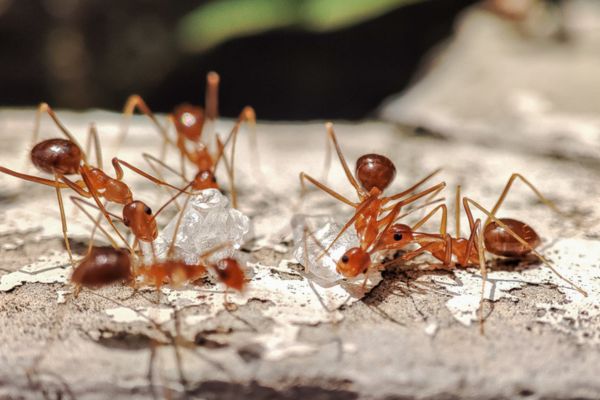
Tawny crazy ants (Nylanderia fulva)
Tawny crazy ants, scientifically known as Nylanderia fulva, have many unique behaviors. Often referred to simply as crazy ants or rasberry crazy ants, they are recognized by their distinctive reddish-brown color and their erratic movements. This chaotic movement, often darting in all directions when disturbed, earned this species its “crazy” nickname. Unpredictable behavior, combined with their ability to form large colonies, makes tawny crazy ants an important invasive species to know about.
Tawny crazy ant identification
Tawny crazy ants are generally medium-sized, measuring around one-eighth of an inch long. One of the most notable features is their long, slender legs and antennae, along with their reddish-brown coloration. These ants have smooth and glossy bodies that are covered with dense hairs. Both male and female tawny crazy ants have wings during the reproductive phase, but females lose their wings after mating, and males rarely fly.
Other types of crazy ants
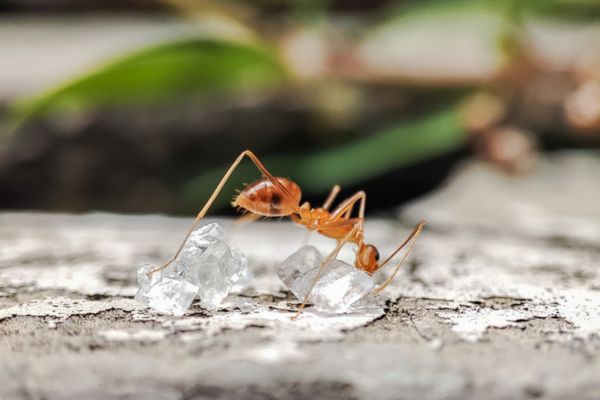
In addition to tawny crazy ants, there are several other notable types. One of these is the yellow crazy ant (Anoplolepis gracilipes), which can be distinguished from the tawny crazy ant by its vibrant yellow coloration, however, this ant species is not found in the United States. Another type is the black crazy ant (Paratrechina longicornis), which has a shiny black body and long legs.
Behavior and habitats: tawny crazy ant
The tawny crazy ant or rasberry crazy ant is an invasive species in the United States, primarily found in the south in states like Texas, Florida, and Louisiana. They thrive in warm, moist climates and prefer outdoor environments near rocks, soil, and tree stumps. Crazy ants have a diverse diet and are known for their opportunistic feeding habits, which can include organic matter, honeydew, and sugary substances. These ants tend to be more active during the warmer months, with their peak activity typically falling in the spring and summer when temperatures rise. They have a unique social structure of super-colonies, which consist of multiple interconnected nests that can span large areas. This social organization enhances their foraging efficiency and increases their ability to rapidly reproduce.
Life cycle and reproduction
The life cycle of tawny crazy ants involves several stages, including egg, larva, pupa, and adult. The lifespan of these ants typically ranges from a few weeks to several months, depending on environmental conditions and their role within the colony. Queen ants have a significantly longer lifespan, often living for several years. Rasberry crazy ants are highly prolific, with reproductive rates that can lead to rapid population growth. A single queen can lay hundreds to thousands of eggs during her lifetime, and under optimal conditions, a colony can produce several generations within a year.
Signs of tawny crazy ants
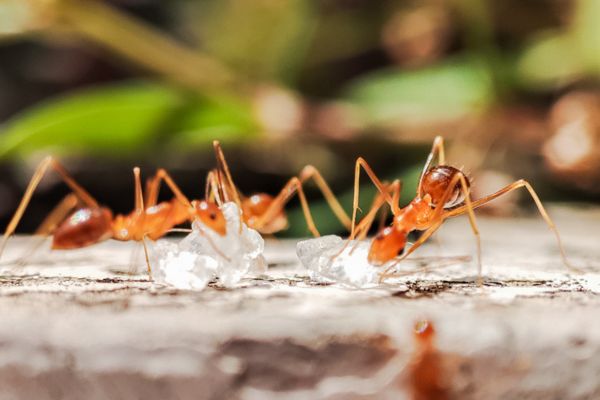
Ants are resourceful and usually gain entry into homes through small cracks, gaps around windows and doors, and even through plumbing and electrical outlets. They can be found both indoors and outdoors, typically nesting in soil, wood, or even under debris in gardens and yards. There are many reasons ants may be attracted to your home, including food residue, sugary substances, and even pet food left out. Ants are also drawn to moisture, which can lead them to kitchens, bathrooms, and areas with leaky pipes. If you notice small, reddish-brown, fast-moving ants wandering around your home, especially in erratic patterns, you may have a tawny crazy ant problem.
Are tawny crazy ants harmful?
Tawny crazy ants are typically not considered dangerous to humans or pets, and they do not sting. However, these ants can bite. Their bites are typically mild but can cause a quick burning sensation that fades. They can also spray formic acid in self-defense or when subduing prey. This is only harmful if sprayed in the eyes, and any contact should be followed up with care from a medical professional. Crazy ants are also known to cause damage to homes and other structures, as their large colonies can undermine soil stability and lead to structural issues.
How to get rid of tawny crazy ants
To help prevent tiny crazy ants in your home, it’s important to eliminate food sources, seal entry points, and remove any debris or clutter. Although it’s tempting to take the DIY approach to treatment, tawny crazy ants' swarming behavior makes it difficult to target their nests without experience.
At Terminix, our technicians have the knowledge to find their hiding places and efficiently eliminate large colonies. Don't wait until your infestation gets out of hand; contact Terminix for professional ant control.