Pharaoh ants
(Monomorium Pharaonis)
Content Updated: March 12th, 2025
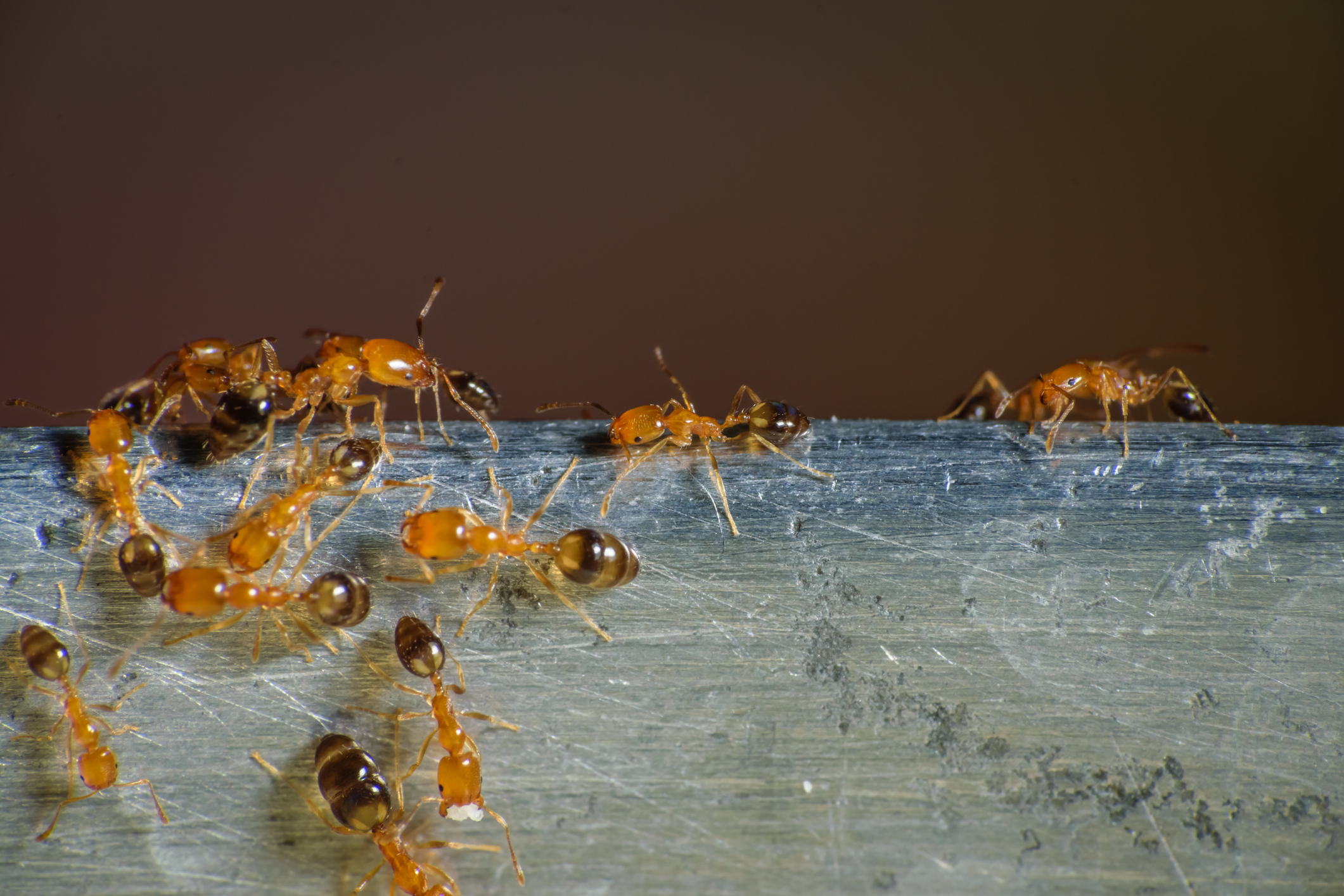
Pharaoh ants, scientifically known as Monomorium pharaonis, are small insects in the Formicidae family. They are often recognized by their light yellow coloration and their notable sweet tooth, which earns them the nickname “sugar ants.” Unfortunately for homeowners, pharaoh ants are the most difficult household ants to control, often forming large colonies that can lead to significant challenges.
Pharaoh Ant Identification
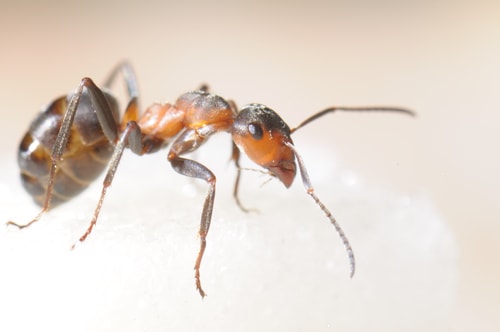
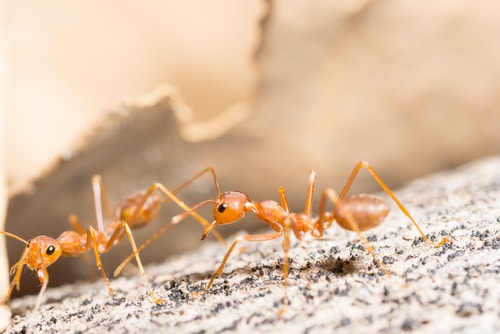
Pharaoh ants are small and light yellow to brownish in color, typically measuring about one-eighth of an inch in length. Their bodies are slender and have a smooth texture, often with a slight sheen. They have an unevenly shaped thorax when viewed from the side and a pair of short, well-defined antennae. Unlike some ant species, pharaoh ants are wingless and do not have wings at any stage of their life cycle.
Pharaoh ant behavior and habitat
Pharaoh ants will nest in virtually any site that provides protection but prefer warm, humid areas like kitchens and bathrooms. Colonies have been found nesting in walls, furniture, and appliances and have even been discovered in hollow curtain rods, inside irons, in small boxes, and under roofing shingles. They are prevalent in many regions of the United States, particularly in urban settings where food sources and shelter are abundant. Due to their ability to easily spread and establish new colonies, pharaoh ants are considered invasive.
These ants are opportunistic feeders that primarily consume sugary substances but will also eat proteins and fats. They tend to swarm during the warmer months, particularly in late spring and early summer when conditions are favorable. Pharaoh ants have a unique social structure characterized by multiple queens within a single colony. They are also known for their budding behavior, which allows colonies to split and form new ones when disturbed.
Lifecycle and reproduction
Pharaoh ants have a relatively rapid lifecycle, taking approximately 38 to 44 days to reach adulthood under optimal conditions. Worker ants typically have a lifespan that ranges from 30 to 90 days, while queens can live significantly longer, sometimes up to several years. In terms of reproduction, pharaoh ants are remarkably prolific. A single queen can lay between 10 to 20 eggs each day, and colonies often have multiple queens. This reproductive strategy allows for rapid population growth, enabling colonies to expand quickly.
Signs of Pharaoh Ants
Pharaoh ants are attracted to homes by food and moisture. Their preference for sugary substances makes exposed food, spills, and unsealed containers one of their favorite meals. Additionally, warm and humid environments, like those found in kitchens or near plumbing, can draw these pests indoors. They can gain entry through tiny cracks and crevices in walls and foundations, as well as through plumbing pipes and electrical wires. Once inside, they travel from room to room within the walls through plumbing pipes and electrical wires, nesting in protected areas such as wall voids, furniture, and appliances. Here are some signs you may be dealing with pharaoh ants:
Foraging trails along walls, floors, and countertops
Sightings of small, yellow to light brown ants, particularly in kitchens and bathrooms where food sources are abundant.
Nests in warm, humid areas such as walls, furniture, or appliances.
Disturbances around open food containers, spills, or unsealed food items.
Are Pharaoh Ants Dangerous?
Pharaoh ants are generally not considered dangerous to humans or pets, but they can be a nuisance. They may bite if they feel threatened, but these bites are usually minor and may only cause slight irritation. While pharaoh ants are not known to transmit diseases to humans directly, they can contaminate food and surfaces by carrying pathogens on their bodies. In terms of structural damage, their nesting habits can lead to potential problems, especially when they create nests within walls or electrical outlets.
How to Get Rid of Pharaoh Ants
Although removing food sources, sealing entry points, and eliminating moisture can help make your home less inviting, these ants may still find their way inside. The colony's ability to split into two or more colonies, combined with multiple queens that can lay over a dozen eggs each day, makes this ant species the most challenging to control. That’s why pharaoh ant control requires the help of a professional. At Terminix, our technicians know how to place baits and can help protect your home from these pests.