
Pavement ants (Tetramorium Caespitum)
Pavement ants are a common sight in the summer. Learn more about this ant species.
Updated: June 4, 2025
Pavement ants (Tetramorium caespitum), also known as concrete ants and cement ants, are small, dark brown to black ants commonly found around sidewalks, driveways, and building foundations. They’re most active in warmer months, often spotted trailing along cracks or sneaking into kitchens in search of food. Get to know more about this common ant species found all across the United States.
Jump to section:
Pavement ant behavior and habitat
Pavement ant life cycle and reproduction
How to get rid of pavement ants
Pavement ant identification
Ever seen ants swarming around sidewalk cracks during the summer? Then you’ve likely spotted pavement ants. Here’s how to identify this ant species:
- Size: About one-eighth of an inch long (up to 3 mm).
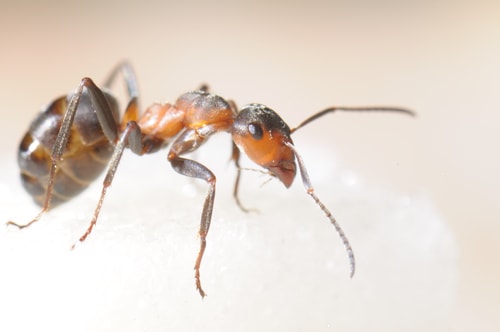
- Color: Pavement ants can appear dark brown to black. They have dark lines running the length of their body.
- Body shape: These ants have a spined thorax and legs that are lighter than the rest of their body.
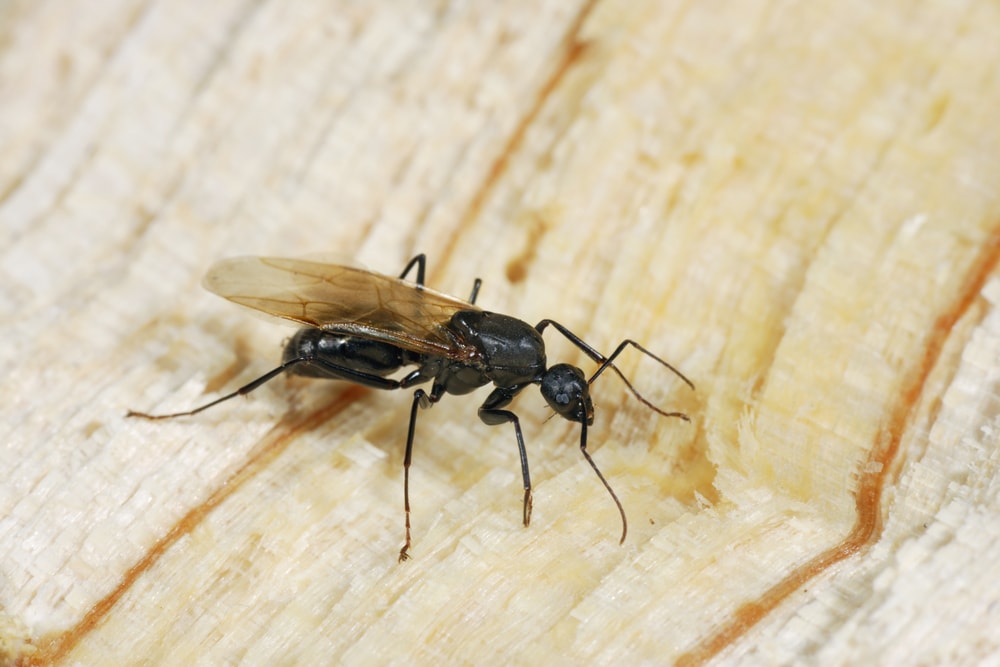
- Wings: Reproductive ants, or swarmers, grow wings and emerge during mating season, while the worker ants stay wingless.
Pavement ant behavior and habitat
Compared to other ant species, pavement ant behavior is less well-known. Here is what has been studied about pavement ant activities and habitats:
- Preferred habitats: These ants prefer to nest in soil next to and beneath slabs, sidewalks, patios, and driveways. Piles of displaced soil next to or on top of pavement can be a sign of a colony.
- Geographic range: Pavement ants are an invasive species from Europe that can now be found across the United States. They are common in the East Coast, the Midwest, and Southern states, as well as some Western states like California and Washington.
- Diet: Pavement ants will forage for nectar and small seeds as well as greasy or sugary foods for their diet.
- Swarming season: Winged reproductive ants emerge in the late spring to summer to mate and make new colonies. Growing pavement ant colonies will attack and kill rival pavement ant colonies to expand their territory.
- Colony structure: Pavement ant colonies include one egg-laying queen, worker ants to maintain the nest and forage, and reproductive ants to help grow the colony.
Pavement ant life cycle and reproduction
Pavement ants, or concrete ants, have a life cycle with four stages: egg, larva, pupa, and adult. Their colonies can support thousands of ants, and large numbers are important since they battle rival pavement ant colonies for territory. Learn how long pavement ants can live and how they reproduce:
- Lifespan: Pavement ants can live up to five years or longer.
- Reproduction rate: The time it takes for a pavement ant egg to become an adult is around 36 to 63 days. Queens lay eggs throughout the year, but reproduction picks up during swarming season.
- Swarming and colony growth: In late spring through summer, winged male and female pavement ants leave the nest to mate. After mating, the females shed their wings, find a nesting spot, and begin laying eggs to start a new colony.
Signs of pavement ants
Noticing pavement ants or cement ants around your home can mean there’s a nest nearby. Learn where these ants can be found and stay alert to these signs of pavement ants:
- Soil piles: Heaps of displaced soil near pavement slabs outdoors or near indoor structures, like basements and garages, are signs of a nest.
- Soil under baseboards: Pavement ants can nest under foundations or within hollow block foundation walls. If soil appears under baseboards, this could be a sign of pavement ants.
While pavement ants primarily live outside, they could make their way into your home:
- What attracts pavement ants? Pavement ants are attracted to food sources like sugary foods, greasy foods, crumbs, and spills. Like many ants, they follow scent trails to find their way to food.
- How do they get inside? Pavement ants can access any small openings, such as gaps around windows, spaces under doors, or cracks in foundations.
Are pavement ants dangerous?
Pavement ants are not very destructive to home structures or aggressive to humans. You are not likely to get a pavement ant bite if you disturb a nest, but they can sting. Pavement ant stingers are generally too small for humans to feel. The danger from pavement ants is from contamination. Like many pests, they can spoil foods like pantry items or pet foods.
Pavement ants as pets
Interested in ants as a pet? Pavement ants can be easy to care for in a small ant farm. They need a secure enclosure, a bit of moisture, and simple foods like sugar water and small protein sources to survive. While they’re not the most interactive species, they’re an easy ant species for beginners.
How to get rid of pavement ants
One or two pavement ants can quickly grow into a colony of thousands. Here are ways you can prevent pavement ants in your house:
- Close off entry points: Seal cracks and holes in the exterior of the home to prevent ants and other pests from entering.
- Clear out brush: Keep vegetation cut away from the foundation of the home.
- Create a perimeter: Avoid using items such as stones and landscape timbers next to the home's foundation. Pavement ants nesting under these items are likely to infest the home.
- Manage garden beds: Apply layers of mulch less than two inches thick and at least 12 inches away from the foundation in landscape beds.
Individual pavement ant colonies can be managed with DIY ant control like ant baits, but a perimeter inspection and treatment plan are vital for long-term relief. Pavement ant colonies are controlled by direct treatment of nests in the soil. Where colonies are located under slabs, ant baits may be successful in controlling an infestation. If baits are unsuccessful, the slab may need to be drilled and treated underneath.
Professional ant control can help you get rid of pavement ants and keep them from returning. Experts know where to look, what to treat, and how to prevent future problems. Schedule your inspection today and take the first step toward solving your pavement ant problems.