
Little black ants (Monomorium minimum)
Noticing small black ants in your house? Find out what they are and how to get rid of them.
Little black ants (Monomorium minimum) are tiny, dark-colored ants commonly found in homes and gardens. Known for their small size and persistent foraging habits, these ants often form large colonies and are a frequent nuisance in both urban and suburban areas. Learn more about their behavior, habitats, and how to manage infestations effectively.
Jump to section:
Little black ant identification
Little black ant behavior and habitats
Are little black ants dangerous?
How to get rid of little black ants
Little black ant identification
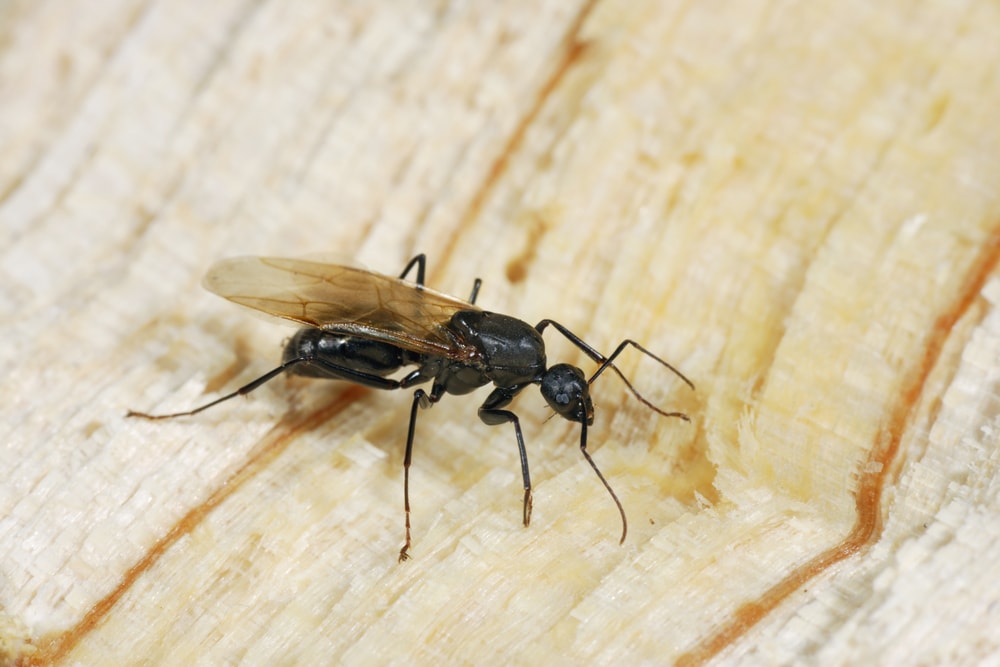
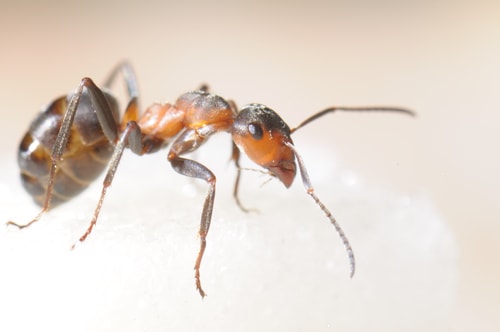
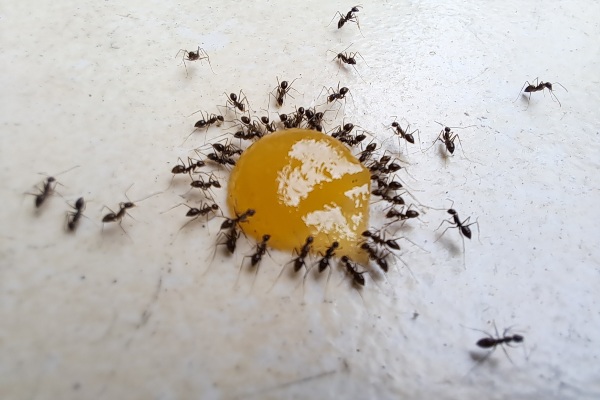
Little black ants (Monomorium minimum) are tiny, shiny, dark-colored ants that measure about one-sixteenth to one-eighth of an inch in length. Their glossy black exoskeleton and small, slender bodies make them easily recognizable. Colonies may contain multiple queens, which are two to three times larger than the workers, reaching up to three-sixteenths of an inch. Despite their small size, these ants are highly active and often found trailing in long lines as they forage for food outdoors and indoors.

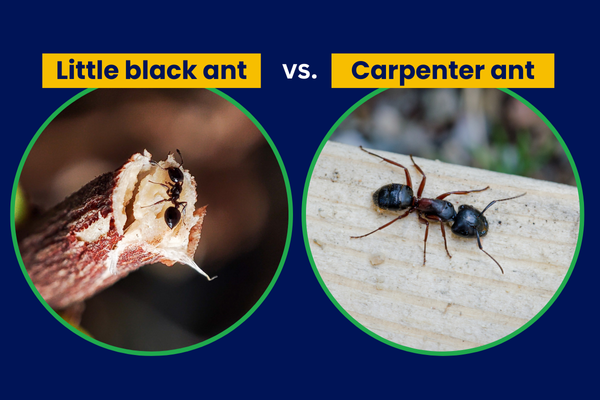
What’s the difference between black ants and carpenter ants?
Little black ants and carpenter ants are two common ant species that can sometimes be mistaken for one another, but they have significant differences in appearance, behavior, and habitat.
Size: Little black ants are much smaller, measuring only one-sixteenth to one-eighth of an inch, while carpenter ants can grow up to one-half inch or larger.
Color: Both species are dark-colored, but carpenter ants may appear black, red, or a combination of both.
Body structure: Little black ants have slender, shiny bodies, while carpenter ants are more robust with a matte finish and a distinct constriction between the thorax and abdomen.
Diet: Little black ants forage for sugary substances and proteins, often trailing in long lines to food sources. Carpenter ants, on the other hand, consume other insects, living and dead, plant nectar and honeydew produced by aphids. They do not consume wood but tunnel through it to create nests, which can cause structural damage.
Nesting habits: Little black ants nest in soil, under rocks, and in wall voids, while carpenter ants prefer moist or decayed wood for their nests. Look for sawdust-like material (frass) near carpenter ant nesting sites.
Little black ant behavior and habitats
Little black ants are highly adaptable and commonly found throughout the United States, particularly in urban and suburban areas. They prefer warm environments and establish nests in a variety of locations, including soil, under rocks, in rotting logs, and even within homes. Indoors, they may nest inside walls, behind brick veneer, or beneath carpets near doorways, especially if moisture is present.
These ants are known for following well-defined trails between their nest and food or water sources. They have a broad diet but are particularly attracted to sugary substances, including honeydew produced by aphids, scales, and mealybugs. Fruit trees, roses, and other plants that host these insects can contribute to infestations by drawing ants closer to buildings.
Little black ants typically swarm in summer, when winged ants leave the colony to mate and start new nests. Their colonies can grow large and contain multiple queens, which helps them expand quickly and survive in diverse environments. While they are not considered invasive, their persistence and ability to form extensive foraging trails make them a nuisance pest in homes and gardens.
Life cycle and reproduction
Little black ants have a relatively short life cycle, with workers living for several weeks to a few months, while queens can survive for up to a year or longer under favorable conditions. Their life cycle consists of three main stages: egg, larva, pupa, and adult.
Reproduction is rapid within little black ant colonies, as they contain multiple queens capable of laying hundreds of eggs over their lifetimes. Queens continuously produce eggs, ensuring a steady supply of workers to support the colony. During the summer, swarms of winged ants (males and future queens) leave the nest to mate and establish new colonies, allowing populations to grow quickly.
Signs of little black ants
Little black ants leave clear signs of their presence, making infestations relatively easy to detect. Signs include:
Visible ant trails: Lines of ants moving to and from food or water sources.
Nests: Small piles of soil or dirt near foundations, in gardens, or under objects like rocks or bricks.
Food contamination: Finding ants in kitchens, pantries, or around pet food.
Swarming activity: Winged ants appear indoors or near windows during warm months, indicating a colony nearby.
What attracts ants to your home?
Little black ants are drawn to homes in search of food, water, and shelter. They are especially attracted to sweet or greasy foods, crumbs, spills, and unsealed garbage. Moisture issues, such as leaky pipes or damp areas, can also invite them indoors. Outdoor plants that host aphids or produce honeydew can further attract ants and bring them closer to buildings, increasing the likelihood of an infestation.
How do they get inside?
Little black ants enter homes through cracks in foundations, gaps around windows or doors, and openings around pipes or vents. Their small size allows them to fit through even the tiniest gaps, making it important to seal potential entry points to prevent infestations.
Are little black ants dangerous?
Little black ants are not considered a major threat to people or pets. However, they are capable of biting, typically if they feel threatened or their nest is disturbed. Their bites are mild and rarely cause significant discomfort, making them more of a nuisance than a danger. Unlike fire ants, their bites do not sting or result in painful reactions.
These ants do not cause structural damage to homes, but their presence can lead to food contamination as they forage in kitchens and pantries. While little black ants are not dangerous, addressing an infestation promptly is important to maintain a clean and pest-free environment.
How to get rid of little black ants
Swarming, which occurs when winged ants leave the colony to mate and form new nests, can make it harder to control little black ants. Swarms often indicate a nearby mature colony, and once new nests are established, the infestation can quickly spread.
Immediate steps to take when you notice ants
Clean up crumbs, spills, and food debris immediately to remove attractants.
Store food in airtight containers and keep trash bins tightly sealed.
Wipe down ant trails with soapy water or vinegar to disrupt their scent trails.
Identify entry points and seal cracks or gaps where ants may be entering your home.
Little black ant prevention tips
Eliminate piles of lumber, bricks, or debris near your home that can serve as nesting sites.
Keep landscape mulch less than two inches thick and at least 12 inches away from the foundation.
Trim tree and shrub branches to prevent them from touching the building and creating pathways for ants.
Seal cracks and crevices in your home’s exterior to block entry points.
Avoid plants that attract aphids or treat such plants regularly to prevent honeydew production that draws ants closer to your home.
DIY vs. professional ant control
DIY ant control methods, such as baiting and spraying, can help manage minor infestations. Baits are effective when placed near ant trails, as ants will carry the poison back to the nest. However, DIY treatments often require persistence and frequent follow-up, especially if the nest location is hard to find or if multiple colonies are present. Professional pest control services offer more comprehensive solutions, including precise nest identification, targeted treatments, and ongoing prevention strategies. Professionals can address infestations more effectively, particularly for persistent or large-scale ant problems. Terminix offers expert ant control plans to eliminate little black ants and keep them from coming back.