Education
How do ants find food?
Content updated: April 24, 2026
Key takeaways
- Ants find food primarily through their strong sense of smell, using antennae with four to five times more odor receptors than most other insects.
- Worker ants leave pheromone trails to guide other ants to food sources, allowing colonies to efficiently locate and collect food.
- Ants eat a wide variety of foods depending on the species, including sugars, meats, fats, insects, and honeydew.
- Some ants, like carpenter ants, use both pheromones and visual memory, relying on landmarks to return to food sources.
Jump to section:
Did you know that ants have a keen sense of smell? If you’ve ever wondered how ants find food, the answer lies in their antennae. Ants have four to five times more odor receptors on their antennae than most other insects, which allows them to detect food sources with remarkable accuracy.
Worker ants (sterile, wingless females) generally find food for the queens (who lay the eggs), reproductive males and young in their colony. Worker ants often forage for food at night (between sunset and midnight) in the spring and summer, traveling up to 100 yards from their nest to find food.
Ants sometimes remain active in the winter if their nest is warm enough from sunlight, mild outdoor temperatures or inside heat. When ants are active in the winter, they typically forage at night looking for food and moisture. You may see them near your dishwasher, sinks, bathtubs or other damp areas.
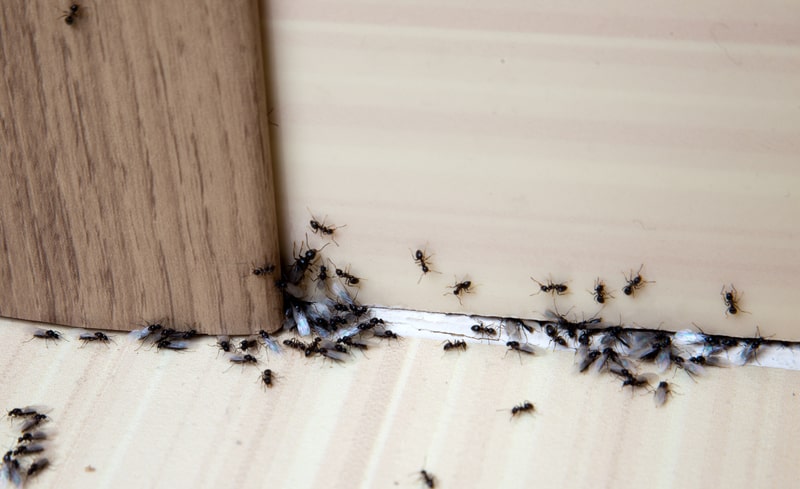
When worker ants leave their nest to search for food, they leave behind a trail of pheromones (chemical scents) — like leaving a trail of breadcrumbs to help you find your way home. After an ant finds food, it turns around and follows a different pheromone trail back to the nest. While it travels home, it lays down more pheromone on the trail, reinforcing the trail. When other worker ants come across the pheromone trail, they may abandon their own random search for food to follow the pheromone trail directly to the food source.
Carpenter ants, which are sometimes called “wood ants,” on the other hand, use a combination of pheromones and visual memories to find their food. On its first trip to a food source, a carpenter ant follows the pheromone trail established by other ants. This method of traveling is slow, since the ant has to walk with his antennae to the ground to pick up the pheromone smell.
On this first trip, the carpenter ant stores images of the route. On later trips back to the same food source, carpenter ants use landmarks and memories of the whole landscape to find their way. The ants use different landmark memories on their way to and from the food site. Some ants can store many memories and activate the correct ones as needed.
How Do Ants Detect Sugar?
Ants, like other insects, use chemosense to detect sugar and other food. They have the ability to detect chemical substances in their environment. When these chemicals are present (even at low concentrations), they can be detected as smells by the olfactory receptors — small bristles on the insect's body. Ants can recognize and detect the location of chemicals (such as those found in sugar and sweets) that are attractants.
What Threat Do Ants Pose?
Carpenter ants can potentially damage your home by chewing wood into sawdust as they excavate and build tunnels and galleries for their nest. Knowing what the ants in your home like to eat is important knowledge for helping you control them.
Contact the pest specialists at Terminix® if you need help getting rid of ants or any other pests in your home.